Purpose-Driven Founders & Business

The reality of building something that matters. Candid interviews with entrepreneurs who are proving that profit and purpose aren't mutually exclusive.

42 Episodes

Andrew Salisbury
S10 · Ep 26

Sustainability & Food Systems

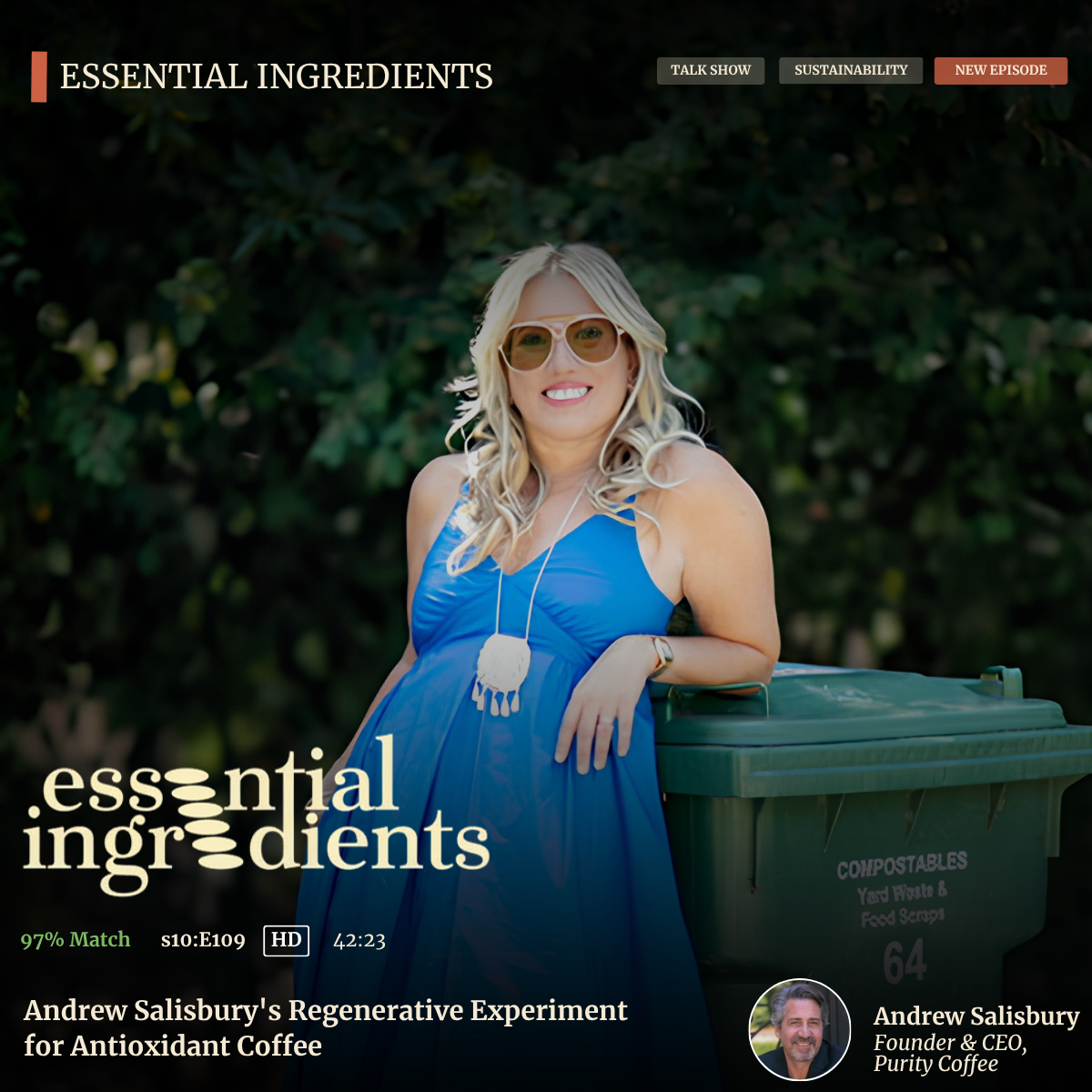
Andrew Salisbury's Regenerative Experiment for Antioxidant Coffee

Coffee health benefits are backed by decades of science — learn how one founder tested antioxidants, soil, and sourcing to build a healthier daily cup. Most people drink coffee every day without asking what's actually in the cup. Andrew Salisbury, founder of Purity Coffee, started asking that question ten years ago — and the answer changed how he thinks about one of the world's most consumed beverages. The story began with a personal problem. Salisbury's wife was dealing with low energy, and he suspected her coffee habit wasn't helping. Curious, he met with coffee researchers at the Institute of Coffee Studies, expecting a simple answer. Instead, he got a long list of documented coffee health benefits — support for preventing type 2 diabetes, liver disease, chronic inflammation, and even Alzheimer's — tied to specific compounds like chlorogenic acids and antioxidants. One finding stood out: coffee outranks blueberries and kale as the leading source of antioxidants in the average American's diet. The benefit doesn't come from caffeine — it comes from polyphenols that form (or get destroyed) depending on how the coffee is grown and roasted. That distinction became the foundation of Purity Coffee. Rather than treat coffee as a flavor product, Salisbury built a company around a single question: what happens if every decision, from cultivar to roast curve, is made for health first? Purity now runs coffee through three layers of testing. First, the bean is screened for mold, heavy metals, and pesticide residue. Second, the soil itself is tested, since nutrient-rich, shade-grown soil produces beans with measurably higher antioxidant content than industrially farmed coffee. A third layer — testing the coffee's effects in the body — is currently underway. This soil-first approach also has a climate benefit. Regenerative farming sequesters carbon instead of releasing it, meaning healthier coffee and lower environmental impact aren't competing goals — they're the same outcome. The stakes are rising. Salisbury points to World Health Organization projections estimating a 50% drop in Arabica coffee availability by 2035 due to climate change in equatorial growing regions — a reminder that sourcing decisions made today shape whether coffee remains viable at all. For Salisbury, the goal isn't convincing people to drink less coffee. It's convincing an industry — and its drinkers — to ask better questions about a drink most of us never think twice about.

Listen Now →

Alex Fredericks
S10 · Ep 25

Health Tech & Wellness

30-Second Health: Alex Fredericks on Building Voice Biomarker Tech

Voice biomarker technology can flag hydration, hormones, and inflammation from a 30-second clip. Here's how ToneWell's founder built it — and why AI isn't the analytic. Voice biomarker technology is one of the more surprising uses of AI in wellness right now — and it doesn't work the way most people assume. Alex Fredericks, founder and CEO of ToneWell, built a platform that turns a 30-second voice recording into a personalized readiness report covering energy, hydration, sleep, stress, and inflammation. The twist: AI isn't what's analyzing your voice. Fredericks discovered the underlying frequency technology while consulting for a PEMF (pulsed electromagnetic field) company. He spent years turning it from a delivery mechanism into an analytic — a static, locked database of roughly 150,000 biomarker reference points. That database looks for outliers in your voice pattern and flags things like mineral drift, hormonal imbalance, or toxin load. Only after that analysis is complete does AI enter the picture — as a concierge layer that turns results into daily priorities a person can actually act on. "AI is not the algorithm," Fredericks says. It's the workflow that makes a fixed, auditable result usable. One client kept waking at 3:30am with hormonal symptoms her doctor couldn't catch during office hours. A voice snapshot in the moment led to discovering conflicting medications — she went from seven prescriptions to two. Separately, Fredericks' nephew recorded an unusual iron reading, sought care, and caught a serious kidney infection early. Fredericks draws a hard line: ToneWell tells you what's going on, not what's wrong. It won't recommend dosages or override a practitioner. That restraint, he argues, is what makes the AI concierge trustworthy — it defers the moment a question moves into medical territory. Voice biomarker technology won't replace bloodwork. But as a same-day check-in tool, it's changing how quickly people can notice something's off — and ask better questions when they do.

Listen Now →
The Essential Ingredients Letter · Free

Get the letter. Stay in the conversation.

Enjoyed this episode? Justine sends one newsletter every Thursday on conscious living — food, wellness, sustainability, and the choices that compound.

Every Thursday · No spam · Cancel any time

Subscribe to the podcast

Never miss a Tuesday conversation. Subscribe or follow on your favorite listening app.

Subscribe on Substack →
Or get it directly from NextGen Purpose

No spam · Cancel any time