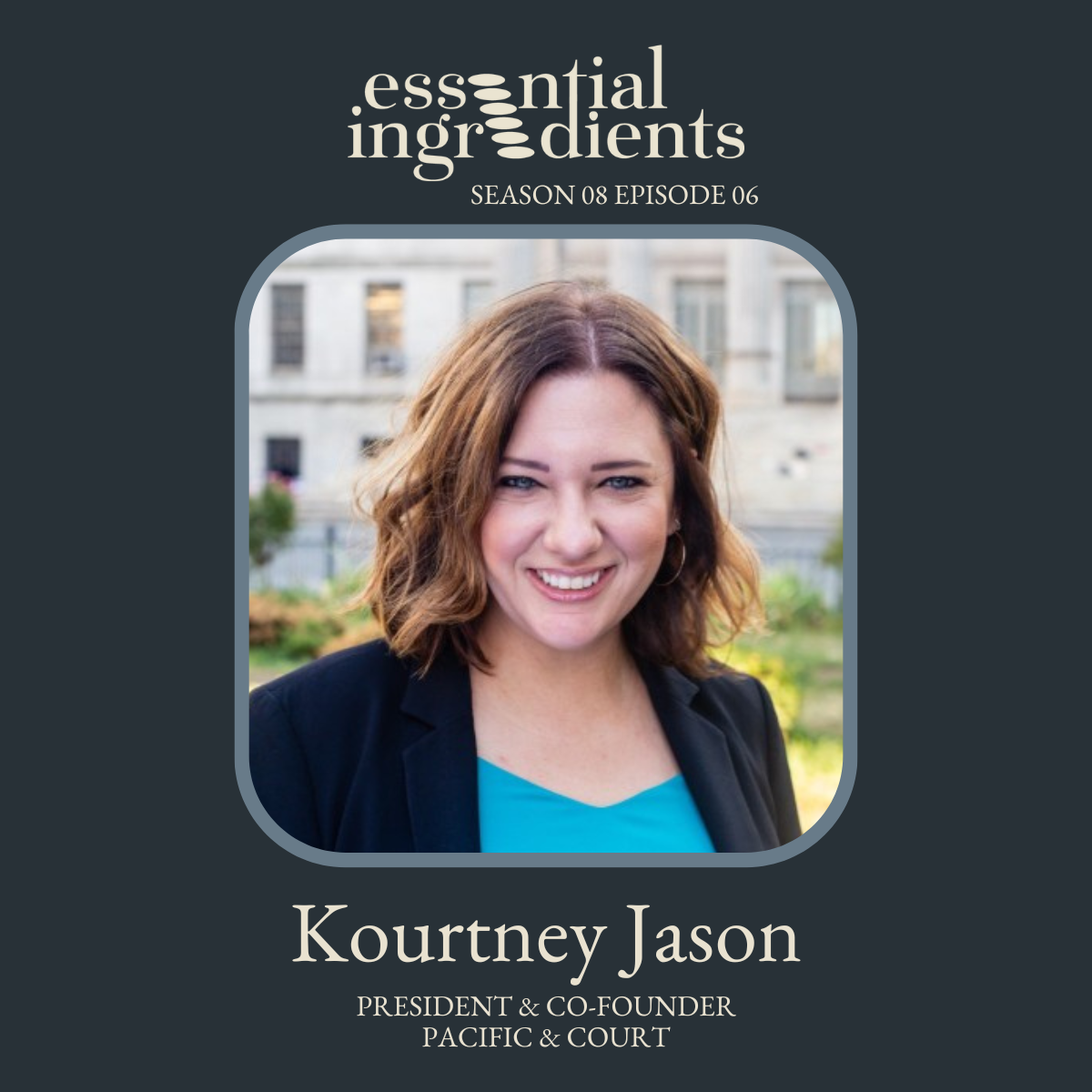
Kourtney Jason · President & Co-Founder, Pacific & Court
Watch on YouTube
How to Navigate the PR Timeline for Maximum Exposure
The Incorporation Method helps you turn what matters into practical changes that fit your life.
“You have to give something away to get someone in. —Kourtney Jason”
Full Transcript
Full conversation between Justine Reichman and Kourtney Jason.
Thank you so much for having me, Justine. I'm excited to be here.
I'm excited to have you here. I do just want to share with everybody, because I just learned where her name came from. I just felt like it connects us in so many ways, Pacific and Court. Kourtney is from California. I live in California. Kourtney now lives in New York in Brooklyn, and I now live in California. And the name of her PR firm is Pacific and Court, which connects not only where she is in her location, but us.
Correct. I love that intersection. We love coincidences.
It is. It's a very happy coincidence. So Kourtney, for those listening, if you could introduce yourself, your position and what you do.
I'm the President and Co Founder of Pacific and Court. We're a boutique book publicity and digital marketing firm based here in Brooklyn. So we work with independent authors and independent publishers to promote their books, getting media attention, helping drive awareness in traffic and increase sales across our digital marketing services. And we work with pretty much all genres. Nonfiction is a specialty. Cookbooks are one of my bread and butter and where a lot of my background comes from. We work with books and authors. And yeah, I love what we do. Why books and authors? That's where my career came from. I moved to New York, first started as an entertainment journalist and realized magazines. Sadly, we're just quickly disappearing. I pivoted over to the PR side of things fully understanding what that journalist and publicist relationship is like, and having built those relationships through the first few years of my career. I joined an independent publisher in California, their original offices in Berkeley, California, and I helped them grow to New York. So now, we share office space with them in New York. My work there for six years outgrew that position, went to another independent publisher, then they merged with another media company, then I went to the agency side. And then through COVID, started my own thing.
That's quite a journey. And really, it gives you a sense. I always think as much for myself when we work for other people. We work both on the client side and on the agency side, or the publishing, all the different sides of the coin. It gives us an opportunity to look at it from multiple perspectives.
Absolutely. And you never know what you're going to learn in each situation. There was an agency that I worked at for just nine months, I thought that the book industry felt unstable to me. And so I was like, well, I've worked with so many cookbooks, chefs and food writers. Well, let me go see if I can do hospitality PR. So I did that for nine months, and then COVID took that away. I don't think I was supposed to be at that company longer than I was because I learned exactly what I needed. I learned how to do a proposal. I knew how to do a new business call with a potential client. There were so many skill sets that I learned from that job that had I not had that job, I wouldn't have been as prepared to start.
I think back to the days around 2000 when I worked at PWC. And one of the greatest takeaways I had from my time there, because I'd worked in family business, I had worked at PR blind communications when it was KBP. That's probably pre-dating you. But my point is that by working at either line communications or working in PWC, there are really hard skills that you learn. You learn how to organize, you learn how to create documents that you can share, you create processes that you can then use when you go and create these other companies. And to me, that was some of the greatest. It allowed me to have a solid foundation and know how to organize and compartmentalize.
With learning that structure and process, you can also figure out, well, here's the way I would improve on top of that, or here's one way that I want to make it more personalized for my background or my skill set and really make it your own.
Totally. So now you're in publishing and you do PR for people in the food business whether they're chefs, whether they're cooks. Is it all nonfiction?
We do all genres. We do some fiction, but my background really comes from nonfiction. So I've spent the last 10 plus years of my career with the focus on nonfiction. We do more fiction now. That is a skill set that I've definitely taken the last few years to learn more about that process. It's very interesting. The comparison is fiction, I think you're pitching more of the story. What I've always liked more about nonfiction or just what's different to me is that you're pitching the person like you. I always like to joke that you can't interview a book, it's about the person behind it. Fiction is so much more about what is the story in this book, where nonfiction is, okay, but who is this expert? Why do they have the expertise to write about this? What's their background? What's their story? What sort of service or message are they trying to tell? And that I think it's just so much fun.
Yeah, I couldn't agree more. You learn a lot about the person, the insight. Yeah, their perspective. And it's super interesting. I don't just say that because I'm writing a book.
Which will save that conversation.
But that's a different conversation. I appreciate hearing that. And actually going through the proposal and writing the proposal, you really learned that it's about the people writing the book and who they are. What do they have to offer? And will they help promote it? Who are they following? All these different things that I didn't think or give enough credit to. And I think going through that process is quite an education for people. Because I think, at least I was surprised. I'm assuming other people are surprised about what wait things play into that. So I'd love to just start off with whether we have a small business, or somebody that's a new author which I think we should actually separate, put them into two different buckets. Let's start with small businesses. Whether it's a restaurant, a hot new restaurant coming up in New York, they're talking about it, or they're talking about it here. But it's like a small pop up, how do those people without being recognized, if they haven't been on Top Chef, or they haven't won some sort of award, think about getting the word out to create a buzz and some PR for whatever they're building?
I really think it's about the invite. When I was doing restaurant PR, I was in the process of doing a restaurant launch. It was inviting the media in like you have to be ready to comp some meals across both restaurants and books. You have to give something away to get someone in. We're sending review copies of books for free. There's no guarantee that there'll be a review, but we hope that there is. And then similarly with restaurants, it's inviting someone to make that really special experience through a drink, through a plate, through a dish. And then hoping through a very good experience that they would write about it, share it on social and create that word of mouth buzz that
Celebrities play, and that's for people.
We definitely have some books that we send to influencers with the hope that they'll share, and it is so impactful. And sometimes, you can do it without a budget. But sometimes, what is your budget for me to post this?
I don't know what your breadth of knowledge is for small CPG companies, or just other people in the world building better for your businesses for food businesses in particular, and what you might recommend, or what kind of tips you might suggest for those people that want to create brand awareness, want to get their name of knowing full well that it's never a guarantee with PR. You have to be willing to have faith, you gotta be willing to take a chance.
There has to be patience. That's the first thing. It's not going to happen overnight across anything that you're sending out for review, whether it is a product food wise, or a book. It's like a six step process, essentially. There's the pitch, there's the response. There's the mailing of the item, there's receiving the item. Giving that person time to enjoy the item, and then the follow up, and then hopefully getting the coverage. So there are some things that can happen pretty quickly whether you're pitching a podcast reviewer doing a podcast interview, or sharing a recipe for excerpts, or trying to secure a TV segment for a cooking demo. Those things can happen pretty fast. But when you're wanting that very specific product review, that is what takes the longest.
You really do have to be patient, and you have to have a good following through it.
The follow up I think is truly the most important because it's so easy for emails to get buried, to be forgotten and to fall by the wayside. And unless you're, I'm constantly sending myself reminders in my email just to be like, okay, if I don't hear back from this person, I will follow up with them in a week just to low friendly check in. Sorry to bug you, but let me know where we're at with this.
Yeah, I think it's a challenge to follow if it's like a whole job and of itself. Yeah, be honest. I need to do this on Wednesday. I haven't heard from this person. So for those entrepreneurs that are trying to be scrappy and want to do PR, what is an accessible way? What is an entry way, a point of entry for those folks?
I think it's making sure you're taking the time to do the research whether it's local media, or if you're looking a little wider regionally or nationally. Knowing who those people are that are covering similar stories to what you're doing. So I recommend setting up Google Alerts like that. I'm working with a longtime client of mine, she just launched her own podcast this year. So we're working on promoting that, but she's a friendship expert. So I just set up Google alerts for just the word friendship. So then I'm seeing what is the conversation about friendship out there, who's writing about friendship. And so every day I'm getting this list of resources, outlets and contacts that are covering something similar so that I know who to reach out to, but you can do that with really any topic. I set it up for gift guides every year. I set it up for just the best book roundups. So you could set it up for cocktails, and just start finding those outlets, okay, and then make a note. Make a mental note, make a list of. When I'm ready to pitch this person, now I know what they're working on, that gives you the chance to make it more personalized. And that will help you have a much higher success rate of response and coverage.
How challenging is it for these folks that are in startups, or have startups that maybe don't have the same relationships. Haven't been emailing Bonnie, or Sarah, or Jane, or whoever for all these years, and they're coming at it cold. How is their email received?
As long as it's written well to the point, it will be received. Well, freelance writers are definitely, their inboxes are flooded with pitches, but a good pitch and a good subject line. The subject line is so important. That's what makes it stand out. Making sure it's tailored, making sure it's on point that you're going to the right person and you should either say like, though, you might not get a response, but you could very well get a response. It's like, thank you so much. I will keep this in mind when I'm working on an article for X, Y, and Z. Especially with freelance writers and food writers, they're used to that. So it's just having something that's good that will stand out to them.
It's really important to have a good subject line. Let's just use my podcast, for example, Essential Ingredients. What would you say would be a good subject line for that if we wanted to pitch the podcast? I don't know. I'm just making it up as trying to come up with something that we can get an example of to get a little insight so that others can be inspired to do it for themselves.
Say that you were launching the podcast. I would start with a new podcast launch, and then Essential Ingredients is the hot new show for foodies, or a must listen for foodies. Something that's short and snappy, but that's really putting your message as succinctly as possible, but also as enticing as possible.
I get that. That sounds good. And so you mentioned a well written pitch letter. Is there some rhyme or reason on how we do this? Is there some set of rules that we need to follow?
Make sure that there are no typos. Make sure that you have the person's name spelled correctly.; I get many emails sent to me with Courtney with a C, and I totally get it.
But my biggest pet peeve, I'm not Justin, I'm just Justine with letter E.
Exactly. That's an immediate delete if you get anyone's name wrong, but keeping it short and sweet. Go in with the first sentence or two that's like something that will get them to keep reading, that will get them to read the second paragraph. Thinking of it as what is a journalism article? What is the news article that you're writing? So you do want to write your pitch in a very newsy way of what are the facts.
My podcast has already launched. But since we use that example, for all those people, whether it's a new product or a new launch, what is the format for that in that pitch?
Saying a little bit about your background. It has launched a new podcast, Essential Ingredients, and then what is the service of it. What is the listener gonna get out of it? So putting in that service, that news hook, what is different? What is your key message? If someone is only reading this one sentence, what is it that you want them to know?
Okay, I think that that really breaks it down for our listeners so that if they're in a startup environment, they can start to do this themselves before they reach out. Now let's talk about going and getting an agency or someone like yourself as a professional. What does that process look like? What could we expect back from it in terms of PR. Because again, I really want to stress, there's no guarantees with PR, you cannot really promise the world's people, and people expect the world. Yeah. So I think that's a very big misnomer for free.
I appreciate you saying that because that is so true. It's an investment. And hopefully that investment, there is a return on that. But like you said, there's no guarantee if there was. Life would be so much easier and we would all be just running these successful businesses. You just never know. But when you're looking for an agency, it's so much about relationships. The process is whether we've reached out to someone because we really want to work with them or work with their book, or we have an incoming message from an author that's interested in PR. Our first step is setting up a new business call. So that's me asking questions about, what are your goals? What is your wish list? Pie in the sky a list media, where do you dream of being featured? I do really want them to be honest with what their biggest goal is so that I do know what I'm working for. But also, it helps me understand if they have unrealistic goals. You never want the client that's like, yeah. If you know, they have to have some self awareness.
I'll take 50 over 50/50. Yeah, we'll get you there. I'm just kidding with you.
So it's a very good intro to just, okay, what is the dynamic between us? What would it be like working with each other? I make sure that I tell them what my process is and answer any questions they have. And then from there, usually, by the end of that conversation, I have a good idea of, if they feel like a good PNC client, and then I would offer, I'll put together our capabilities deck for you, or I'll put together a more detailed proposal. I usually send that to them within a week or two, then we proceed on to what are the exact services that they want contracting and launching the campaign?
There's so many different kinds of people that have really large companies that listen to Essential Ingredients, and then we've got small startups. Do you work with both?
We work with independent publishers. So independent publishers will hire us with a year-long contract, and we'll work on X number of books for them throughout the year. We work with independent authors whether they are still traditionally published, but maybe their book isn't getting the full attention from their publisher so they want to make sure that they're hiring someone that's working for them and working on their goals. And then there's independent authors that are self published, or using hybrid publishers that will hire us as well.
So what would be the entry point to work with you for one of these individuals doing something like that, just reaching out.
We'd set up the call, we have monthly retainers. But we have services that are available at very different price points. So digital advertising is a really low entry for services and that's Amazon advertising, social media advertising. We do the content creation for you, and then it comes with weekly analytics. PR is a higher cost. And then we do full time services. I'm doing proactive outreach for you and your book every single week with weekly reports, and there's just a lot of communication.
Sounds amazing.
Thank you.
There's a variety of different kinds of agencies. People work in different ways. They have different expertise, what sets you guys apart from other agencies?
I really think it's our energy, our enthusiasm. I just bring a very happy energy to anyone that I talk to.
For those listening, you got a great smile.
Thank you so much. I just get so excited to work with people. I'm a people person. So it really is the relationship. I believe so much in long term relationships too. So having the authors that have more than one book in them that are like, I had such a great experience with (inaudible). I'm definitely going to go back to them with my next book. Making sure publishing a book is such a big deal. It's so exciting. Then you've already done the hard work of writing the book, editing the book. Now it's out there. PR is really the most fun part to share it with the world and get that attention, and hopefully get it in front of people.
Yeah, I think it is. I'm not there yet. I've only written my proposal, and we've written a few chapters. So we're just trying to shop the book now.
But you'll still have to have a publicity and marketing section to share your strategy and ideas. You still don't have the book, but if you still do have to plan and share with publishers, this is what we would want to do.
It was a real learning experience. I'm curious, what is one of the most important things that you might tell someone that is on the fence? They're not sold on PR because it's not quantifiable, and they feel like doing advertising is going to be way out of budget because it seems scary. Years ago, you'd be in TV ads. How expensive is that? And then you have outdoor advertising.I don't want to answer the question. From your perspective, what's the one thing that you would let those folks know that are in that position to maybe break down some of the barriers for them and not have them feel so intimidated by it?
Just asking as many questions, making sure that there's transparency of what you're going to get. And if at any point throughout the campaign, or even before where you're like, okay, but if I'm having hesitations, or if I feel like it's not going the way that I want it to go, how do we talk about that? Because for me, I'm not going to waste a client's time with a pitch that isn't working. That's why I always say I do multiple pitches, pitch ideas and pitch angles throughout the campaign. Because if one pitch isn't getting the response, why would I keep sending that? It means I have to rewrite it. It means that it's not resonating with the journalist so let me regroup and come up with a new angle, a new way to position this, and then see how that works. So that way, I'm trying different things. And we can say, oh, wow, this pitch really did work because it got interest from these 10 outlets, or this pitch didn't work. It's important to have that reflection at the end of the campaign as well. I think it's important to note that in terms of advertising, digital advertising has really changed the game. We still do occasional print advertising for ourselves and for some of our clients, but Amazon advertising has a very low entry point. You can do that with just a couple dollars a day budget. We usually recommend authors start with a $500 a day budget for Amazon advertising, but you're getting three different ads within that. And then we send weekly reports. So we're tracking the impressions, the cost per click, click through rate. And through Amazon, you can even see when the ad has converted to a sale. So you're really seeing the impact. We've had some that have increased author sales by 50%, increase by 20%. So that was really, really interesting.
Do you have any hard hitting statistics you could state in regards to advertising that you're recommending for folks, or that you've incorporated into their strategy?
Knowing your audience is so important because social media gives such detailed opportunities to create an audience. Even through your own social media profiles, there are strategies to find your look-alike audience already putting together who was following you already, and then recreating that audience to expand who you're going out to.
It's like having a book audience. It's like having a mock audience by having an audience. You can test them, see how they're going to respond to the other audience who you don't have access to.
For books or for food, knowing what is similar so knowing who your competitors are so that you can also be targeting their audience.
Going back to my original question, do you know any hard hitting statistics on what $500 a day for a new book author might mean?
Yeah, I think the majority of our digital advertising campaigns if we suggest a three month campaign at $500 a month, so that's $1,500 over three months. Wait,
We originally said $500 a day, you meant $500 a month?
It's like $5 a day, and then $500 per month.
Just wanted to clarify for those listening, because I think we might have gotten confused. 500 hours a month. That sounds very doable.
Yes. And through that campaign, I would say like 95% of our campaigns were getting a million impressions for you.
Wow.What does that look like in terms of sales of books?
We can't guarantee that it translates to a sale, but we're tracking that every single day and every single week. So we're making sure that you're not paying too much for the cost per click.
That you're making more than 500.
With Amazon, it has a function that we also track called Return on Amazon Spend. So you're seeing, okay, we will always want that to be around one or two, ideally, so that you are getting money back on your spend. So we are tracking that, and it's a very good analytic to see.
Awesome. Kourtney, thank you so much for joining us. If anyone wants to get in touch with you because they have a book or they're in the food space and looking to get services, what's the best way to reach out?
Send me an email. It's just Kourtney@pacificandcourt.com. My emails on our website too, pacificandcourt.com.
For those listening or watching, it's Kourtney with the K. Thank you so much, Kourtney, for joining us. I really appreciate it.
Thank you for having me.
Share This Episode
Enjoyed this conversation? Share it and tag @nextgenpurpose
Listen on Apple ▶Listen on Spotify ▶Your Host
Justine Reichman
Founder & CEO of NextGen Purpose. Host and Executive Producer of Essential Ingredients — 11 seasons, 330+ episodes, and a growing movement.
About Justine →