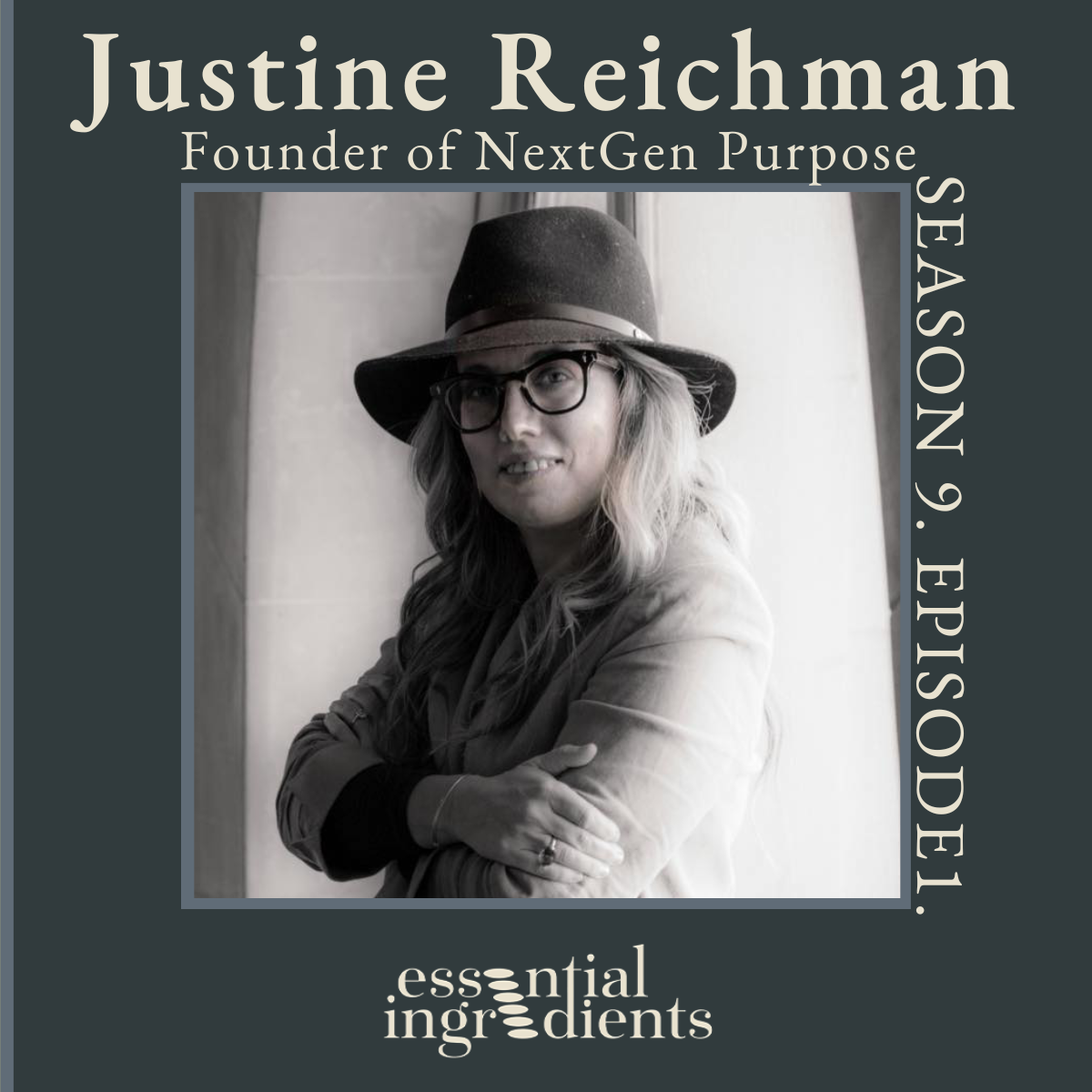
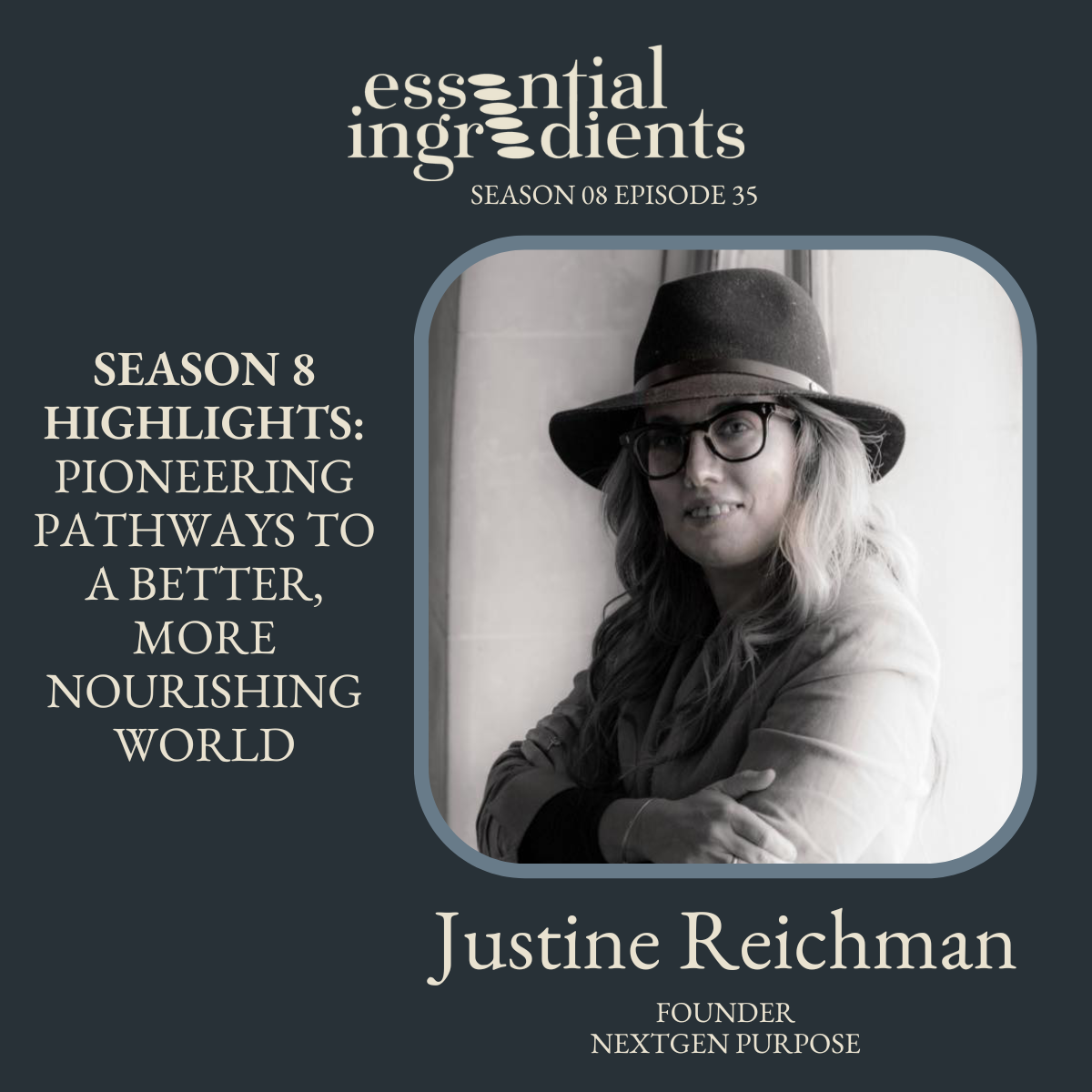
Justine Reichman · Founder, NextGen Purpose
Watch on YouTube
Season 8 Highlights: Pioneering Pathways to a Better, More Nourishing World
The Incorporation Method helps you turn what matters into practical changes that fit your life.
“Justine Reichman looks back on Season 8 — celebrating the changemakers, innovators, and purpose-driven guests who shaped a season centered on wellness, sustainability, and conscious living.”
Full Transcript
Full conversation between Justine Reichman and Justine Reichman.
We have to take responsibility for our health and not just listen to anybody because they look great or because they're being paid to pitch something.
I am really hopeful for changes that we can't anticipate. I feel like we're sort of at a sea change moment in our food systems and our agriculture systems. It feels like collapse sometimes, but I also feel like those are the moments when you get big moments of redefinition.
When you can put your ego aside and focus on the larger vision that you can achieve, so much more than you can alone.
We really believe that small businesses change the game. They'll be the future of everything, and they are more adaptable. They're the bread and butter. So if we can really support small businesses, we think that's going to lead to a better economy, a better future for everyone .
So is that what inspired your interest in food as medicine?
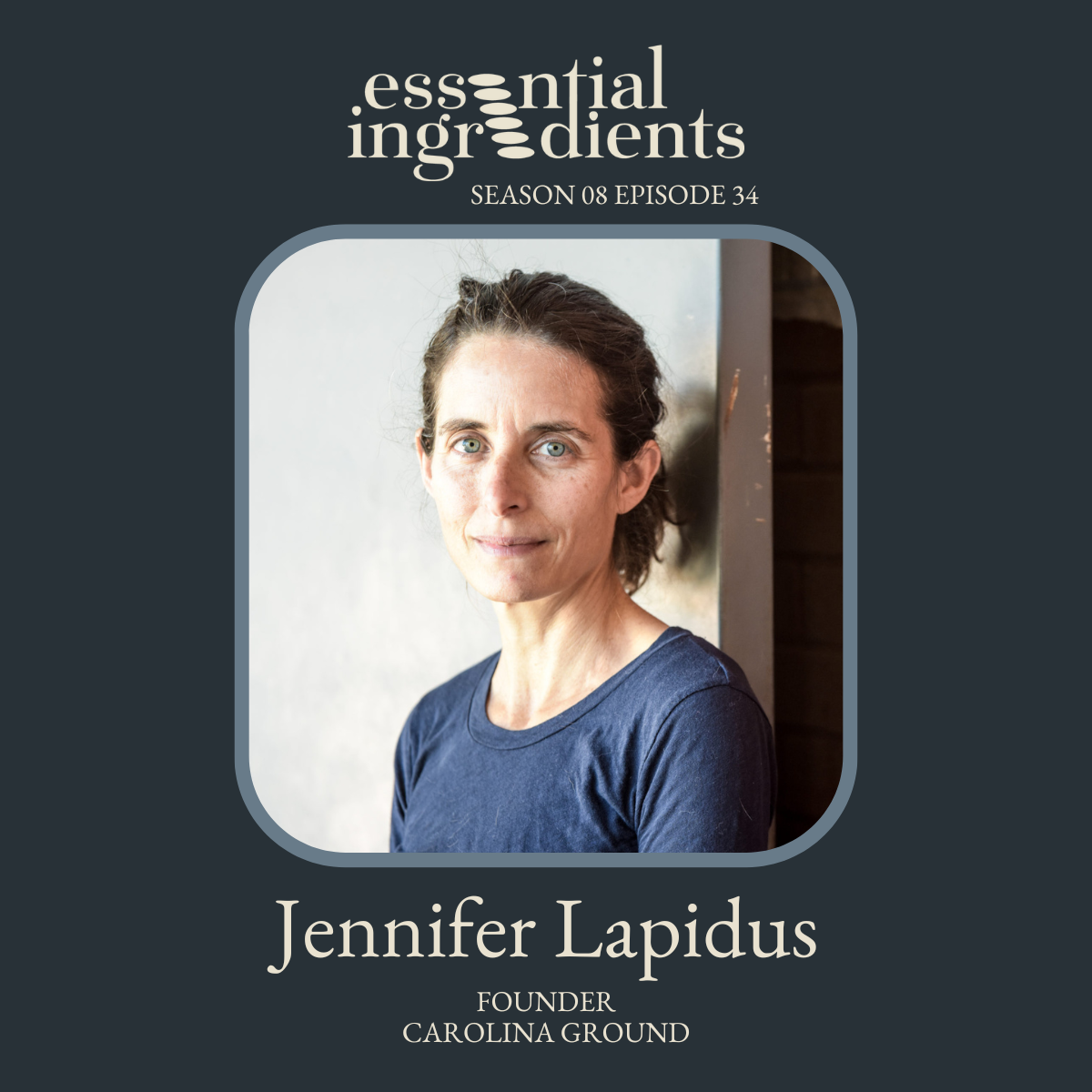
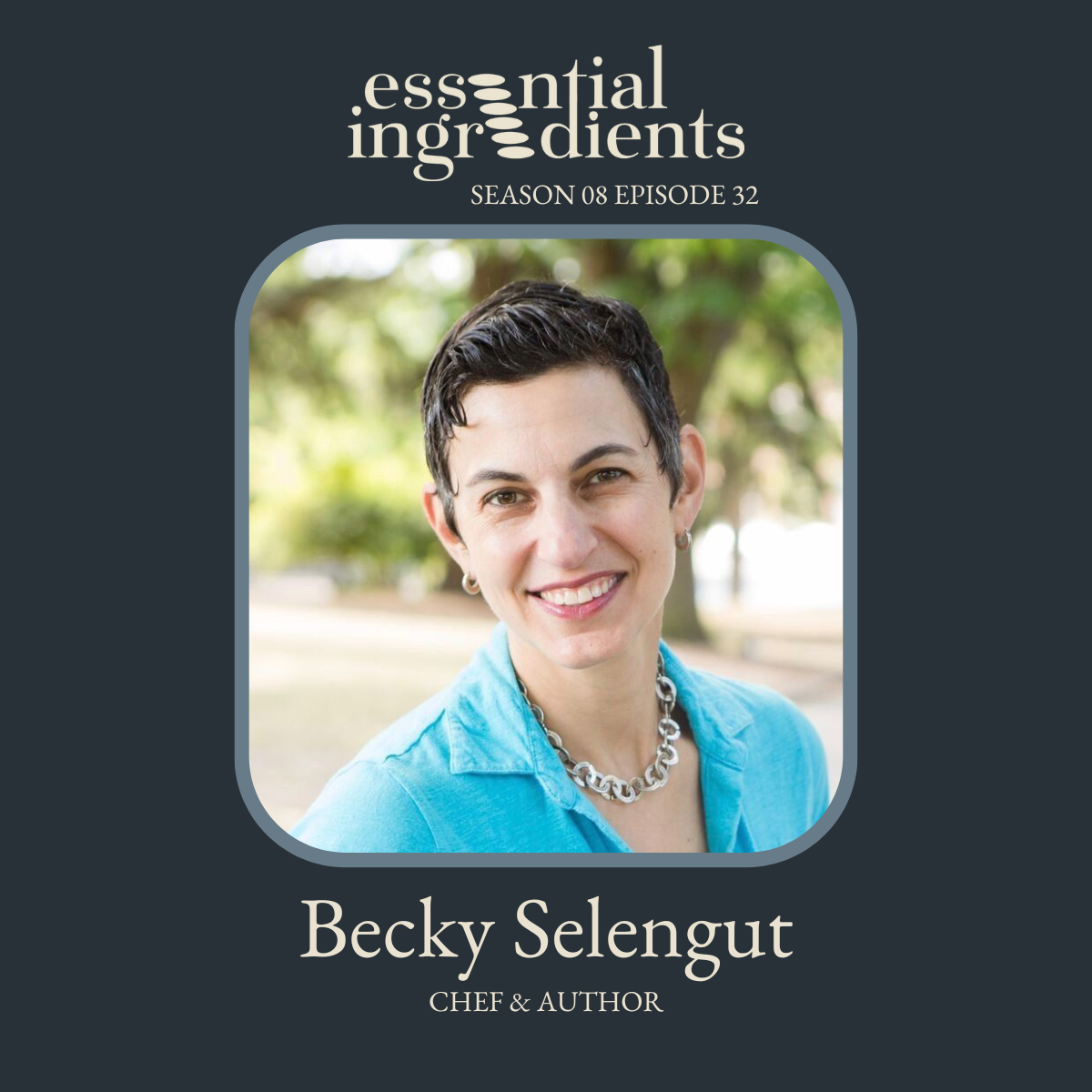
Well, I'd have to go back. Well, food's always been an important part of my life. I come from a familythat values gathering around the table, and the food that we eat is really important. And so as a kid, I was kind of a picky eater, but my parents forced me to eat my vegetables. I really became more interested in that and eating a wider variety of foods because of that. But yeah, as a kid, I also watched a lot of PBS shows like Julia Child, and that really seeing them cooking on the TV got me excited and hungry to learn more about cooking. I've always been enjoying the experience of eating. But I think once I was in my 20's, I had a friend that actually was diagnosed with colon cancer at a really young age, and she really kind of helped me to explore what alternatives were available to her eating and for eating for health. And I think that's part of my shift as well thinking, okay, well, what are we putting in our bodies? And what can we do to ensure a longer life? And to me, that was eliminating processed foods, trying to eat organic. And myself, I tend to eat an omnivore type of diet. I think it's important to get a balance of everything. So that's myself. I know people are really interested in other reasons for eating vegan and vegetarian
When I first started the business, I was all in on culinary mushrooms. Just growing mushrooms you can eat. And I still love all the mushrooms that you can eat. Hen of the woods, all the forage mushrooms that we don't even grow. Oysters or meat, potatoes. To me, they're in our dinners, two, three nights a week. And that's really what I wanted to focus the business on. Initially, I started using medicinal mushrooms actually long before I even started eating wood loving culinary types of mushrooms. I started with some Chaga and Rishi, and they were sort of in the background and not the main interest. And I continued to use them. And we started growing some medicinal mushrooms. And as the business evolved, we started making medicinal mushroom extracts, and they became a bigger part of my life. And there was basically a choice. At one point, I said something about focus. And what I was doing was running a farm that grew produce and sold its people. We were doing at most 10 Farmers Markets a week in the New York City area and suburbs. And that was that in and of itself was kind of a big, messy, complicated business run. And then in addition to the whole Farmers Market, fresh mushroom side of things, we started small and started growing the sort of online, more shelf stable products side of the business, which was mainly the mushroom extracts, some dried products and the mushroom grow kits. And I got to a point with it where I said, I can't do 15 things at once. I need to pick a lane and stick to it. And for me, I decided to pick medicinal mushrooms and stick with these four core medicinal mushrooms that we can grow ourselves, and that I use on a regular basis myself.
Well, I'm so excited to have you on this Mother's Day, because I think that a lot of these podcasts really talk about the founders and their journey, and that's really important. And motherhood even plays a role in yours, and we could share a little bit about that. But I really want to be able to provide these stories for these products for inspiration to the mother, so the community can better understand what we're doing to support each other and maybe even inspire other founders and other mothers to do the same thing in turn. So before we go on, if you could just kind of talk about some of these truffles a little bit, and which one you want to focus on today as it relates to moms this Mother's Day. That would be great.
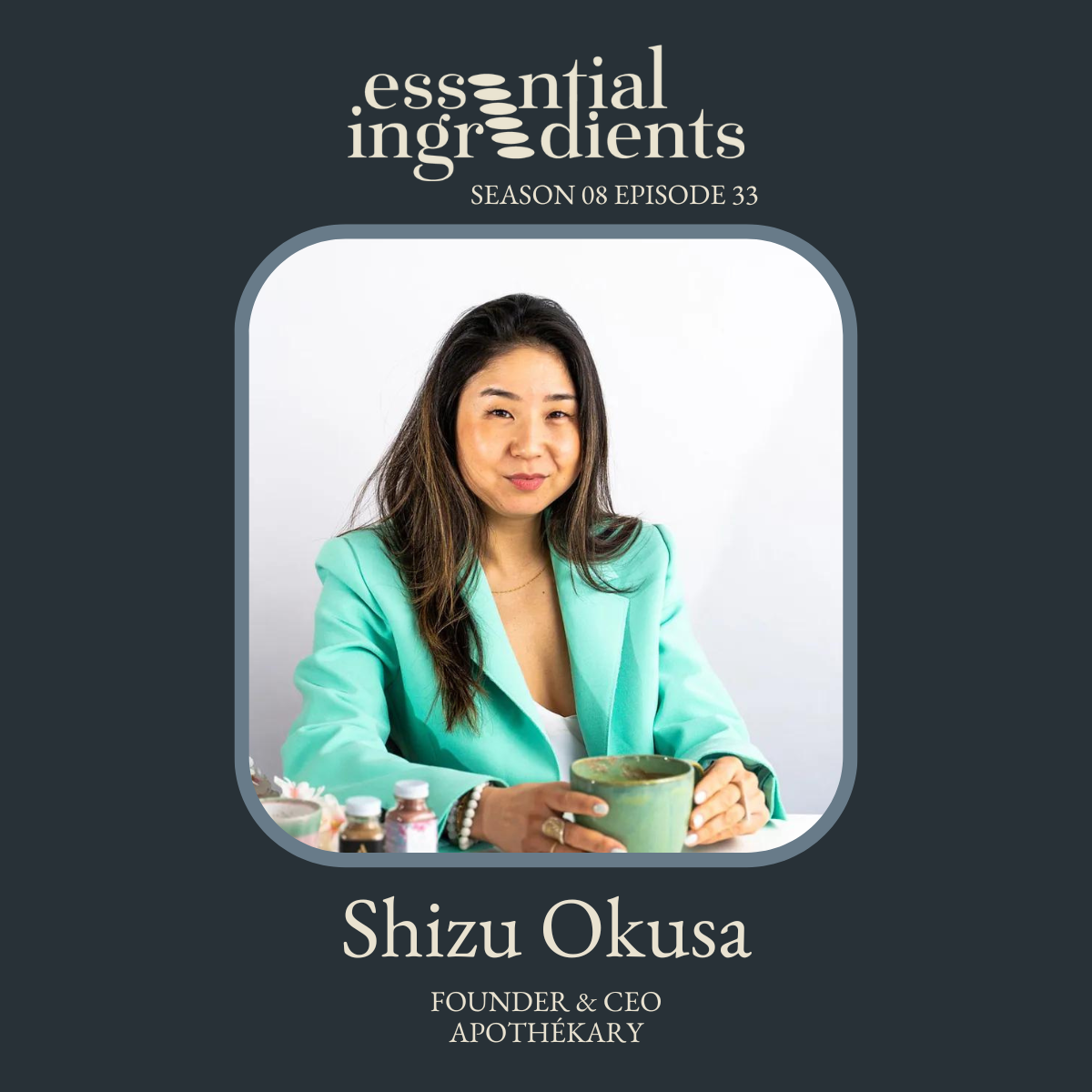
So the one I'd love to speak to, first and foremost is love. You've got love too. We've got enough love around a whole lot of love. And as you can see, there's a hashtag on the side of the truffle box that says #(inaudible)mother. And the reason is because we act the whole love or heart chakra range, or ranges that we created were the very first ones that we created because we believe that the heart is the starting point for everything, for all of our relationships, for all that we do, and the charity that we support with this because we support seven charities. As you know, every mom counts. So charity that was set up by Christy Turlington for mothers, and babies, and pregnant mothers. So really created a virtuous cycle, if you will, with the creation of this product. Some of our listeners know that my personal story as a mother was quite tragic. But that was transformed into something really rather triumphant. I started this as a mother. And then the very first product is given back to mothers through the charity. But the actual product itself is formulated to really support the heart. Not only cardiovascular health, but emotional health and serenity because mothers give so much. We're giving, giving, giving. And then to actually feel embellished, feel embraced and nourished ourselves. But then it goes one step further. Because the way that we source all of our ingredients, which are 100% organic and over 95% regenerative, is that we're supporting regenerative organic agricultural practices that are, in turn, re-nurturing and regenerating Mother Earth
I imagine essentially this world where there is no difference between the non alcoholic and alcoholic world. I think that for so long, alcohol has been very glamorized in society in many ways. And so when I think of drinking, we automatically think of alcohol. Those two words are synonymous to each other. And I think it's about reframing, how do we drink? What does it mean to have a social beverage? And getting into more of these occasions where you can go out to a bar, but you don't have to drink at the bar. Or you might go to a bar that's completely alcohol free. And ultimately, we're not going to get away from social occasions, because that's innate to who we are as human beings and to bring happiness to our life. So we're still going to want to be social. We're still going to want to have those connections, but alcohol doesn't have to be the means to that end. I see us actually celebrating non alcoholic options, choices, switching to alcohol free lifestyle, or whatever you want to call it.
I want to explore this conversation around conscious drinking and how it affects people because nobody wants to feel judged for choosing a bottle of wine or any other cocktails. So what role do you think that plays in the conversation for groups of people that are drinking? Is there shame around it for other people? Are they considered not consciously drinking?
So one of the things that you will actually get a quick Google from is the fact that what is hand in hand with conscious drinking is no judgment. It is a no judgment zone. You're allowed to drink whatever you want. It's totally up to you how much you want to suffer the next day. You know how busy your next day is. Maybe you got nothing to do, and you decide to take it one too far. But in the most general sense, the entire idea of being a mindful, conscious drinker really lays on the foundation that it's a no judgment zone, whatsoever.
Who says better for your choices can taste great too. This season, we chat with founders making the world a sweeter place. So for those people that are not familiar with your branding and your packaging, can you just show that to them, just so that they know.
This is Drinking Chocolate. It's in Whole Foods in Northern California. So basically, it's an accomplishable bag. It looks like this. And this is actually chocolate crumbles, so it's not powder. So there's an interesting difference. Do you know the difference between drinking chocolate and hot cocoa, or hot chocolate cacao? So they're both cacao. So the main difference is that hot cocoa is made from the powder. So they're both from cacao. But basically, when you take a cacao bean and you crush it with a lot of force, it'll push out all the fat. So cacao beans are about 50% fat, depending on the variety. So when you push out all the fat, that's cocoa butter, and then you're left with the fiber, which is just cocoa powder. So basically, that's why you add milk back into hot cocoa, because the fat's been taken out of the cacao. That makes it creamy again. But so what we're doing here is we're actually grinding down the whole chocolate itself. So if you took a chocolate bar and ground it down, that's basically what this is. So you can add water, and it is super rich, creamy and frothy.
If you would, could you introduce yourself, your position and what you do?
I am Amber Benson, I am the Co Founder of Ruvi. We do fruit and veggie smoothie drinks. We're trying to help more people get fruits and vegetables because it's so hard. So that's my passion. That's what I do.
But why fruits and veggies? What inspired you to do this?
Fruits and veggies. So back in the day, I was working with my current business partner developing products for him. He owns one of the largest freeze dry companies, a manufacturing company in the world. I was looking into fruits and vegetables and all of the research, and the huge problem that not enough people are getting them. 9 out of 10 people don't get enough fruits and vegetables. And then reading about everything that fruits and vegetables do, we started kind of clashing our heads together and thinking, what can we do to help people get more fruits and vegetables?
Wow. And so when you were working with him previously, what had you been working on?
We were developing different products. We were working on a meal kit solution to help people make easier meals in the home. And along with that, came fruits and vegetables. Freeze drying is so remarkable, and the way that it retains nutrients, and so a lot of the research I was doing was in this freeze drying space. How freeze drying really retains better nutrients than grocery store produce. And we had this technology at our fingertips. We also noticed that after freeze drying anything like spinach or strawberries, that there's a little layer of powder that's left over in the freeze dryer because it really just dries things out almost entirely. So we didn't want to just throw this powder away. We thought, what can we do with this powder? How can we use the nutritional goal that's in this freeze dryer to help people get fruit and veggies?
Would you say that you're upcycling now?
Yes. That is, not all of our ingredients are upcycled. But we're getting to that place where, yes, it's this great way to utilize food instead of just throwing it away, which is such a problem. But utilizing freeze dry as well in an upcycled way.
So when you first decided to go into this, I'm curious, did upcycling or freeze dry, did one of them take the lead in your initiative, were you more passionate about one versus the other? What was your overarching goal?
Fruits and vegetables primarily. But it was a sort of perfect combination. So naturally, I'm really drawn to fruits and vegetables and the power there. Jason as well. I think he calls himself a free game. He eats mostly plants. Loves fruits and vegetables, and really the research behind fruits and vegetables is what drove the decisions that we were making. But here we are in the middle of this amazing freeze dry technology and becoming experts in that space. Jason, especially. It was sort of how we have some things that are at our fingertips, this freeze dry technology. We're really good at how we use that to solve the problem of fruits and vegetables.
And that's a wrap on Season *. It's been a journey, I have to say. Our conversations this season have been incredibly inspiring, and they've left me hopeful for the future of food. We have even more inspiring stories to share for Season 9, including conversations with entrepreneurs, community organizers and folks working hard every day to make better choices for you more accessible than ever. So stay tuned on your favorite podcast app, and from all of us here at essential ingredients. Thank you for a great season.
Share This Episode
Enjoyed this conversation? Share it and tag @nextgenpurpose
Listen on Apple ▶Listen on Spotify ▶Your Host
Justine Reichman
Founder & CEO of NextGen Purpose. Host and Executive Producer of Essential Ingredients — 11 seasons, 330+ episodes, and a growing movement.
About Justine →