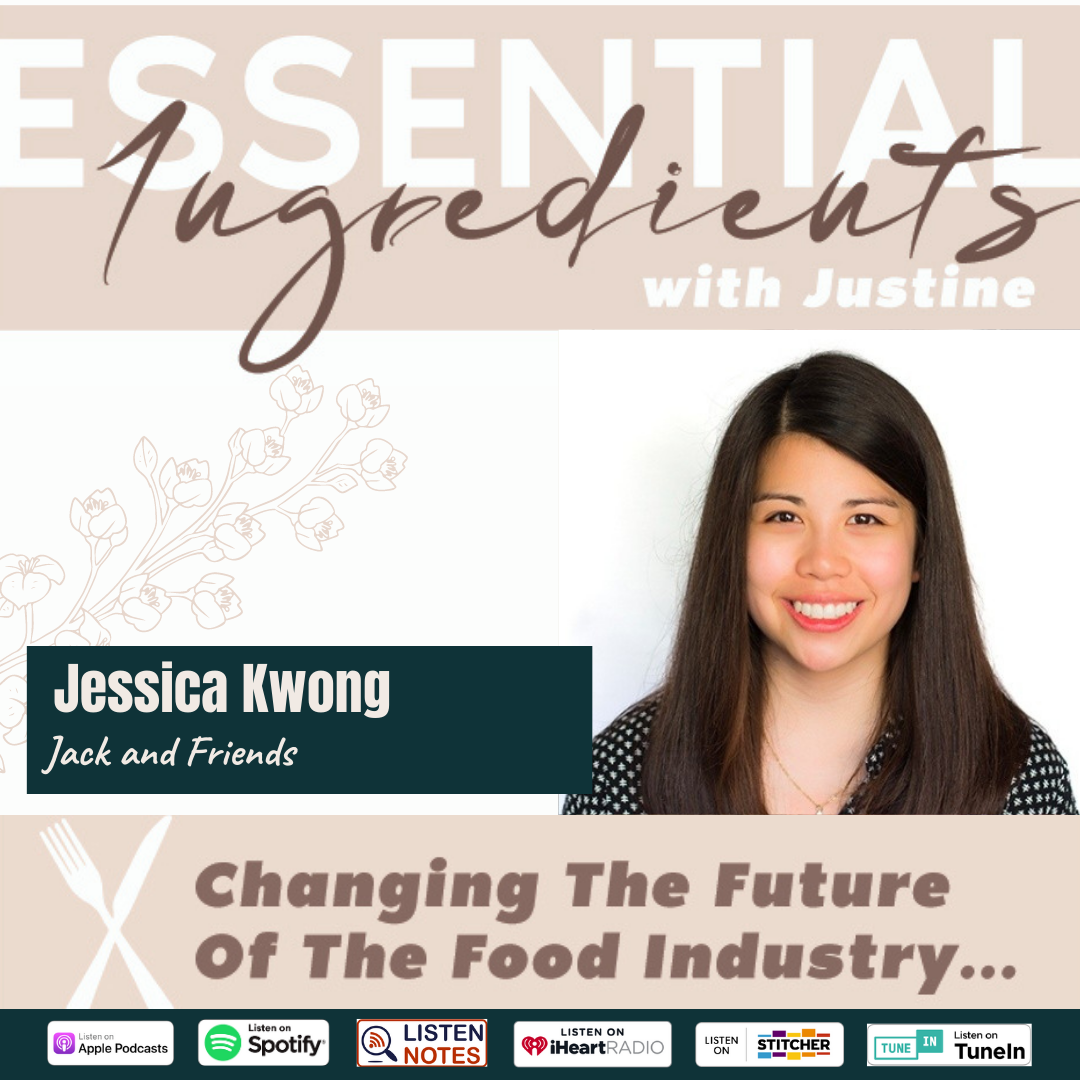
Maximilian Bade · NextGen Purpose
Watch on YouTube
The Unending Possibilities in Foodtech Venture Capitalism with Maximilian Bade
The Incorporation Method helps you turn what matters into practical changes that fit your life.
“Technological advancements and modern innovations have truly revolutionized the food industry. And many more founders, innovators, and entrepreneurs are stepping up to the plate as we continue our quest for practical long-term solutions. However, as much as they want to continue on this path, sometimes they lack adequate support. Thankfully, there are venture capitalists who are willing to invest in this arena.”
Full Transcript
Full conversation between Justine Reichman and Maximilian Bade.
It's good to be here. Justine, thank you so much for having me.
I'm so glad to have you here today. I'm excited to chat with you and learn more about what you're doing.
I'm excited to share what I'm doing, and I'm ready for some hardball questions. Bring it on?
Well, we're gonna have a conversation. I want everyone to hear about what you're doing, and the changes you're making in food, and how you're impacting the industry. So tell everybody a little bit about what you do at the Humane Society.
The Humane Society United States is the largest animal protection organization in the country. We work on a myriad of issues related to animals. And what I do is lead the work to help farm animals. As you know, most animals who are suffering in the world happen to be those animals who are raised in food production because the vast majority are raised inside factory farms. These are giant warehouses that can find millions of animals inside the warehouse walls. And for many of these animals, they're confined in cages. Cages are just so small, they can barely move. And so what I lead at the Humane Society United States is work to abolish the worst practices in factory farming, and also help move the food industry away from using animals, and to focus more on plant based foods.
Wow. So how did you get into this in the first place?
I bet, just like you and just like folks listening, I cared about animals when I was a kid. I grew up with dogs, and I loved them. They were not my pets, they're my furry brothers. I had a big fairy brother, St. Bernard named Hector and he was giant beast of a dog. And when you're a kid, St. Bernard looks even bigger. So to me, he was a bear. And I loved him a lot. I saw a documentary on a VHS tape, and I saw how animals were raised in food production. I saw how an egg laying chicken is confined in a cage so small. She came and spread her wings with eight other chickens, the cages size like microwave. I saw mother pig confined in a cage so small, she can't even turn around. Basically a cage that is in essence her coffin to live in for four years. And these type of abuses that go on to these farm animals allow me to make this connection, wait a second, I love my dog Hector. He's a troublemaker, and he probably doesn't love me as much as I love him, but what is going on to these other animals? They feel the same pain that Hector can, then they can suffer just like Hector. So making that connection allowed me to look outside my own house, and to make a difference in the lives of animals, especially who were being raised in food production. As I got older, I started to realize, not just a few animals that I saw in this documentary, it's most egg laying chickens are in cages, most mother pigs are in cages. Most chickens in the meat industry are genetically manipulated to grow so big, so fast, they can barely move at the end of their life. They're in constant pain, constant suffering. So you just look at the vast majority of animals who are raising these conditions. And the numbers, 9 billion of them, you start to realize, oh, my gosh, I really want to make an impact in the lives of so many animals to make their lives better.
You came up with the revelation that you wanted to help these animals, and you decided to go work with the Humane Society?
I interned there. I was walking down the street one day in 2001 in DC, I saw a building in the city, Humane Society United States and I thought, Hey, I'll go in there to see if I can intern. Not as professional as I wished I was. I wearing my gym shorts and a t-shirt, and I didn't do any background research on the organization. I just walked in and I went to the person. Their front desk saying, hey, I'd like to enter. What can I do? Unfortunately, they had a lot of compassion and mercy towards me because I don't know if I would have overlooked my lack of professionality, and they allowed me to start interning on the spot. So I did that, and it really opened my eyes to actual professional advocacy work. And from then on out where my one suit that I own pretty much every day of my internship, I started to understand what it's like to actually wage thoughtful campaigns. Not just, oh, I care about animals, what can I do? It's like, hey, let's have some strategy behind it. Let's see the difference we can make, and let's use as many tools that we can to make tangible progress for animals. So I learned that at my internship at the Humane Society United States. I went to another organization called Compassion Over Killing for a few years after that internship. That's where I did undercover work and actually worked in a factory farm. I was hooked up with a hidden camera and I documented the abuses that would go on within those facilities. I was there, chicken dropped on a conveyor belt and having to grab her. She fights for her life, having to shackle her. It was terrible.
I'm sorry, can you walk us through a little bit of that?
One does not realize how bad it is until you really work there. You can watch as many documentaries, YouTube videos as you want, and as I did. But once you're there, you see the reality even in harsher ways. When I walked into what's called the shackling room, the thing that hits you first was just the smell, so harsh. That it's almost like you walk through a wall, like that's how strong the scent is. And the sun is a VCs, it's blood, it just really shows you that you're entering a really bad place and really terrible things happen. I walked up to shackling line in to my left were about a dozen other workers who were there to shackle the animals, and this is a chicken slaughterhouse. When you look to the left, you can kind of see through the cracks, the chickens being dumped from the truck. Many of us have seen these trucks that go down the highways, and you can see the truck dump the chickens on the conveyor belt, conveyor belt starts to move towards you, the shackles start to churn. And then as the chickens get to you, the workers to your left are grabbing chickens super fast and shocking them, and you're waiting for the chicken get to you. And finally, that first chicken got to me, and my heart was beating so fast, I cannot believe what I was doing. I was against morally, but I had to do in this undercover work. I grabbed her and I could feel her twisted legs in my hand because of this genetic manipulation. The chicken legs twisted up, they just grow abnormally, and they're only 45 days old. These are babies, all chicken meat comes from baby chickens. I'm holding up a genetically manipulated baby chicken, the size in my head at least have like an eagle. That's how big she is because of the genetic manipulation it's done to these animals. She's hitting me with her wings, she's scratching me, she's pecking at me to try to escape, and it was just breaking my heart. She didn't want to die, and I just had to shackle her. That's what happened to her and what happens to billions of chickens every single year. And you know what that did though, that allowed me to focus my understanding of what I need to do for animals has to be impactful. I can't do actions just because they feel good. I don't want to wage campaigns and make a little impact. She reminded me, this is real world stuff. And that if I want to be someone who makes an impact, I got to truly make an impact and not engage in some theoretical thought process, but make everyday practical changes that truly do improve the lives of animals like her.
What was the big impact you wanted to have?
The impact I'm wanting to have was knowing that the finite amount of time I have on earth to make as big an impact as possible. Before that, I probably try hard and make some impact. Because of her, my thinking is no longer, hey, I want to try to make some impact. I just want to do my best. No, that's not at all. I want to make the biggest impact I can, and everything that I'm doing has to be transformational. And guess what? I might fail, and that's okay. But I want to make transformational, guideposts, as in the actions that I take. I also have to wage campaigns that have a real world impact. There was some work out there that I'm sure I used to do myself, that maybe like I felt good as an activist and I'm like, yeah, I showed them. I showed this person or that company. I'm sure I changed a couple people's minds here or there, no longer was that something that I felt like I would want them to do. It has to be real world impact to pause, more animals to have a better life than I could have ever imagined by shooting as high as possible.
Wow. If you look at some of the campaigns that you've done, I'm sure you've made transformational campaigns. Can you maybe share one of the more transformational campaigns that you put together?
Let's talk about Proposition 12 in California. In 2018, we waves the Proposition 12 Campaign, it's a ballot measure where people get petitions signed, and you can put something on the ballot. So people can vote for that question when they vote for governor, or senator, president. So in 2018, we waged a ballot measure that banned the confinement of egg laying chickens, mother pigs and baby veal calves in tiny cruel cages, and ensured that the eggs, pork and veal sold in California cannot come from operations that can find these animals in the small cages. It was a big battle against animal agribusiness. This is not easy. It was a year-long fight against some of the largest agribusiness companies that there are in the country. At the end of the day, we won. We got two thirds of the vote, and California passed the strongest law in the world for farm animals. And since then, Oregon, Washington, Michigan, Colorado, Utah and Nevada have followed passing similar laws. And when I started working on this effort to try to get chickens out of cages, 99% were in cages. Now, we're down to below 70%. We're in the 60%, which represents about 100 million chickens who were not in cages now who otherwise would be. And I think that's probably the greatest reduction of farm animal suffering in US history. So again, because of these campaigns, more than 100 million egg laying chickens are not in cages. And of course, we're never going to stop till we get every single one of these chickens out of cages in the egg industry.
Wow, that's a big number. I was just gonna ask you to quantify it too. I was wondering, how big is that number? That is not something to sneeze at?
No, not at all. There's no sneezing at that number at all. In fact, sometimes numbers like that, at least to me are so big. It's hard to even kind of picture like, how do we picture 100 million animals? I can't do it. I don't know how many people could do it so I guess I would just look at in terms of, one chicken is typically in the egg industry is confined in a barren wire cage. Imagine eight chickens put in this barren wire cage, she's unable to engage in the critical behaviors that allow chickens to have a good life. She can't perch, or scratch, or dust feet, or lay eggs in a nesting area. She has to eat, sleep and lay eggs in the same spot every single day, day after day, week after week, month after month for more than a year and a half. That's her life in a cage. It's frankly torture for animal. And because of these laws that we've passed, now she and 100 million other egg laying chickens, more to come, would no longer have to be confined in a cage, and instead be in a barn where she's able to run around, and there's perches, and dust bathing areas, and nesting areas. May not be Utopia, they probably don't live on a pasture. In most cases, they don't have outdoor access. That's not good. But it's much better being confined in a small cage, we can't move your entire life.
And the fact that you're able to extend this beyond California and then be able to get additional states, now, can we also talk about the other states, the states that you haven't gotten to. What's the plan for those states?
There are a bunch of states out there that are pretty rough to try to pass farm animal laws. States like Iowa that actually goes in the reverse and they pass laws like Ag-gag, which makes it a crime to be a whistleblower in the state if you want to shine a light on the abuses that go on in factory farms. So rather than criminalizing abuse of farm animals, what Iowa has done is to criminalize exposing the abuse to farms. Certainly encouraging hiding abuse by the law. It's even stronger than it has to be hidden. That's what I was doing. But here's the thing is when Iowa can escape, what we have done is waged campaigns to get the largest food companies in the country to mandate better conditions for animals. So we've gotten virtually every company in the nation that is in any size to mandate that their chicken suppliers related to eggs have to go cage free, and that their pork suppliers have to eliminate those gestation crates, those cages where these mother pigs have to turn around.
Not as if they're mandating it, how will that then work with the States?
Here's how Justine. Well, let's use McDonald's as an example. This is a great microcosm example. McDonald's buys about 2 billion eggs a year, 2 billion with B. When we got them through a campaign to announce they're switching all their eggs to cage free. If you are an egg producer in California, Oregon, Washington, or Iowa, or Oklahoma, or Nebraska, if you want to continue supplying McDonald's, you got to go cage free. So McDonald's went further than many states in mandating higher welfare, better treatment for these animals. And so there are numerous articles that have even recently come out about how major egg producers, even in Iowa are going cage free, not because I was mandating it, but because companies like McDonald's are saying, listen, you don't have to supply to us. But if you want to supply to us, you got to go cage free. And so all of a sudden, egg producers are like, okay, we'll go cage free. And the same thing is happening to pork producers supplying big food companies saying, okay, I know our state is mandating it, per se. But if we want to keep supplying our pork to major buyers, then we're going to have to get rid of those crates.
Well, okay, so they're not gonna have a choice.
Their choice is either getting rid of these cages and still selling the product of food companies, or being stubborn and keep being a hold of the past and holding on to those cages, but not really having too many places to sell the product. I feel like an agribusiness that still raises animals using cages is kind of like folks still producing typewriters. You can still produce typewriters by law. In some states, you can still try to sell your typewriters. I think society is moving beyond typewriters to things that reflect more of where society is right now.
I know that you've been on a mission, and you've been working with the Humane Society. I know that you're super passionate about this. I know that many people have their hands dipped in a lot of things, and I know that you've also had some other innovations that you've taken this passion for, and you've created some other businesses. I'd love to just tap into that and touch on that a little bit because you've created a really great business. I'd love to just talk a little bit about that, because it really connects so perfectly with this. And I can't help but think that this was inspired. Would you tell us a little bit about Eat Just and how this inspired that?
To make the lives of animals better, certainly did inspire me.
You don't use them.
A lot of ways to help animals. You can make conditions for these animals better. That's what I'm trying to do to passing these laws and getting these corporate policies. You can also help folks eat more plant based foods, so we can get animals out of the picture. And in that idea that I founded with my dear friend also named Josh.
Other Josh?
Yes, we'll call him other Josh for this interview. But if you ever have him on, don't let him know that we called him other Josh right now.
All right.
We decided on with, there's a lot of work that's being done off of delicious and affordable plant based burgers, and hotdogs, and bacon, and sausage, and chicken, and even now fish. These are items that taste just like their meat counterparts, only they're made from plants. But there hasn't been much work done to help folks eat more plant based breakfast meals so we thought, hey, this is a missing idea. Let's give it a shot. We founded a company at the time called Hampton Creek, named after my dog who passed away, later on St. Bernard. He was after Hector. So it's called Hampton Creek. Now, it's called Eat Just, and the company offers a product called Just Egg. It's in the egg section in every major grocery in the United States, all plant based. And when you open it up, you pour it on the frying pan, you scrambled up just like eggs. You don't even make it any different. Scrambled up like eggs, turn into an omelet, whatever you want to do with eggs, you can do with Just Egg. No animals were harmed in the process. It's cholesterol free, unlike eggs, and it also has as much protein as eggs. And so it's a huge hit. And it's being sold not only by every major grocery in the United States, but it's being sold internationally. Now, as of this recording, there was just announced a partnership in South Africa for it to be sold. It's sold in China. So it's a great way for people to move away from supporting buying eggs from caged chickens. Some folks are switching to pasture eggs, hey, that's a great step in the right direction too. Some folks are eating more plant based meals like Just Egg. Hey, that's wonderful as well. And so we wanted to try to allow the free market to solve a lot of the problems that go on to animals within industrial factory farming.
I'm just curious, how did you two come together to build that business?
We've been best friends since we were in school. I wanted to be a professional baseball player.
When you say school, do you mean college, high school?
Yes, since we're about 14, so that's early in our high school days. I want to be a professional baseball player, he wants to be a professional football player. So we bonded over our shared interest to be professional athletes, neither of us came close. But we did have that dream, I did end up playing baseball in college, and he ended up playing football in college. So at least we went that far. Throughout that time, what we built together was a work ethic, was a passion, an interest in learning and reading is a drive that you need if you want to succeed at anything. And so we kind of just in our life, just kind of directed that in a different direction. And for me, it was to help animals, and it was to wage these campaigns for animals, and it was to start in this company. And for Josh, he went to work at the United Nations. He went to work for the President of Liberia, went to work at a law firm. And eventually, he went to found this company with me. And to this day, he's been leading the company, and just really extending beyond a point that anyone could have ever imagined. At this point, there's been hundreds of millions of dollars investment, I believe about $600 million in investment from anyone, from a billionaire, or many billionaires frankly, to government funding apparatuses, to folks who were there in the beginning who just felt like a big chance to change the world. So there's a whole variety of people who have backed the company. But mostly, it's more about people buying the product. And most people who buy the product aren't vegan or vegetarian. They're everyday people who just want to take a step in the right direction. We're happy to have everybody trying to do a bit better. And then I tried to do better myself every day. So I think we're kind of in this together to do all we can to move the world to a more humane place.
It's such an innovative product to where either one of you chefs, or recipe, food scientists, or any background like that, or it was just sort of an innovation you came up with to build a better for your product, and from your background building a more humane and better way to eat.
I can make a mean peanut butter and jelly sandwich, and I can make a pretty good oatmeal. But beyond that, I have no culinary talent whatsoever. And I think the other Josh would say the same thing. We happen to be able to bring people on the team who have a lot of talent. So we knew that we had to bring on scientists, we knew he would bring on culinary experts, we knew we had to bring on sales people, marketing folks, and communications. So we kind of knew the team to bring together, to bring on a lot of people who have way more talent than he and I both do.
Well, that's what it takes sometimes. You have a great idea, you're doing good things in the world, you just need to surround yourself with the right people that can help take your idea to the next level.
That's the only way to do it. I don't know any successful business where the founders could do it all, or do most of it, frankly. If we've never succeeded making a big impact by doing it ourselves, whether waging these political campaigns to pass laws for farm animals, or waging the corporate campaigns to get companies to make changes, or founding companies and having to come to succeed, it all is a team effort. No one can do it all on their own. I gotta say, I'm proud to have been a founder of Eat Just. The scientists on the team are just even more critical than anything I did for the company. The culinary experts who have made the Just Eggs so darn delicious, they get as much or more credit than I do for founding the company. So yes, a huge team effort with so many people brought together. Frankly, the thing that unites everybody is to try to make things better off for animals, for people, for the environment. We're making things fit better each and every day.
Well, that's what we do on this podcast. This podcast is really all about the people that we bring on like yourself to be able to share their stories for inspiration to inspire others. So Josh, I really appreciate you coming on and sharing your story to be able to inspire other entrepreneurs and people changing the future.
Thank you so much for having me on. It was a lot of fun talking with you. And hey, I hope everyone listening, try something, give something a shot. You found a company, especially trying to displace industrial animal agriculture. If you want an impact, that's the impact. So go try to make a plant based chicken company, try to make a plant based fish company, pork company, try to wage a campaign. If you're not an entrepreneur but you're more of an activist, wage your campaign to get a company to change its ways, especially in the food industry. So hey, I'm thrilled to be on, I hope I've created some type of inspiration for some folks just as so many have inspired me, and I'm looking forward to coming on again.
If somebody wanted to get in touch with you that was either listening or watching the show, how would they get in touch with you?
You can email me at jbalk@hsus.org, that's J-B-A-L-K-@-H-S-U-S.O-R-G. You can follow me on Twitter, and super easy, it's just Josh Balk. That's my name. So it's @joshbalk, and you can be up to date on the campaign's we're waging, and join in, and see how we're changing the world for animals.
Awesome. Thanks so much. Thank you guys all for joining us today on Essential Ingredients. We're here every week. Thanks so much.
Share This Episode
Enjoyed this conversation? Share it and tag @nextgenpurpose
Listen on Apple ▶Listen on Spotify ▶Your Host
Justine Reichman
Founder & CEO of NextGen Purpose. Host and Executive Producer of Essential Ingredients — 11 seasons, 330+ episodes, and a growing movement.
About Justine →