Meghan Adelman · NextGen Purpose
Watch on YouTube
What's All the Hoopla About Enhanced Health and Plant-Forward Diets with Meghan Adelman
The Incorporation Method helps you turn what matters into practical changes that fit your life.
“Meghan Adelman, Co-Founder of Navitas Organics, joins Justine to explore what certified organic really means, why regenerative farming matters, and how plant-forward choices can transform your health.”
Full Transcript
Full conversation between Justine Reichman and Meghan Adelman.
Thank you so much for having me. I'm really excited for our conversation today.
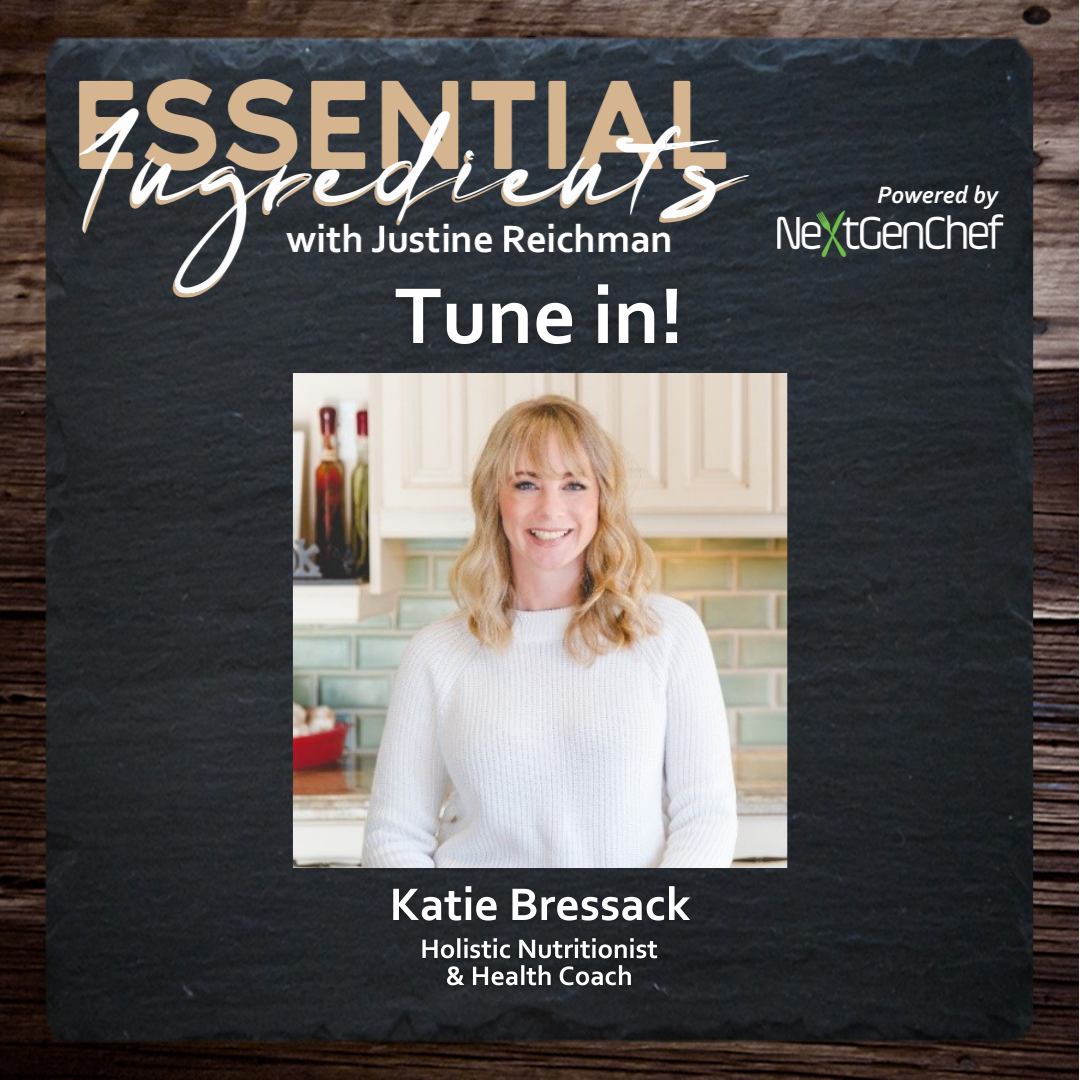
Me too, Katie. On a personal level, it's really interesting. I just think so many women and so many people are interested in this topic. And now more than ever, I think it's really top of mind. I think people are starting to ask questions, and I'm curious to learn more from you about how you got into this.
It's really interesting. I felt okay ish. I feel like the day before my period, I always would have a crying meltdown. And then the next day, I'd get my period be like, oh, hormones. But it was when I was getting married and planning my wedding that I really felt the impact of stress, and my periods just went crazy. Like they just started going all over the place. I was like, oh, my god, I don't feel stressed. But obviously, my body is under a lot of stress from starting my business, planning a wedding and just daily life. So that's when I really started honing in on a little bit more. I was working specifically with women and women's health with hormones. But then I was like, okay, I need to go deeper and deeper about the different phases of our hormones. I was also 33, so I feel like I was going into another phase of my own hormonal health. I just felt like there was something missing, like I was talking about food, movement and stress. But that missing piece for so many of my clients and myself was just understanding hormones and how every day our hormones are a little different than the day before, and how we can actually eat in a way to squash our hormones. That is a little bit more than just eating spinach, or kale, or some of the things that I was talking about all the time.
Because I think a lot of that is just about general health. When we talk about spinach and kale and eating for general health and hormones takes it to another level. And understanding hormonal health, and your individual hormonal health is really different. So I'm curious because on a personal level, I know, balancing hormones can affect how you feel with regards to energy, with regards to mood and how we respond to our everyday life, so I'm sure that this has impacted you on a personal level.
Yes. I think the biggest one that I see too is sleep. It's really important for everyone to understand that what we eat throughout the day can have a huge impact on whether or not we're getting quality sleep. If we feel rested when we wake up the next day, especially hormonally, sleep is such a cornerstone of health and especially hormonal health. And most people that I work with are not getting quality sleep, like they're waking up a few times at night, they're having a hard time falling asleep. It really goes back to like, what are you eating throughout the day? How are you setting up your blood sugar? How are you keeping your cortisol level as balanced as it can be with everything that you have going on. But I think sleep is a big thing too, that a lot of us might not be paying attention to as much as we should as well.
So was there a time when this first came up for you? When you were dealing on a personal level, when you're getting married, when you realize that food was having such a tremendous impact where you went from maybe not sleeping well to all of a sudden having that amazing night's sleep. What did that change in your diet look like for you?
I always had a hard time sleeping. I feel like I went through many phases in my high school years because I've probably not been paying much attention to sleep at that point. And then it kind of came with me through college, and then I lived in New York City in my 20's and I would have really horrible times where I was just not sleeping well. I can see what I was not eating and not doing that was actually having that huge impact on my body. But I think the biggest thing that I noticed and I really learned was how food and how balancing your blood sugar is the direct mirror to your cortisol levels that stress hormone. So I was skipping breakfast, I would be running around. I've never been a coffee drinker, I just don't like the taste of coffee, but I would like to run around, try to get ready, run out of the house, get to work, just not fuel my body with protein. And then I would have a really hard time falling asleep that night. And now I know, I think the biggest thing that I've really learned is that the first hour of the morning sets up not only my day and the way that I'm feeling throughout the day, but also how I can actually fall asleep at night and how I can stay asleep. That's key for me. I have 16 month old twins. And if this mama does not get enough sleep, I can't handle it, it's just too much. I'm really dedicated to my sleep, but that was kind of like the first thing that I really noticed was when I really started really balancing my blood sugar, I used to be hungry often. I always carried food in my purse. I always had a bag of nuts. I always had protein bars. And most of my friends were also experiencing the same thing.
I used to do that too. I used to carry snacks, and I still do because we get so busy we forget, or you're just running around and you forget it, it gets lost. I love food, and I don't like to eat just to eat. I like to eat because I love the food.
Yeah. Same as we should.
It's not just the gas for the car. It's not just the fuel for the engine. It's an enjoyable experience. Before you go on, I want to go back to the choices you're making though. So when you realize that you needed to eat breakfast and you were making a choice to eat breakfast, did it make a difference what you chose to eat for breakfast?
Honestly, just eating within 45 minutes to an hour of waking up made a huge, huge difference in my body throughout the day, like a little bit more balanced. I was able to handle and react to situations in a more calm demeanor. But protein, I was a vegetarian for a long time, and I started really incorporating more animal meat back into my diet, especially ritual morning breakfast, I would have eggs. But honestly, oftentimes, I was eating leftovers for breakfast. If we had chicken stir fry for dinner, I would eat that for breakfast or a chili. I was having that for breakfast and my body was craving protein. The more that I ate protein, my body was like, yes, give me more, give me more. So that was like a big difference. I started being a vegetarian when I was in the fourth grade until I was a junior in college. And then I kind of switch back and forth, eat me for a while, stop, add me back in. And in this period of my life when I really added that animal protein back in for breakfast, that's when I really started noticing a really big change in my body.
So the change that you noticed, just to bring it full circle, that you were more balanced throughout the day. Maybe more clear, less hangry, more balance and slept better throughout the night.
Yeah.
So do you think that this is more about eating within the first 45 minutes of eating protein? And is this directly related to the hormones, your particular hormones? Do you think that we're asking you to give it protein?
Yes. Because I found out a few years after that I had a thyroid condition. I had hypothyroidism, and I had probably had it for years and just had never, it got kind of lost. I moved from New York to LA. I think things just kind of got lost along the way in terms of blood work and different things. So yes, I think a lot of it has to do with my own personal body because I truly believe that all of us need to figure out what works the best for our individual health and our bodies. But I do have to say that the majority of women that I do work with, there is a huge difference in the way that they feel when they actually eat protein for breakfast, and they actually do eat breakfast and not just live off of caffeine for hours, and hours, and hours. They have less sugar cravings, they feel obviously sleeping better. But the energy that I feel, all of us are looking for is food. It's actually eating whole foods. It's drinking enough water. I always say, let's go back to basics. First, let's look at what you're eating, what time you're eating and start there. But the majority of people that I do work with feel thousands times better just by focusing on that first morning, first hour of the morning, I should say.
I think that that's a really key thing for people. I'm curious because people's hormone levels are different, and they change. They change with age, and they change a variety of times during our lives. So what kind of changes do you see as people change in their lives? How will this change? You're in your 30's, I'm in my 40's.
Oh, I'm in my 40's now.
Oh, you're in your 40's now, sorry. You're in your 40's now, but we think pre menopausal, perimenopausal, postmenopausal, all these different things, how are they affected? How do we change what we eat to positively impact how we feel during the day, sleep at night and power on?
Yeah. I think there's a few things. There are so many different hormonal stages. And really, if I could turn back time, I've really spent a little bit more time in my 20's thinking or caring about my hormones and how they were going to show up in my 30's. How I took care of myself in my 30's is showing up in my 40's. Right now, I'm 42. I think a lot of it is we've got to look at what's under the hood. Let's get some bloodwork done. What stage are you in? What are your hormonal levels? What's going on? But honestly, the first step that I really do no matter what phase it is is balancing blood sugar. Once you're so hungry, it throws off that blood sugar. And what happens when our blood sugar gets thrown off is that it really spikes the cortisol that is the stress hormone. And what I see often is that no matter where you are in your life cycle, when your stress is too high and your blood sugar's off, that's usually the start of insomnia. Eating more sugar, needing the coffee, meeting the energy drinks, so for me, it always goes back to, how are you balancing your blood sugar? AWhat are you eating? And it's different sometimes. A lot of times, we're not eating enough healthy fats, we're not eating enough fiber, we're not getting enough protein. But it's also important to work with a doctor to get some blood work done, or get urine or saliva to really test your hormones to kind of see what's going on. Estrogen dominance can happen a lot. Like at the end of your 30, 40's, or even sooner, really kind of taking a closer look at what might be going on.
As you said a couple things, you said cortisol, you said estrogen dominant. And so for our listeners, because some of them may be familiar with these terms and others may not be, if maybe you could just explain a little bit more about cortisol. And then after that, maybe a little bit about estrogen dominance so that we can all be on the same page when we're talking about this.
So cortisol is your stress hormone. I don't know if I'm allowed to swear, I usually call it like the bitchy bossy hormone because that's what happens. It will steal from your progesterone. Progesterone is the hormone that really helps us feel calm, but it has many other amazing capabilities as well. But when we are chronically stressed, our cortisol, which is a stress hormone, basically is in charge and craves sugar. We need more energy that's cold on the way, it also affects your thyroid. I know everyone thinks we've kind of understood a little bit that we need to manage and cope with stress a little bit better. But it really is the number one thing that I see is the chronic year of stress that we don't even know that we're under because we've been doing the same thing every day. We liked it, but I was doing okay, I was doing it. I was like, yeah. But now, your body's like, I'm done with that. I'm tired, we need to kind of pull it back a little bit. So with that, I often see estrogen dominance, which is, if you've been under chronic stress for a long time and your progesterone, there's not a healthy ratio between your progesterone and your estrogen, and when you're estrogen dominant, it can cause lots of heavy periods, excess weight, moodiness and all of those different things as well.
So what are some of the foods that you might recommend if somebody was estrogen positive or trying to manage their cortisol levels besides eating first thing in the morning and maybe adding more protein whether they eat meat or not, you can eat protein. So what are some of the other foods you might recommend?
Healthy fats. I grew up in the 80's and 90's, and I never saw an avocado till I went to college. Healthy fats are really important. I still to this day, people are nervous about avocados and eating too much healthy fat, I see it often. Healthy fat is so important for hormone production. If you are craving lots of sugar, if you're never feeling satisfied with meals, not feeling nourished, you've got to get some more healthy fat in a good way to notice too. If you're craving lots of french fries, that's a sign for me. If I start craving french fries out of nowhere like, am I not getting enough healthy fat? Like, if I've been avoiding the avocado for the past few days. Same thing with sugar. If you're constantly craving sugar, are you getting enough protein? And I totally agree. I believe having plant based protein is also amazing. But nice mix of both, if that's how you eat. We can learn a lot about our cravings as well. I always say our cravings are BFF. Because when we start craving things, that's what we need the healthier version of what we're craving. So I would say healthy fats for the win, fiber. Eating enough vegetables, fruit, beans, nuts and seeds, just getting more fiber. And when we're taking a look at hormones in general. I always start with the blood sugar. But then we move into digestion. It's TMI, but are you having regular bowel movements? Every day, maybe twice a day. And then really looking at liver support, and then really talking about the phases of your cycle, how it's okay to feel different every day. When you're in the menstrual phase, it's like winter, and you really want to be kind of more, I don't know, like cuddled up under a blanket.
I was thinking the same thing as you were saying that. I was like, kinda want to be warm. And yeah.
Sort of like warming and cuddling. So like lots of warm, nourishing foods. Moving into the follicular phase, your energy starts rising. It's more of like you're going into the spring. I feel like everyone feels really amazing in the spring. And then we go to ovulation. And that's when we usually feel like our best and our sexiest. That's when you should go shopping for jeans, by the way, is when you're ovulating. Even though you look the same as you did like three days before, just to feel your body more like you're just like, and then as we go into lutherville, it's fall. You're kind of like preparing for the winter, you're starting to like slow down a little bit. So it's really about just understanding. I think it's just important for anyone that menstruates to understand that every day, our hormones are doing something a little bit different. And it's okay to feel different during each phase of your cycle.
It's so interesting. It's such an important conversation because I can't tell how many times I feel like I'm so tired. Is this ever ending? I can't tell you up until recently, I'd be tired the week before my period, the week during my period, and the week after my period. That's three weeks out of the month. I mean, that's crazy. Three weeks out of the month. That's more than half the month I was tired. That's not acceptable.
No.
I'm not alone.
Not at all. And it's amazing that you were able to make that connection to being like, okay, it's probably hormonal, what's going on? What stage of my end? Everyone's energy levels shift and change. I think it's important to not put that pressure on ourselves. Okay, my body's literally telling me I need to rest. And not judging ourselves, I feel like a lot of times we're like, why am I not productive today?
Work for somebody else too. I mean, I happen to work myself, and we're all harshest on ourselves. But if you have to get up and go to an office, and have kids, get everything prepared, it's hard, it's not easy.
Another thing I do is I track my period. I always put it on my husband's calendar.
That's smart.
He still is like, why are you so mean to me today? The day before my period, I'm just a little bit shorter. I just need a little bit more time, leave me alone time. But I just think it's funny because I'm like, he even notices that shift and change. I'm trying to kind of get him used to it, it's one day a month, honey. You know what's coming, prepare for it. Leave me alone. I think it's a conversation for everybody to have for all of us to know more about just hormonal health. Men have hormones too, don't get me wrong.
I was gonna ask you about that. I know that you focus on women in their hormones, but what about men in their hormones?
It's interesting. Men have a 24 hour hormonal cycle, and we all have 24 hour circadian rhythms. So I used to get really mad when we first started and he would go to bed, and he would put his head in the pillow and like, I would start talking to him like, you just woke me up. Like, how are you sleeping already? It takes me a long time to unwind. I have a whole evening routine so I can go to bed, but it's because of their circadian rhythm and their cycles at 24 hour. So they wake up, they're ready to go, 9:00 to 5:00, they have the energy. That's why the workday is the way that it is, and then they're ready to go to bed. Their body's like, okay, it's time to go to bed. We're women, we have a 24 hour circadian rhythm. Our cycle can be anywhere from 24 to 35 ish days, depending on what's going on. And especially as we go through perimenopause, estrogen starts getting lower and lower. Women tend to have a hard time sleeping because of low estrogen. It's fascinating because I was like, when I learned that I was like, okay, so I can't be mad at him, aggravated. So now, I just know that I need to go to bed before him. I do a gratitude journal, I do some deep breathing, I read a book. So by the time he comes in, we can both just go to that.
You can also change his diet, and maybe that can affect his hormones.
I feel like it's just a cycle that is just so dominant. I just think it's fascinating, because I've never been able to like put my head in the pillow and just zonk out ever. Even with newborn babies.
Well, Katie, I'm curious. Just before we head off, if our listeners or viewers wanted to go through this process with you, can you just go through a little bit about what that process looks like--
In terms of connecting?
Well, if I wanted to go through this process with you, if I wanted to become a client, what would that process look like?
So we would get on a consultation call just to hear a little bit more about what's going on. If your doctor had mentioned, think about changing your diet, just getting your health history in your background. And then I usually work with women for either three or six months through a whole program where it's totally personalized, looking at your specific diet, your health goals. I'm really interested in how you want to feel every single day. And then walking you through the first step of, it is really balancing your blood sugar. And then we talk a lot about cravings, healthy snacks and meal prepping, just getting all the basics down. And then we move through digestion and liver, the whole thing. We talked about eating for your hormones, depending on where you're at.
And their blood work involves parts of testing that you maybe analyze or look at to review.
I always suggest getting that through their doctor and working that way. And then I cannot diagnose, but I can take a look and be like, here are the specific questions I want you to talk to your doctor about. A lot of times, it's like, oh, your vitamin D is really low. Confirm this with your doctor. And then I also have a five week group program for people that kind of want to gain the information and then kind of work on their own after that five weeks. So I run that a few times a year, which it's fun. If you like being in a group and kind of hearing other women's stories, talking through things that work really well for people, or if you like more hand holding, kind of like personalized long term support that's also available with my one on ones.
Okay. How would everybody find you? What's the best way to find you?
I'm everywhere. Just kidding. I'm on Instagram, Facebook the most at Katie Bressack. And my website, as well is katiebressack.com.
Wow. Well, thank you so much, Katie, for joining us.
Thank you for having me.
We're so pleased to have you here on Essential Ingredients. We're here every Tuesday. I want to thank our viewers for watching and tuning in. We hope to have you here again soon to learn more about what you're doing and how you're changing the future of food.
Share This Episode
Enjoyed this conversation? Share it and tag @nextgenpurpose
Listen on Apple ▶Listen on Spotify ▶Your Host
Justine Reichman
Founder & CEO of NextGen Purpose. Host and Executive Producer of Essential Ingredients — 11 seasons, 330+ episodes, and a growing movement.
About Justine →