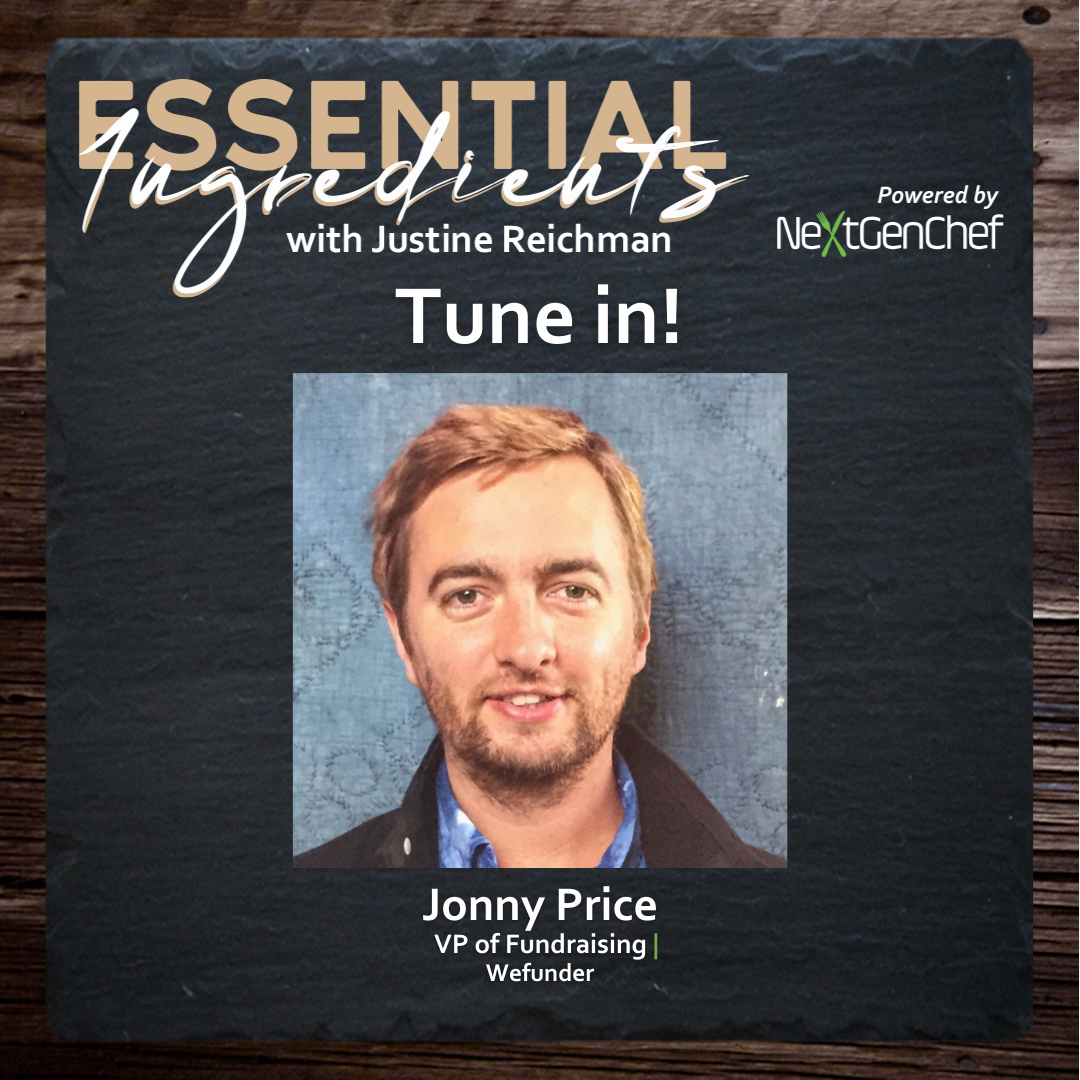
Jonny Price · NextGen Purpose
Watch on YouTube
Wefunder's Jonny Price Talks About Affordable & Accessible Investing with Jonny Price
The Incorporation Method helps you turn what matters into practical changes that fit your life.
“Jonny Price, VP of Fundraising at Wefunder, explains how everyday investors can back mission-driven startups for as little as $100 — and why a community of owners becomes your most powerful growth engine.”
Full Transcript
Full conversation between Justine Reichman and Jonny Price.
Really a pleasure to be here. Thank you for having me. I feel both honored, and also excited to talk about this passion of mine, which is full. So I think it's going to be a very nice conversation.
I am honored and excited to have you here and learn more about what you're doing. Tell them a little bit about what your incubator does and who it's for.
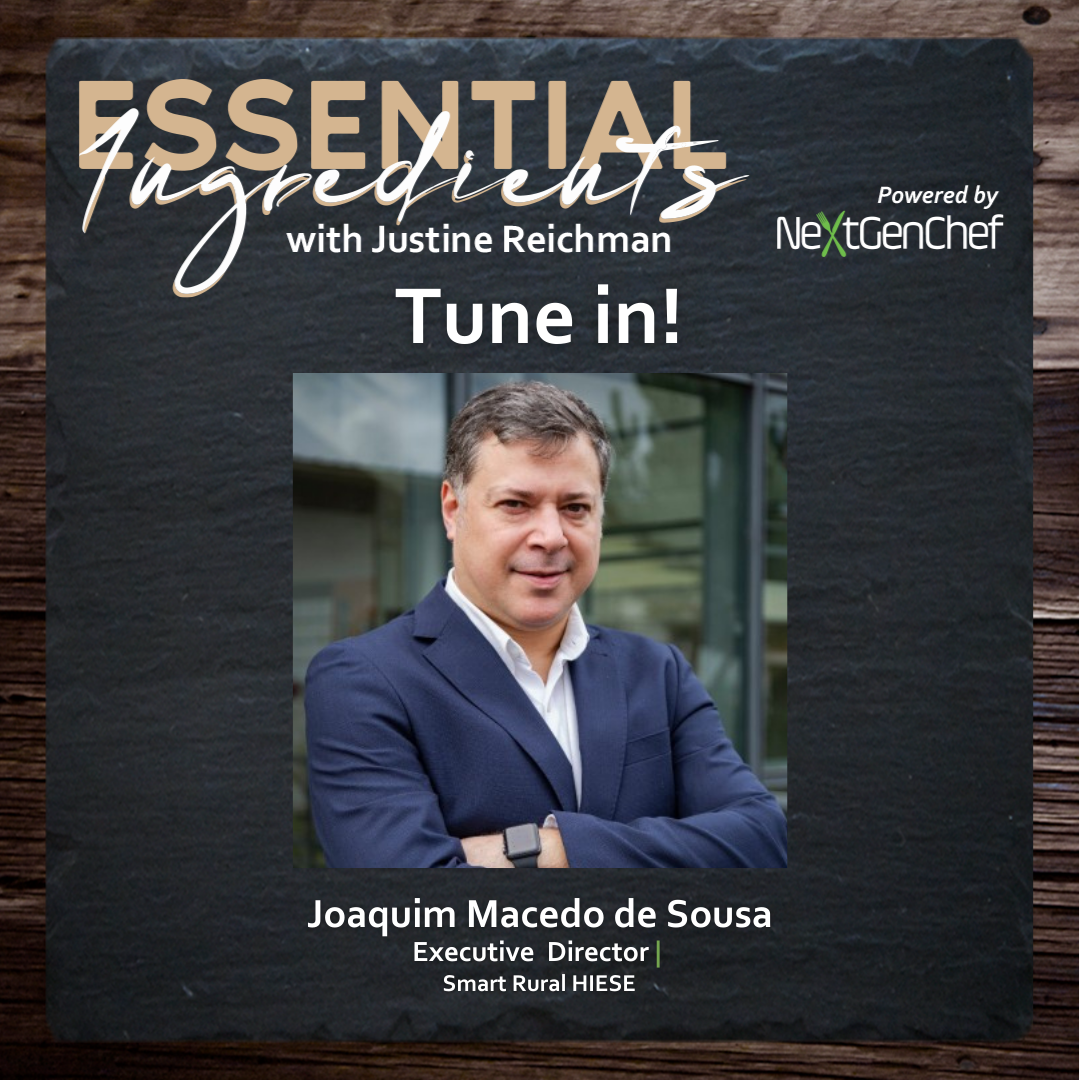
We are a rural base incubator. We are based in Central Portugal, in a rural area outside of Coimbra. It's a very small village with around 6,000 people. It's a very small village. We try to help innovators and entrepreneurs that want to make a difference in all industries that are related with the rural areas. And of course, the agri food or the food industry is one of our strategic industries. We have what we call a smart civilization on these subjects all over the world. I imagine that smart city as a concept is very well known, and we are also trying to bring also to the table the concept about Smart Rural. It's the fact that a lot of people live now in cities, but the rural areas are also or may become very important hubs for innovation, and for bringing good things to people, and to attracting intrapreneurs and people that want to live a different life.
Wow. Well, thank you for sharing that. I'd love to learn just a little bit more. What inspired you to get into this? So you started Smart Rural, you're the Executive Director, did you found this incubator?
I didn't have the pleasure of finding it. After three or four months, I joined the project. In my early career, I started as a research scientist. When I was young, I wanted to become a wildlife biologist. I watched all those interesting TV shows about wildlife in the rainforest in Africa, and I wanted to become a wildlife biologist. But when I was studying in my bachelor, I met a lot of people that bring me the idea of becoming an entrepreneur. I tried really hard to become an entrepreneur related to wildlife, but it was impossible. Another passion of mine was also food. And in Portugal with a lot of fish, in running average, the second world's consumer of fish per person, the first is Iceland, and then comes Portugal. It really made me thinking about quitting the life of a researcher and becoming a full time entrepreneur because I do believe that research in science is very important to society. But I tend to believe now that entrepreneurs can make a more short term impact. I wanted to have that impact on the life of people, and then it was like a very easy way to put things in my life. Okay, I will become an entrepreneur. And I think that fish is a good way to start. I tried several times, in fact, to be an entrepreneur, full time entrepreneur. I was not a very successful player in the game, and I got injured because I failed. I got injured, and then I became a coach. Instead of becoming a football player, I had to change to a coach to heal my injury. And then in 2017, I was invited by one of the foremost business incubators in Portugal, which is IPN, Institute Pedro Nunes based in Coimbra to run this new venture of theirs, which is kind of a spinoff of IPN. It's a rural IPN and a joint venture with the municipality of Penela. And that's when I became the Executive Director of HIESE. It's a lot of fun to work with entrepreneurs, I really feel alive and it's very inspiring because they are always very positive and they fail as I did, but they face life in a different way.
What do you like most about working with entrepreneurs?
I would say that's the way they face challenges, and they are always positive. They fall, but they get back again and start. Because being an entrepreneur is a different way to see success in business. One wants to be your first entrepreneur. And while you are an entrepreneur, you tend to take chances to face race and to do smart. Smart choices, of course. Because in my debater, we are working with tech based companies, startups and research scientists that became entrepreneurs or engineers. So it's very thrilling and fun to work with these people.
Yeah. I think entrepreneurs have a kind of their own DNA in some way. I know for myself and many of the entrepreneurs that I work with, they're wired in a way that's different. They want to build something, they want to fix something, and they will, no job is too small, no job is too big. We may not know how to do everything, but we'll figure it out, and we tap into resources when we don't know how to do it ourselves. We know how to find and surround ourselves with the people that know how to do things that we don't know how to do so we can get it all done. So it's a unique skill. And there's a certain DNA, I like to call it of being an entrepreneur.
Yeah, definitely. I agree. That's something to do with DNA. But sometimes, entrepreneurs are born during the process because some people didn't. But then that DNA yet, it's sort of what you may call epigenetics and they became during their life because they got tired of working with companies that they don't share their vision. Or in some cases, they lose their jobs and say, okay, perhaps I should try something new, starting my own job and my own company. So it may also happen. But in most of the cases, it's something that is in their own DNA.
I would definitely agree. I mean, I've seen many people get frustrated with process, and getting stuck in the process, or wanting to solve a problem, creating something from passion or a need, or their own desire for a void, or seen through a void that they've experienced. So being that, I'd love to hear about some of the founders and startups that come through your company. And maybe if you could share some of the stories, or about the founders that you have, what you're learning from them, maybe some of the innovative ideas, how they're changing the future of food?
Yes, and the food industry as a whole. Okay, because of the value chain. We have a very interesting company which is called Eco Experience. The founders used to be research scientists as I am or as I used to be in the field of chemistry, and they came up with a technology that helps transform oils from the food industry into soap. That's something that has been around for a long time. I can't remember the name of the process, the chemical process in English. I would believe that something like simplification or something like that, but they figured out that it was possible to do this process in a very easy way using an enzyme from the human liver. So because we attack an enzyme to turn the fat into decompose the fats, they are using it to turn these oils that are used in the kitchen to make soaps. And their first profit was the kit for children, because they wanted to start by educating people on these circular economy principles, which is okay. So you were something that used to be a waste. And now, we can turn these wastes into new products that you use in your little life getting used to wash your hands or to wash the dishes. And with these kits to children, they were very clever because they figured out that the best way to educate grownups is starting by the children. Because at some point, children will see their parents put the oil in the tub, don't do that. We can use the oils, it's bad for the environment. So we can use this fact to make our own soaps. And I think it's very, very clever. Actually, it's bacon that they have now for the process. They found the [inaudible], and they are quite unique. And now, they have been invested in by a huge detergent company from Portugal. They are moving very quickly as a startup, and it's been very inspiring to see where they are going. What really drew my attention about the person, which is the entrepreneur of the company says that, at some point, he needed to find some investors. He had all sorts of capital venture angels. He chose an investor that already had a factory that would allow him to speed the process and asked him to prefer to start his own factory. Instead of, perhaps in the future, but now, I must focus on marketing and selling my products. And if I set up the factory now, I will not have the energy or the time to do that, which is what entrepreneurs must sell.
Very innovative. Very, very innovative. I mean, what we love to do here is use it as a platform to share the innovations that people have created. It's inspiring, or the other founders are listening as well. I appreciate you sharing that. I don't know if you have any other stories that you want to share that are coming through the accelerator at this time, because we'd love to be able to share them for inspiration.
This one is related to the US.
Okay.
You know the Louisiana Crawfish?
Yeah.
It's a native species in the US, but not in Europe. And it was introduced in the European rivers in the 80's, and now became an alien species that is invading the oreca system, because it fits very well to our environment. So now, this is a problem because they are destroying the rice fields, the rice for producing rice, where they are burrowing for making their nests, or they are destroying or eating fishes or amphibians that live in our river ecosystems. These people came up with a very simple idea, which is, okay, we should fish the crawfish in order to prevent them from destroying our ecosystems. So this is one part of their business idea. But in order to make it available to the market, to the customers, they have to clean the guts first. So they have to put it in ponds, and water will help them clean their guts. This will make an effluent very enriched in nitrogen and organic matter to deal with this. So we will now grow microalgae that will be fed by this enriched water from cleaning the guts of the crawfish, and we will have a circle system where we clean crawfish that will sell afterwards. But also, we'll be producing microalgae, namely spirulina, which is a very protein basis, what we call a NASA product because it's also not should eat in the inner space. And they are also trying to bring this in the circle in order to have both products. And it's very interesting also how you can turn a problem into an opportunity, and from this opportunity to match it with other products.
Wow, super interesting. I love hearing all these different things that people are doing. It's one of the ways that I think people create their own ideas is by hearing all these different stories about what other people are doing. It's how I worked on my startup, it's how we all create new ideas. It's by collaborating, listening and hearing what's going on, and cross pollinating, and hearing what's going on on the other side of the world. So I appreciate you sharing some of these stories. It's really exciting. It must be exciting for you to be part of all this and watching all these founders and startups develop and see how their ideas are evolving.
Yes, definitely. As a coach, I don't able to get the opportunity to score. But it's very interesting, very fun. It really gets me excited to work every day to be with these people. And this probably will bring me to another thing that I would like to share with you, which is the importance of these people to be in an ecosystem. And a business incubator is the right place to be if you don't want to be alone.
Talk to me about the incubator that you guys have, because I think, and let's talk about before we even go into the actual incubator. We know what an incubator is, but I do know that sometimes, we have listeners that may not know what an incubator is, or some people may hear incubator and they hear accelerator, and they don't necessarily know what the difference is. So I'd love to just take a minute to ask you to explain what incubator means to you and what your incubator provides as both a service and a community.
An incubate in our case, it's both a facility and also a set of services that we render to our customers, which are startups. So they can be based in our incubator and their offices there. Of course, in some of the cases, such as the one from these people that are growing algae and the cleaning crawfish, they have only their office there, but they are producing outside. I'm not very far from our incubator. So it's a facility, which is what we can call a level one incubator or a First Stage Incubator. That's actually what most of the incubators do. But then how we really add value is in helping entrepreneurs that have great ideas, turning these innovative ideas into successful businesses.
Joaquim, can you talk to us about that? Can you share with us that process? How do you do that? Walk us through it.
We have a pipeline. And if you are an owner of an idea, field idea not a business, you go to our website, you register your idea and you apply to our incubator. And most of the cases, they haven't incorporated, they haven't started their company yet. So we say, great, don't do that yet. Before you incorporate, before you launch your company, let's do a business plan. Let's do a proper evaluation of how you can turn your idea into a company. Okay. So on average, we give them three months to work with us in business modeling, with a baby small canvas, and trying to get some insights from the market, the customer discovery journey, and to write down a proper business plan. Okay, so we are [inaudible] with a lot of money, and failing is very expensive for us that's why we want the proper business plan.
Before you go on, can you just talk to, and when people apply, how many applications are you getting? How many people are you accepting out of the applications you get?
So on average, we get 10 to 20 applications per year, which is a lot in such a small place like ours. I would say that 75% move into this incubation phase where we run the business plan with them.
And how do you choose those 20 people who's going to be accepted?
We run an evaluation. Because in their application, they should give us an idea of what will be their business proposition, it is still a very rough idea on how they fit our strategic areas of Smart Rural and their background. So it's a very easy process. That's why in most of the cases, we have a goal, and they start incubating what we call a start incubating process.
And then what is the cost of this program?
Oh, it's very cheap. They are paying 25 euros per month.
It's very affordable, and it's only for people that can physically be there. So it's just for people that are in your area?
At this point, we have entrepreneurs that are based in Madrid and they want to move to Portugal. But before they move in, they launched our company, it's going to be a tiny company--
What company?
Tahini from--
Tahini? Okay.
They are from Syria and Lebanon. They've been in Europe for the last five years, I believe, and they want to set up a factory in Portugal. So they're still based in Madrid, we are running virtually the same condition with them, they are doing the business plan, we are helping them. Most of their entrepreneurs don't have the skills in management, they don't know what balances are, or to run the proper financial analysis and the business indicators so we help them with all that. Also with our network, which is very important. We are not only a facility, we have a very strong network in Portugal and in the world through IPN, through a Smart Rural.
So theoretically, could you have other people that would take advantage or have an impact of participating in this incubator remotely?
I imagined that that would be asked to be assessed on a case by case, but it really depends on what's their vision is. Because if they want to have an impact in our territory, okay, because we want to attract people to the rural areas.
The rural areas of Portugal, specifically.
Yeah.
Okay, that makes sense.
Once they have everything ready, and that in average takes three months, then we assess the business plan and three things may happen. That's why not all of them move forward because they are very eager to start, but then they lose their stamina. At the same point, okay, I am going to become an entrepreneur. I thought I wanted to, but it takes a lot of effort, and I'm not very familiar and comfortable working with numbers or doing business. So another case, it's sort of fun because it's like a marriage, people have to know beforehand. In some of the cases, they want to become partners, but they don't know each other. So what happens when they start doing their business plan and sharing their visions and their expectations? At some point, some of them split and they say, okay, we are good friends. Or at some point, we quit being friends, but we should not become partners. And in other cases, everything goes according to the plan. But okay, the market doesn't seem very interested in your product or your price and you have to pivot, and then you move forward, and you will eventually become one of these success stories that I share with you.
So it's a great place to connect and collaborate, and really utilize the resources you have and build up the rural community in Portugal.
Yes, definitely.
Wow. Joaquim, it's like a great community, and I'm so glad that you've been able to share some of the resources that you have. And I think that it's such an amazing way for these people to be able to build up the community and access resources in a time when it's really hard to access those resources. And many times, people and founders get stopped in their tracks when they're not able or feel like they don't have the tools or the skill set to move forward, and this is such a great resource. So it's inspiring to see this, especially in a community that really needs those tools, and the products that they're bringing to that community and the businesses. So however we can support you, please let us know. So thank you for sharing this. So overall, you have a lot of businesses that are coming through, you're supporting a lot of founders, and you're in the food space. I know that you're passionate about it, I'd love to just hear in particular, is there one thing that you're specifically passionate about changing with regards to changing the future of food?
Yes. We want to see if all the supply chain of food. Specifically, if you look at the businesses that are not close to the end customers, I would say that you should really try to evolve into really innovative ideas. Most of the people that are now in the food industry, as farmers or chefs, more technicians, you should turn him into a successful entrepreneur. I really believe that we'll make a change because at least in our country, in Portugal, farmers are very important of course, but you should try to turn their mindsets into business people. And that means what Joseph Schumpeter tries to ask people that are at the wheel and the skill to turn innovation into successful business. That's what entrepreneurs are. And I will say that that's definitely what will change the landscape of the food industry. It will bring it more innovation and be more sustainable, which is also very, very important.
Yeah. I think we want to change the landscape of it, we want to make it more sustainable, more regenerative and just change it in general, and make it more accessible to all through education, through collaboration, and just make it a better food system. So Joaquim, thank you so much for joining me today. I'm so pleased to be able to have this conversation with you, and be able to share this information with the community.
Justine, it's my pleasure and my honor. I hope to see you soon, perhaps even in Portugal.
Yeah, I would love that. I would love that. I hope you'll keep me up to date on what's going on in your community and continue to share these stories with us so that we can share them with our community and share resources because we've got a ton as well in our resources, the NextGenChef resources can support your community. We'd love to be able to cross pollinate and share them with HIESE. So thanks again for joining me, and I want to thank our listeners and viewers for tuning in today. We're here Every Tuesday, so I hope you'll join us again next week, and we will talk to you again soon.
Share This Episode
Enjoyed this conversation? Share it and tag @nextgenpurpose
Listen on Apple ▶Listen on Spotify ▶Your Host
Justine Reichman
Founder & CEO of NextGen Purpose. Host and Executive Producer of Essential Ingredients — 11 seasons, 330+ episodes, and a growing movement.
About Justine →