Alex Bayer · NextGen Purpose
Watch on YouTube
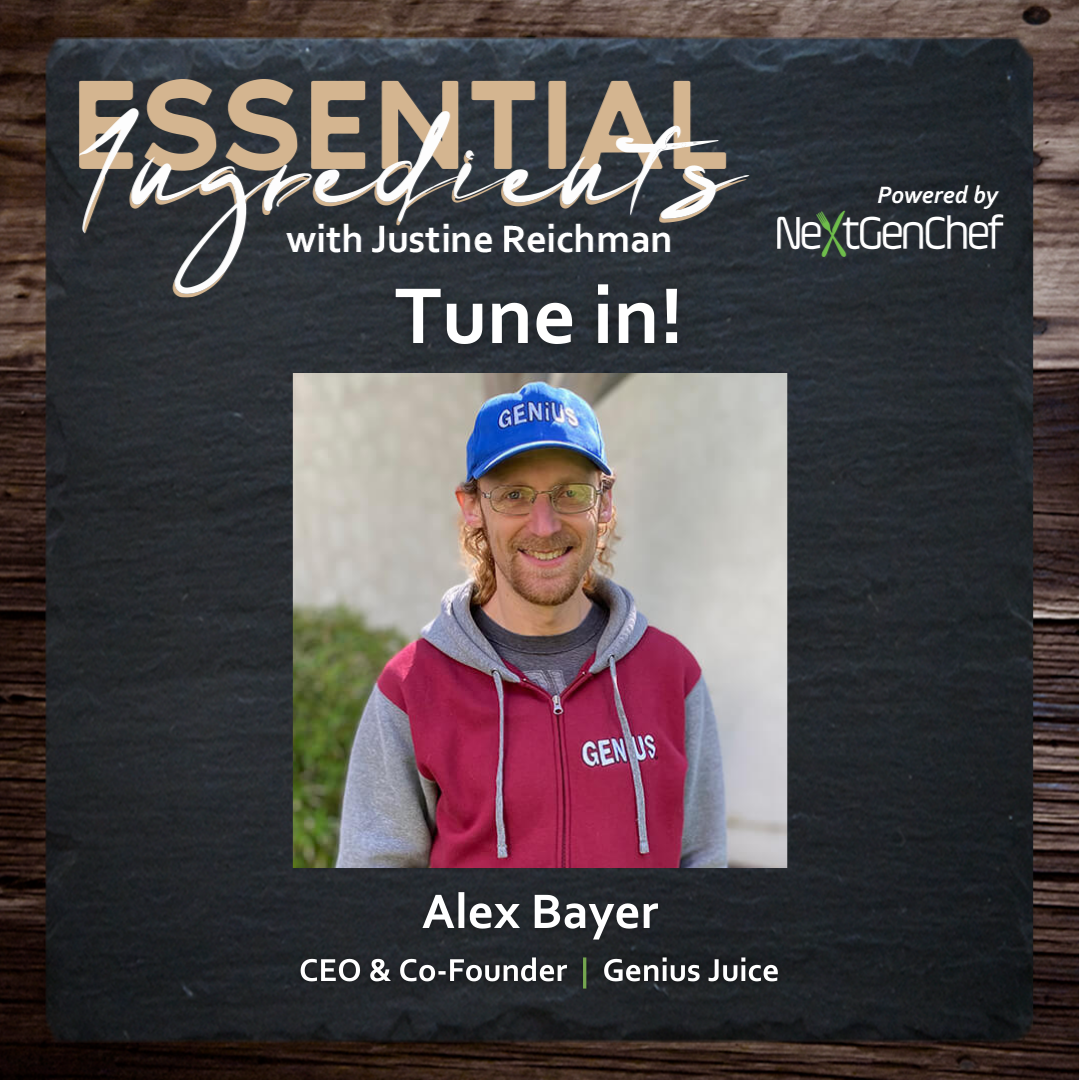
What Does "Natural" Really Mean? with Alex Bayer
The Incorporation Method helps you turn what matters into practical changes that fit your life.
“The recent surge of big-name food companies touting their products as "natural" has consumers everywhere asking, what exactly is natural food? The Food and Drug Administration does not set stringent guidelines for the use of the term "natural", leaving it up to individual companies to decide what makes a product natural. This results in manufacturers adding chemicals onto the list of ingredients so long as they are categorized as "natural."”
Full Transcript
Full conversation between Justine Reichman and Alex Bayer.
Thanks, Justine.
I'm so excited to hear what you have going on. I feel like the last time I saw you, you guys were sort of the beginning stages of Hooray, and we're just learning about your product, tasting it and doing samplings. And now, you've grown so much. So for those of the folks out there watching this podcast, this videocast, or listening to it, I'd love for you just to introduce yourself and tell people what Hooray Foods is.
Yeah, I'm happy to. So my name is Sri Artham, I'm the Founder of Hooray. I started the company almost three years ago. And in my kitchen, literally. Because I wanted to come up with a way to displace pigs from the food system. There's something like 75 million pigs on US farms and way more around the world. So I thought, well, these other companies, like Impossible and Beyond are coming up with these burgers that are going to take cows out of the food system. And Daring and Gardein are working on chickens, but not as many companies seem to be working on pigs. So I naively set out to create bacon with the hope of displacing pigs from our food system.
What a great idea to everybody. I think that that's a really innovative idea. So tell us how you came up with this idea, and how did people respond to this?
Really good. I mean, I think San Francisco is a really cool place to start a company because everyone is willing to try things. So shortly after I came up with the formulation and had a few friends try it, I started reaching out to restaurants. And within a week, two or three restaurants said, yeah, we'd love to carry this. One of them is one that your listeners might know, the Plant Cafe here in San Francisco picked it up immediately. And in fact, even let us make bacon in their kitchen to start, well, until I got my manufacturing facility set up and started selling creatively. So they had sold, they had two BLTs. One was our plant based BLT, and one with an old BLT with pig BLT. And ours are started selling out selling the pig one, so it was just a really great start
Which ones sold.
Yeah, thankfully, the plant based one.
What's the inspiration for you too, I know that you are interested in pigs and you wanted to see, but why pigs? Why was this so interesting to you?
A few reasons. I mean, pigs are the second biggest contributor to greenhouse gas emissions after cows. And I think it's the most consumed meat in the world, by the way, like a lot of that in Asia. But we in North America also eat a lot of pork, they're also really cute and adorable. Pigs are as smart and as sociable as a dog, or as an animal like pets that we have. I have a little dog, I could not imagine eating him. So there's so many reasons that we shouldn't be eating pigs.
They are super smart. They're super, super. I actually was walking down, I'm originally from New York, I was walking down an avenue one day and I saw a little black pig walking down. Somebody had a leash on the pig, so cute. People have the Miss pet, but I'm with you. There's also a lot of people that just don't eat pork for whether it's this reasons or other, there's a large, I don't know what portion of the population doesn't eat pork, but whether for health or religious reasons, I imagine that's it's quite considerable. And even now when you take into account the people that have decided not to eat meat and you couple it with the religious, and that I'm sure that that is even more exponentially larger. I don't know if you know what that number is.
I agree. I don't know what the number is, but I would imagine that at least around the world, there's got to be at least a billion people who don't eat pork. And so we do want to get Kosher Certification for example at some point and just see if that helps people who couldn't or wouldn't eat pork before, they can now eat bacon.
I think that's a great way to go because there's a huge, the Jewish population, all those people, why would they want to eat pork? This Chilean, they make this Chilean, the religious Jews or Chileans are a lot of them. I don't want to sound like beans and all this different kind of stuff, but I could imagine putting that in there. Because I could imagine that you put the beans and the hotdogs in there, or the sausage, or whatever they put in there. I forget it, but I can imagine putting that in there.
I don't know how to make that, that sounds really delicious.
But this sounds like something you'd want to put in there.
I'll just say it really quick. One of our first restaurants was [inaudible] a place called WesBurger in the mission here in San Francisco. They have amazing burgers and fried chicken, that sort of thing, and they would stay late at night, like after the bars closed at 2:00 AM. Vegans would come by, ordering a plant based burger. And then just as they're about to pay, ah, put some bacon on it, and then put animal bacon on it. And so the people at WesBurger started calling in Portland style. So there's a lot of people who don't want to eat bacon, but who end up eating bacon.
I think so. I think there's quite a market that you're cornering here, and that people like bacon. I've tried your plant based vegan, and it's really good. It's really, really good. So I think that you're opening up a whole new thing, and people want to be able to add something new and different to their sandwiches to their breakfast. I mean, it just gives it a whole nother flavor,especially if you're eating eggs, if you're eating vegetables, it just adds another texture to it, adds another flavor to it. That a lot of times, when you're plant based, so obviously, you probably wouldn't eat eggs, then maybe, but it adds another texture. And when you're eating plant based, you want to be able to add more textures to your food, or anytime you want to add more textures, frankly.
Totally. Yeah. Bacon's like that magical food. It's got like smoky to mommy. It's salty. It's a little sweet. It's crunchy. It's chewy. It's just everything.
So now, I hear you talk about a lot of San Francisco restaurants and places that your bacon is at, have you expanded beyond San Francisco?
Not in restaurants, in grocery stores. So with the pandemic, we kind of reduce our effort on restaurants and really focus on grocery stores. But we're nationwide in Whole Foods. We're also an Imperfect Foods, the grocery delivery company that helps blemish, and otherwise, like produce that would go to waste to be served to people. And this week, starting this week, we're in Canada nationwide in the grocery store called Sobeys.
Wow, that's great. That's a big deal. International.
Yes, exactly. We're an international company.
You've got international. Am I the first one to have that conversation with you about that?
Possibly. Yeah, the public way? I think so.
In a public way. So I'm the first one to really have this conversation and share it. Wow. I'm excited.
And I'm Canadian, so I'm really excited about that.
That's a big deal. Okay. So now, you've been doing this for three years. When you first started out, it was pre pandemic, but you've grown a lot in the last three years now. Has COVID had a really big role in that, do you think?
Yeah. Not necessarily a good role. I mean, it's made R&D really hard, or at least in the early days when our food science team was scattered all over the place. We had plans to go into restaurants. There were many restaurants, we're planning to carry our bacon, that all sort of got scuttled by the pandemic. I think the one good thing about the pandemic, or having started this company in the pandemic is, say that we had a team before the pandemic, a lot of people left the Bay Area, we would have been a very virtual team. But most of my team which was like 14 people now have been hired during the pandemic. So everyone is here, all but one person is here in the Bay Area. So it's really nice that we have a very geographically cohesive team.
That is nice. But you've grown a lot. But it changed. So you originally, how did it look before the pandemic? What were your plans for Hooray?
Restaurants, restaurants, restaurants. Because like Impossible Burger had done a great job starting in restaurants. And it's a great way to build your brand. Get people to try a product before they really commit to a whole pack of bacon. And so that all kind of went on pause for quite a while.
So when was it that you decided you had to pivot or change?
I think within weeks. I remember a conference call of our small team then which was maybe four people, and then we were just like, what do we do? All our plans are just destroyed. Thankfully, like the month prior Whole Foods that convinced us to create a retail product for them, they were in town for fancy foods. And after that meeting, they loved their bacon and wanted to sell 300 stores across the country. And so we said: "Okay, we're just going to ignore all the restaurant stuff. And instead, just focus on for the next six months designing, packaging and building the production line, getting all our sourcing done." So that was our focus.
So as a small company of four people, and Whole Foods comes to you and says, Okay, we want you to do this. Did you have any fears or concerns about being able to deliver on that?
Through naivety? No, it didn't. We already talked to a manufacturer and they said: "Yeah, we could do this. It's going to cost nothing, no capital, we can do it." And as we started to go into it, yeah, of course, it turned out that it was going to be super hard, it took a ton of money. And we made the first shipment by the skin of our teeth, like we produce it just in time to ship it to you, if not Whole Foods.
So if you're gonna do it again, would you do it the exact same way? Or how would you do it differently than the next time?
I think in the startup world, you have to take risks like that. And sometimes, they're not going to pay off. And that might be the end of your company, but I don't know. We were talking about earlier, you have to grow or you don't survive. And sometimes, you just have to bet on your success and hope you're gonna make it. And that was a really big bet we made on ourselves. It should have paid off. Yeah, it definitely paid off. I saw the buyer, the Whole Foods buyer at Expo, he said in Philadelphia a few months ago. It was like, do you know how little we had and how much would that you took on us? And he was like, yeah, I knew you had nothing.
Did you ask him why you took the bet on you?
I should have asked him that.
I would ask him. I'm curious. Like why he bet on you as a person, though. Because I think a lot of times, when it's an investor or a buyer, they bet on the founders, they bet on the people that--
I think so too. Between the product and the team, and get mad a couple of us at the time, and he just thought we could. And I guess worst case, we didn't do it, and he wouldn't buy our product. So maybe there wasn't too much for him to lose.
If the products got to taste good, and they got to believe in the founders and the people because they're invested in the product, and the taste.
Yes. Especially in the early days.
Yeah, I agree. Yeah. So where you are today? What's your hope for the next couple years? Are you bringing on any more skews? How are you looking to expand?
So we're starting to think about restaurants? Again, I can't say anything just yet. But in a couple weeks, we'll be in a pretty well known restaurant on a pilot scale.
Did you say you're gonna be in a restaurant?
Yes, we're gonna be a subset of restaurants and a chain that's pretty well known. So we're excited about that. But we can't say just yet, unfortunately.
So I hear that you're going to be releasing this in a chain, like chain, are you going to be releasing your Hooray Foods and your bacon, your plant based bacon?
I'm really excited with that, and this is the first time we're sharing this publicly is we're gonna be in a set of public record stores. Like the most sort of--
The hamburger shops.
Yeah, exactly.
Oh, my god, that's amazing. That's a big deal.
Yeah, it's a really big deal. And I couldn't think of a more kind of mainstream accessible chain to be in.
That's amazing. It really talks to the whole conversation where people are talking about making plant based meats, or these kinds of meats that are plant based, more mainstream and more accessible. And this just sort of hawks to it in a really big way.
Exactly, yeah.
And that's less plant based. Amazing. Congratulations. I used to go there as a kid. I don't know -- on the West Coast, though. We don't have any [inaudible].
There's one in Concord, and one in Dublin. I think there's a few in the Bay Area, but I don't feel any different.
When it launches, are you going to go there and have a little Hooray party and say, Hooray.
We're just starting. No, we really should. I think starting with a subset of stores in Texas, so won't be in the Bay Area once it unfortunately starts.
Why don't you do something virtually and we can remote in and do like a little live like podcast interview with people, talk to them and have somebody in there?
That'd be really cool.
There's a Hooray moment going on. There are a little Hooray.
I agree.
So well, that's a big deal. You'll have to give us the date so we can carve out the time on our calendar, so we make sure to schedule this at the right time.
Perfect. I'll definitely let you know.
Okay, so that's a big deal. But that being said, are you planning to expand your skews?
Eventually, yes. We want to still get our bacon, I really want to focus on our bacon. Like for example, Impossible and Beyond, I think they really focus on burgers before they extend their products. That same with just like they've really learned that focus on eggs is important before going too broad. So same with us. We want to get our bacon to be better and better before we go broader. So we've been working on R&D for the past year or so, an updated formulation that hopefully we'll release this year.
That's exciting. That's exciting. So yeah, I'm curious, this is exciting. Were you an entrepreneur before you launched Hooray?
Not successfully.
Interesting. Were curious, you say not successfully, how do you define success?
Wow. I mean, first places like in my heart did it feel successful. And then I guess maybe the second is like were the investors, did they make money? Or was the product of commercial success? I don't know. There's a few ways to define success. But most importantly, did I feel successful? I didn't feel successful.
You didn't feel successful. Okay, fair enough. Because I think of success, people define success in so many ways, and so often it is defined by the bottom line. And I don't think it's only defined by the bottom line. I think it's defined by having an impact and how you feel about what you're doing, and having an impact in the world and marrying all those things together, and having a good time.
Yes, that's definitely a big part of it.
Yeah, we spend so much time doing what we do every single day. Well, it sounds like you've been an entrepreneur before, so this is not your first time. It's not your first time with the rodeo. So I'm curious, what have you learned from being an entrepreneur that you might recommend to other entrepreneurs? Lessons learned.
Hmm. I mean, I think a big part of Hooray success is just choosing the right product at the right time. And that was very purposeful for me. I knew plant based was taking off, an immense way to make a great impact on the world, and that there wasn't already a great plant based bacon on the market. So I think as much as oftentimes we want to start with a product that we love, or that we know, I think it's just sort of, think about where's the market at and like getting to design a product for where the markets are at.
Yeah, I think that's really important. I think timing is the key and paying attention to what's going on around you, and understand--
Exactly.
Yeah. So as you progress and you continue to look at the mark, and I'm sure we'll see new things from Hooray. So if our guests--
I hope so.
I'm sure we will. I can't wait to see what other things come through and try new things as they do. And if our guests, or anybody watching the video cast, or listen to the podcast, they wanted to get in touch with you, whether that they wanted to learn more about it, or maybe do a partnership with you, or who knows, maybe wants to invest, I don't know, for money, who knows.
We're always looking for money.
We're always looking for money. How would they get in touch with you? What's the best way?
The best way would be to email me, and it's Sri@hoorayfoods.com.
Wonderful. Well, Sri, thank you so much for joining me. I want to thank our guests for watching the video cast and listening to the podcast. We're here every week, and I really look forward to be here again next week. So thank you so much Sri.
Share This Episode
Enjoyed this conversation? Share it and tag @nextgenpurpose
Listen on Apple ▶Listen on Spotify ▶Your Host
Justine Reichman
Founder & CEO of NextGen Purpose. Host and Executive Producer of Essential Ingredients — 11 seasons, 330+ episodes, and a growing movement.
About Justine →