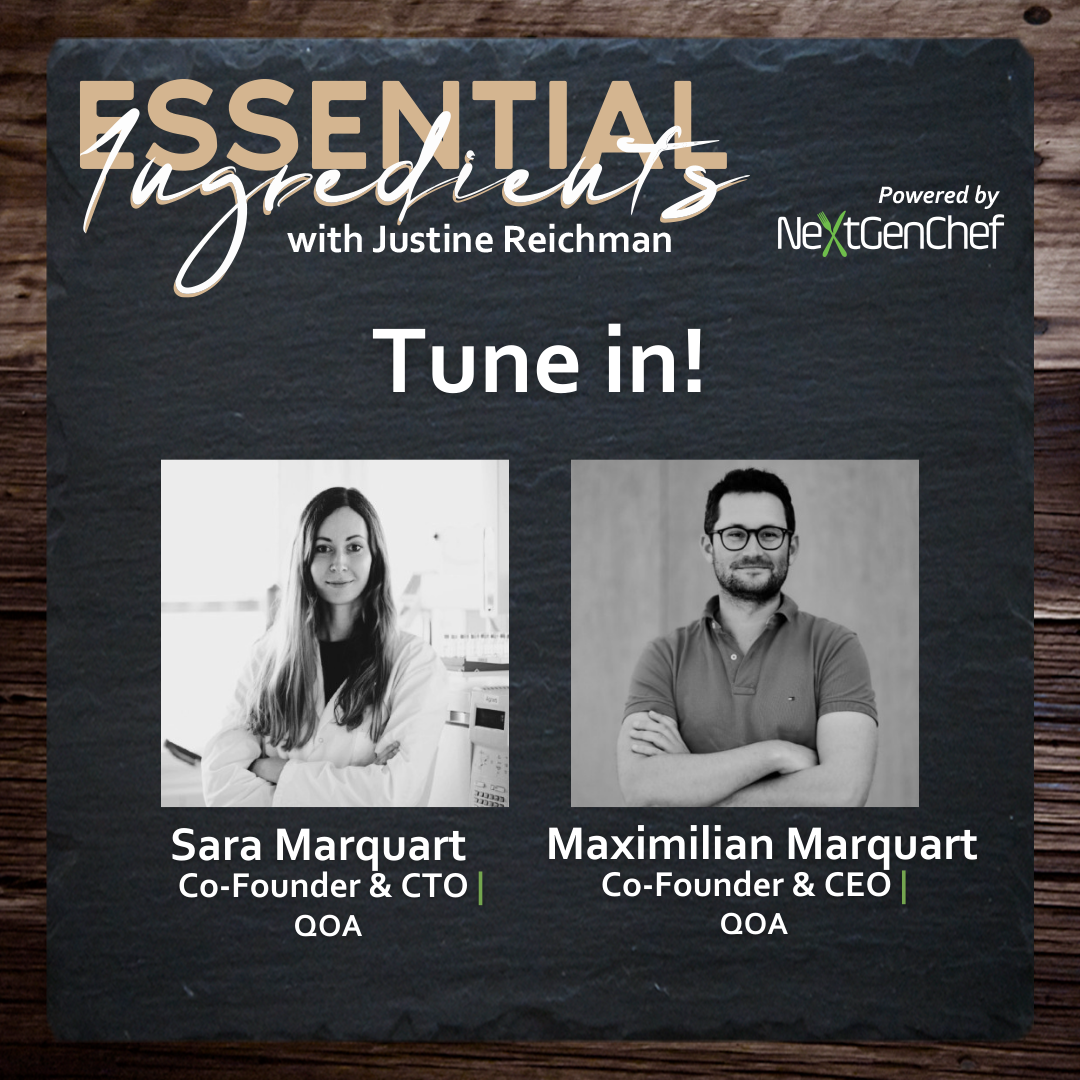
Max and Sara Marquart · NextGen Purpose
The Incorporation Method helps you turn what matters into practical changes that fit your life.
“Milk chocolate, dark chocolate, white chocolate, ruby chocolate, bittersweet chocolate, sweet chocolate, unsweetened chocolate — How much do we love chocolates!”
Full Transcript
Full conversation between Justine Reichman and Max and Sara Marquart.
Thank you, Justine. It's my pleasure to be here.
It's my pleasure to have you here. I'm really excited to learn more about you and True Honey, and learn about your story. What inspired you to launch True Honey, both for myself and for our listeners here. So tell me what inspired the original story behind True Honey?
Yeah. That'd be my pleasure. I guess I come from, recently, anyway, a background is a commercial helicopter pilot. I had my own helicopter business. We were a service providing business for the agricultural sector. It was really during that time, I was spending a lot of time flying up and down the length and breadth of Sydney, the North Island in New Zealand. And as much as I guess, it has embarked on a career that I dreamt off and was really enjoying. I guess there was one part of it that just didn't really resonate very well with me, and that was the fact that we were, I guess, as part of our agricultural helicopter operation, you're supplying different synthetic fertilizers and pesticides over the land, and I just didn't really enjoy that. I didn't really think it was the future of food production, and that was really what triggered, I guess, my interest in the manuka honey industry. So this is back around eight years ago. Flying up and down the country, feeling a little bit despondent around some of the methodologies being used in industrialized mutual farming operations that identified some really expensive, significant stains of the manuka tree growing in some of the most remote pristine country corners of New Zealand. And I guess that's where the idea of, I guess, producing ultra high grade manuka honey from some of the beautiful pristine country, parts of our country was born really, and all started from there.
Jim, before we go into this in depth, for those listeners and viewers that are watching that are not familiar with manuka honey, why is manuka honey so special to you?
Yeah. I guess to me, what I love about manuka honey is, firstly, that it's sort of viewed as a precious gift from nature. Maybe from a slightly technical standpoint, what really differentiates manuka honey from virtually all other honeybees in the world is the fact that it has properties that are termed nonprofit side, antibacterial properties. As most of us know, virtually all honeys contain some form or level of antibacterial, antimicrobial properties. But based on some research that was undertaken quite a few years back by a gentleman called Dr. Peter Molan, there was actually trialing the effectiveness of honeys for treating antibiotic resistant infections, lots of staphylococcus and others. What they found was manuka honey was performing working far more effectively on healing these really resistant wounds than the other honeys. They started to look a bit deeper, understand why, or what compounds manuka honey had that other honeys didn't that was causing this phenomenon. What they found was manuka honey contains up to 100 times higher levels of a compound called methylglyoxal or MGO, the abbreviation, than other honeys. So that's really what makes manuka honey very different to the majority of other honeys in the world, really. It makes it very special. For me, like I said at the beginning, I guess the part that in my mind, a precious gift from nature that has proven some believed or perceived in a number of different beneficial properties for general health and well being. And it's got such a long history. It's been around for such a long time, and that's what makes it pretty dear to my heart.
Is there anything personal aside from the precious gifts and the fact that it can be antibacterial? Is there anything personal about it that resonates most with you? Is there something, a personal reason why you have this special affinity for manuka honey?
Yeah. Probably the teams from my time working in the agricultural sector, they've been quite a lot of time learning, understanding of this correlation of nutrition as well being to have a product that's direct raw, straight out of nature. Like I said, it has those properties. I just have a natural draw or affinity towards it. And I guess it's just me, I love, I think, and the world that we live in today, and probably even more so into the future that a lot of the natural products, plants, and former products from nature can actually have a much greater part. Like you say, our health and well being into the future. As a human race, I don't think we've been fully using it to its full potential, and probably been too focused on the pharmaceutical drugs to resolve issues.
Do you look at manuka honey as kind of a medicinal kind of thing?
Yeah. I do need to point out that. I guess it's a true honey. We're selling manuka honey as a food product. But most certainly, these very strongly held beliefs increase supporting evidence around the medicinal properties of manuka honey.
That's great. I think I believe I need to be very medicinal. For me personally, whenever I'm sick, it's a go to for me for manuka honey with lemon and hot water, and a little bit of garlic. We all have our own home remedies, and that's mine. Little oregano oil.
Every morning, I have a nice bit of lemon juice with manuka honey and water. So that's my daily health tonic diet.
So when you build True Honey, you created this company was your goal to create a medicinal kind of food, if you will, or to create a healthy product that would be out there to change the future of food in some way, to offer a new kind of healthy food? Or what was your goal when you build True Honey?
Yeah. I guess it's probably a couple of paths back into the industry. Probably the best way to explain is to give a good example with that time. So at that time, the UK was actually the largest market for honey in the world. The demand was so strong at the time, on the back of Dr. Peter Molan's research, but there was a real lack of, I guess, regulation around what defines manuka honey and a number of other things that had actually been quite a bit of damage done to the manuka honey industry.
Before you go on, Jim, could you first talk a little bit about Peter Molan's research for those listeners that are not familiar with it? And then second, could you talk a little bit about the bad press that manuka honey was getting. Just so that people understand what you're talking about so that we're bringing everyone up to speed, so we're all on the same page as everyone's listening.
Yeah. As I touched on this a little bit earlier, Dr. Peter Molan was conducting some research around the effectiveness of honeys for treating antibiotic resistant wounds. And they found that the manuka honey was working considerably more effectively than all other honey for treating these really resistant wounds, and they were having some great results. So that's where they looked deeper to understand what the compounds were in the manuka honey that were causing or providing it with these additional benefits, then it was found that it was 100 times higher levels of mental block. So on the back of that demand, well, research findings and corresponding demand, there was a raft of manuka honeys going onto the global stage. But with a real lack of regulation, there was a lot of mistrust coming out of there because of maybe some dodgy behavior from different parties. And when we went through honey, into the industry, obviously, we really wanted to address a number of things actually. So I'll start from the beginning. From a production standpoint, we started off as a production business just making high to ultra high grade honey, and we have our own beehives and beekeepers, honey facility for extracting, storing and picking honey. But on the production front where she went around and we spoke to a number of the different landowners of manuka resources, and wanted to understand from them what they really wanted in a honey company. What they were really looking for was the been the huge lack of transparency and visibility through the whole production chain. So we really wanted to address that, and we develop them our own proprietary software program that we call Trueview to provide all of our landowner partners that own the resource that we're partnering with to produce them in their county with access to the software platform so they can see clearly all steps in the production chain that provide complete visibility and transparency around the production process. I thought at the time, if we want to be a player in them and make your honey industry long term and really make a difference, it was vital that we look to create and develop our own brand, True Honey, or the True Honey brand. Because otherwise, I felt that will become reliant on our competitors to essentially feed us in all of these really pristine blocks we've managed to acquire. We would potentially, eventually lose because our competitors be able to out compete us when bidding for these blocks. So that was one of the key reasons that drove us to want to develop the brand. But as we started to look into it, and this is moving back to the question, UK being the largest market at the time from making honey, it's been actually a lot of damage done in that market. And there was a lot of mistrust. So there was quite a bit of media going around, twice the amount of making honey being sold was being produced in different things like that. So we really wanted to play our part, and reinstalling some confidence, I guess, in the market.
How were you reinstalling competence. What did you do to reinstall the competence?
Well, the first thing we did was conducted a number of different online surveys and workshops with those customers to understand what they were really looking for in honey brand. They told us three key things, or the first three key things that come to mind was they wanted to be able to pitch us the honey in a glass jar. Because previously, everybody had been packaged again. They wanted to be able to buy direct from, I guess, the producer, direct from us. And we get to fully still to this day a fully integrated value chain. So we could put our hand on our heart around the authenticity of the product from I guess to the plate, or to the jar. And then they also told us that they wanted to see very, we're practically possible use of various sustainable packaging materials to ensure that minimizing our negative footprint on the environment and using sustainable packaging if possible. So that was really the brief or the foundation for the brand in resulting products packaging that we created.
Did you say that those are the big differentiators now for you versus the other companies?
We're probably a few years old now. So just a number of other brands have maybe looked to change that glass jars based on consumer demand and other things as well. Probably, I guess, as far as differentiated to brands out there, probably one of the key things or a couple of key points for True Honey, I guess, because we're really focused in specializing and producing what I would call high ultra, high grade, or some of the purest manuka honey in the world. So we, from my background in the aviation or helicopter industry have essentially targeted areas that are far from anywhere inaccessible by land or vehicles. So the only way we can access them is flying the hives into these really remote corners that we've produced, I guess, the highest that we're aware of, or the purest and highest rated manuka honey ever in the world.
It makes it the curious because people have lack of access to it, so there's lack of--
No. I guess part of the purity is being far away from any form of emissions. And secondly, due to our approach, we have the ability to place our beehives right in the center of the concentration of the manuka resource. So really, that's the only nectar source that they'll have for that period, or predominantly they only need the source which means that the percentage of manuka nectar and honey is at its absolute highest. We're I guess, maybe if you're driving some hives on the right side and you have a number of other different floral species present might be part of something else, where we really target the 100% pure manuka.
Wonderful. Okay, so here, you're already providing the purest manuka honey there is. What's next?
I guess we're still probably in the early to mid stages of the brand development, and I guess probably more specifically market development. So I guess we've managed to acquire and build a very strong stronghold, probably the GCC region or Middle East, and we're just looking to expand on that. So we do have plans in the short, medium term too, we want to launch them to at least parts of the US market, China and also Japan. So I guess there are three markets that we're very focused on over the next 12 months or so to identify partners with the right distribution, partners in luck to be able to offer our products available in those markets as well. So that's a pretty big project. And what we want to do, what we're planning to do, obviously, in parallel with that, and this is probably a little bit on the back of the whole COVID situation that we've all been experiencing around the world is we've sort of developed our business. I guess we're really starting to appreciate just how unique and special some of these beautiful locations were being able to work in to produce some of this honey. And we really want to be able to share that story, I guess, with our honey lovers around the globe. So I guess we're in the early stages of developing the technology to enable it, like some of these times are very difficult to travel to bring you as close as possible to what we're doing. And we were producing it essentially, moving forward beyond that, I guess we're pretty focused on those key things. Don't want to get too distracted in the short term, but longer term if we can successfully continue to grow our premium luxury manuka honey brand. We do have quite a strong interest in maybe adding in some feature product lines, like maybe a skincare, high end skincare range, but we'll focus on the honey in the first instance, Justine.
I was gonna say, are there any other products you're going to create in the food space around, no food, anything that also includes manuka honey. So manuka honey can be used in many formats. Are there gonna be any collaborations coming up?
Possibly, yep. Need to watch the space a little bit. We currently just have a range of different grades of manuka honey. Recently, we launched some manuka honey lozenges, which we might be some variants of that. And we've also been collecting stockpiling, like some good reserves or a super high end New Zealand Propolis as well. We've got some other ingredients derived from our beekeeping operations that we were quite eager to look to develop further into products as we move forward into the future.
And so right now, where is it available?
We currently sell them to Saudi Arabia, Oman, Kuwait, Qatar. So we got a distributor in parts of Europe. So selling into Germany, Austria, Netherlands. We're currently filling small amounts into Japan, Singapore, and obviously, New Zealand.
I know you gave me a long list of places you want to go, but what's next? Like, what's the top on the next of your list?
I guess we are right in the midst of it. Like developing these new markets so that's pretty big for us. Obviously, both the US and China markets are very significant. We just want to ensure that we take the time to identify the right partners in those markets that we can work with really. I guess we're really excited and pretty focused on it. We have also just started the beginning of our new season. So we're just in the process of producing another whole crop of honey and placing our hives out onto the manuka box.
So if we had listeners that were listening to you that were either a distributor or somebody that wanted to partner with you, how would they get a hold of you?
They can email me at Jim@truehoney.co.nz, J-I-M@T-R-U-E-H-O-N-E-Y.C-O.N-Z. Yeah, [inaudible] your interest, and we can have a chat.
And what would be the ideal partner for you? Jim Mcmillan:Well, products are probably at the more premium end of the spectrum. So I guess we really wanted to be able to give manuka honey for what it was, and we wanted to be able to package it accordingly. So probably at the premium and without reharvest, which is straight honey ever made. But that's probably even more at the luxury end of the spectrum. So I guess, firstly, good aligned values. And obviously from a practical perspective, it would be important that they would have the right demographic of customers that would be attracted to our products.
Wonderful. Thank you, Jim, for joining us. I really appreciate it. I'd love learning about what you're doing, and how you're really building an innovative better for your food business. So I want to thank our guests for joining us as well. Don't forget to follow you. How do you follow True Honey?
We have Facebook and Instagram page. Search True Honey and you should find us. Also visit our website which is www.truehoney.co.nz, and that'll have all of our social links on there as well. So yeah, I certainly encourage anybody that's interested to follow us on either of those channels. We also have a YouTube channel as well. So we've got some quite exciting little video clips on it.
Okay, thank you, Jim, for joining us. I want to thank our guests for watching and listening. You can follow us every week and watch our videos, and download the podcast at Essential Ingredients with Justine. Thanks so much for joining us. Thank you, Jim. Such a pleasure.
Thank you.
Share This Episode
Enjoyed this conversation? Share it and tag @nextgenpurpose
Listen on Apple ▶Listen on Spotify ▶Your Host
Justine Reichman
Founder & CEO of NextGen Purpose. Host and Executive Producer of Essential Ingredients — 11 seasons, 330+ episodes, and a growing movement.
About Justine →