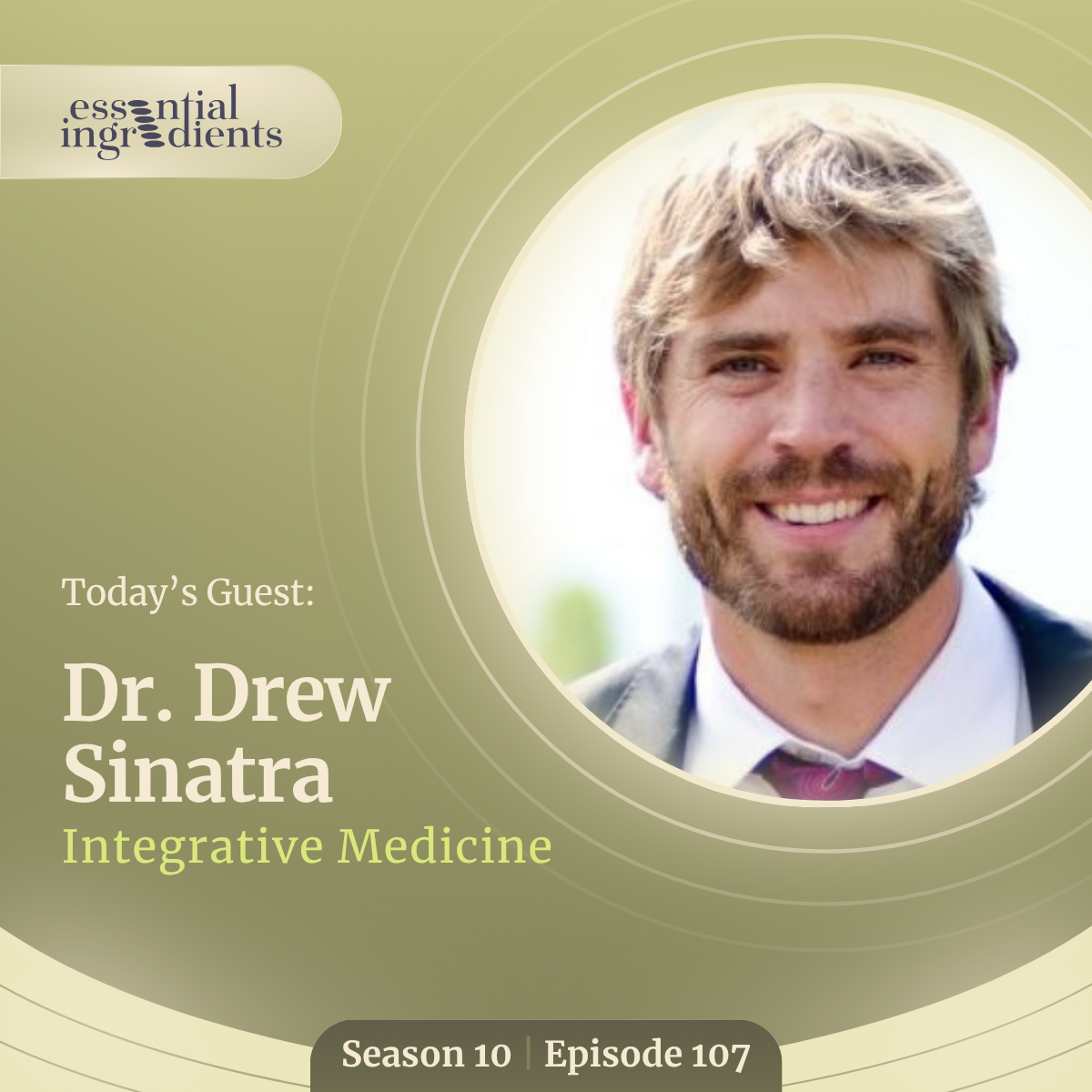
Dr. Drew Sinatra · Naturopathic Doctor, Integrative Medicine
The Incorporation Method helps you turn what matters into practical changes that fit your life.
“Your husband isn't lazy. His hormones might be crashing. Picture this: he used to be motivated, easygoing, present. Now he's irritable, exhausted, checked out, and every explanation you've tried doesn't quite fit. Stress. Work. Getting older. None of it lands. There's another explanation almost nobody brings up: andropause. In this episode, naturopathic doctor Drew Sinatra joins Justine Reichman and Dr. Lisa Brent to talk about what happens when male testosterone quietly declines — and why it almost never gets named, diagnosed, or treated until years after symptoms start. Here's what makes this tricky: testosterone starts dropping in a man's 30s, but symptoms don't usually show up until his 50s or 60s. By then, the signs — fatigue, mood swings, brain fog, low libido — have usually been chalked up to stress or aging. Worse, Drew says, many men get diagnosed with depression and put on antidepressants when the real issue is hormonal. He walks through what an actual workup looks like: full hormone panels, thyroid and anemia checks, prostate screening before testosterone therapy even starts, and ongoing labs to track hematocrit, estradiol, and PSA once treatment begins. It's not a quick fix — it's a process, and a careful one. But the conversation goes beyond bloodwork. Drew is candid that testosterone alone won't solve depression or isolation. Sleep, exercise, and — something he pushes hard for — joining a men's group, matter just as much. He talks openly about the male suicide rate peaking in midlife, and how stigma keeps men from asking for help until things get serious. The real message here isn't "go get testosterone." It's: stop assuming feeling worse is just what happens after 50. Get curious. Get tested. Start the conversation — even if it's uncomfortable. If someone in your life has been quietly fading, this might be the episode that changes the trajectory.”
A practical starting point
What You’ll Take Away
Midlife health conversations are more productive when symptoms, context, and questions are brought into the open.
Notice patterns in energy, sleep, mood, and recovery without jumping to a diagnosis.
Bring a concise symptom history and medication list to a qualified clinician.
Treat midlife care as an ongoing partnership rather than a one-time answer.
Try This
Keep a simple two-week note of the patterns you want to discuss with your clinician.
Meet Drew
As a California- and Idaho-licensed Naturopathic Doctor who specializes in Integrative Medicine, Dr. Drew Sinatra helps people investigate the "why" behind an illness or symptom — providing the best of natural and conventional therapies to re-establish vitality lost to chronic stress and illness.
Through his concierge-like medical practice, with its exceptional care and support, he empowers people to become the CEO of their health and wellbeing.
Meet Lisa
Dr. Lisa Brent is a licensed naturopathic doctor and acupuncturist specializing in women's health. With a commitment to holistic and patient-centered care, she integrates primary care training with expertise in lifestyle medicine, nutrition, bioidentical hormone therapy, and gut health.
Dr. Brent is dedicated to empowering her patients through education, individualized wellness strategies, and compassionate support. She is the founder of Be Well Natural Medicine, hosts educational events such as the Women's Health Symposium, and provides care both in-person and via telehealth.
In This Episode
The Importance of Midlife Health Talk — why couples and partners need this conversation
What is Andropause? — understanding the hormonal shift almost no one names until years after it starts
Symptoms Nobody Connects — fatigue, mood swings, brain fog, low libido all chalked up to stress or aging
The Truth About Testosterone Supplementation — what a real workup looks like, what to track, and what to expect
Mental Health for Midlife Men — the male suicide peak in midlife, stigma, and why asking for help matters
What to Look For — the questions to ask your doctor, the labs that matter, and what 'normal' doesn't tell you
Environmental Disruptors — the everyday exposures quietly suppressing testosterone levels
The Importance of Support Systems — why a men's group matters as much as any lab result
Advice for Better Wellbeing — practical next steps for the man in your life, or for yourself
Chapters
- 01:31
The Importance of Midlife Health Talk
- 04:22
What is Andropause?
- 11:00
Symptoms Nobody Connects
- 15:40
The Truth About Testosterone Supplementation
- 19:35
Mental Health for Midlife Men
- 26:15
What to Look For? Important Questions to Ask
- 31:25
Environmental Disruptors and Testosterone Levels
- 36:20
The Importance of Support Systems to Overall Health
- 38:32
Advice for Better Wellbeing
Inspirational Quotes
“Testosterone begins to decline technically in the 30s, but we don't see symptoms show up in men typically till like their 50s or 60s.”
— Dr. Drew Sinatra
“It's a desire for each person in a partnership to feel good and age well, but I do think it is easier for women to talk about it.”
— Dr. Lisa Brent
“We want to step back and look at what are the contributors that may be a part of every piece that's happening, so that we treat more at the root; we cover a lot of bases in a less invasive and piecemeal kind of way.”
— Dr. Lisa Brent
“One of the biggest fears about testosterone supplementation is the virilization, which is not at all the goal. The goal is to help our patients feel better. It should be almost all benefit without harm.”
— Dr. Lisa Brent
“Some men come in seeking testosterone, and they certainly don't need it. We run labs and figure out if their testosterone is low, and many times [their] testosterone is sufficient enough.”
— Dr. Drew Sinatra
“Mental health and suicide connection is a really important conversation. It's a conversation that people need to be willing to have, and in midlife, oftentimes the male suicide rate peaks.”
— Justine Reichman
“Exercise is absolute number one. It's a medication for a lot of men. Get some exercise; it's key.”
— Dr. Drew Sinatra
“It's just a matter of combining what you're finding on labs with how they're feeling. A key element here is making sure that things are overlapping.”
— Dr. Drew Sinatra
“Menopause and andropause — these are not illnesses. There's nothing to be cured.”
— Dr. Lisa Brent
“We're all living in a toxic soup these days, so everyone needs to detox at some point.”
— Dr. Drew Sinatra
“Sometimes, giving a name to something can help someone, because then you have a plan, you can go forward and see changes, and to know that there's not something wrong with you. You're suffering with other men and women in the same age group.”
— Dr. Drew Sinatra
“If you're ever feeling alone and you want more male connection in your life, join a men's group.”
— Dr. Drew Sinatra
“We get one shot. And most of us, after 50, we're on the downward. We want to feel good while we're here. Go run it past somebody, get some tests done, then you can go from there.”
— Dr. Lisa Brent
“You can feel better tomorrow compared to yesterday… there's so much we can do to support you, and you're not alone in this journey.”
— Dr. Drew Sinatra
“Someone has to be ready… Don't push someone; they need to walk through the door themselves.”
— Dr. Drew Sinatra
“There's also that perspective that can be helpful, especially if you're in a partnership: what I do for my health is good for me, but it's also good for you. If I help myself age well, it means you're less likely to have to take care of me, and we're going to have a better time.”
— Dr. Lisa Brent
Share This Episode
Enjoyed this conversation? Share it and tag @nextgenpurpose
Listen on Apple ▶Listen on Spotify ▶Your Host
Justine Reichman
Founder & CEO of NextGen Purpose. Host and Executive Producer of Essential Ingredients — 11 seasons, 330+ episodes, and a growing movement.
About Justine →