S9 Ep80: Busy Lives, Better Health: How Drinkable Vitamins Fit Real Life with Leslie Danford
“In an entrepreneurial journey, fear is a constant roadblock. But everything's at risk, and it's this balance between calculated risk while still managing a backup plan.” —Leslie Danford
Growth does not come from chasing every opportunity. It comes from making clear choices and standing behind them. This conversation explores what it really takes to build a brand that lasts without losing direction along the way.
We sit down with Leslie Danford, founder of Vitaminis, to talk through her evolution from a small, kid-focused idea into a national functional beverage brand now on Sprouts shelves. She shares how customer insights reshaped her product strategy, packaging, retail approach, and long-term vision.
Press play for a grounded look at what sustainable growth actually requires, and why patience, clarity, and trade-offs matter more than hype.
Building a functional beverage brand in a crowded market
Identifying and serving distinct customer profiles
Rebranding to support retail discovery and clarity
Getting into national retail and what it really costs
Choosing when to bootstrap and when to raise capital
Managing growth without expanding too fast
Navigating packaging challenges and sustainability goals
Balancing mission, margin, and long-term impact
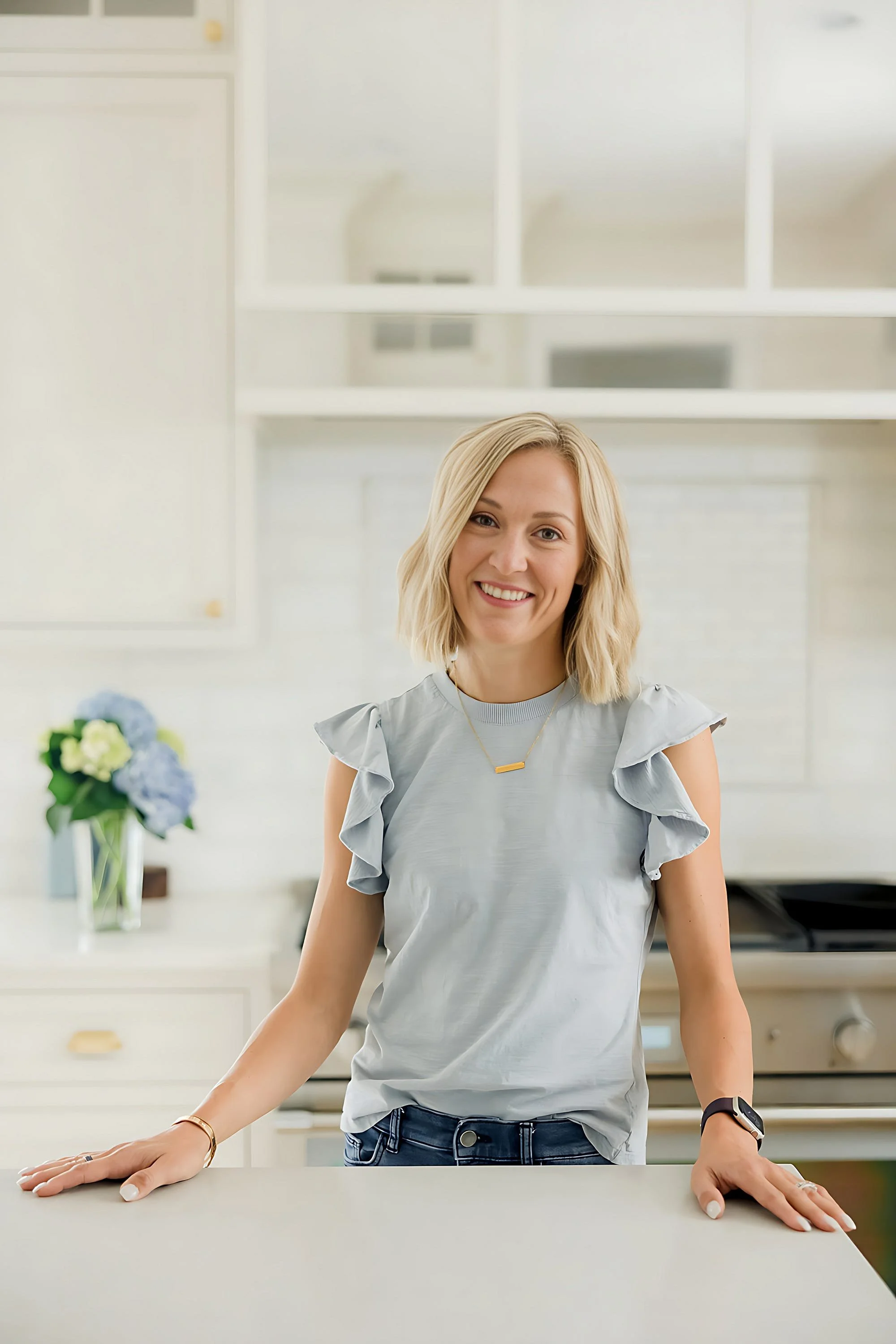
Connect with Leslie:
Leslie is the founder and visionary behind Vitaminis, an innovative brand specializing in convenient, nutrient-rich drinkable vitamin shots designed for modern families and health-focused individuals. With a background in both e-commerce and retail, Leslie has led Vitaminis through a successful rebranding and national retail expansion, including an exclusive launch with Sprouts. She is celebrated for her strategic focus on product development for diverse customer needs—ranging from busy Millennial Moms to adults seeking natural nutrition—and is deeply committed to sustainability and accessibility. Leslie’s entrepreneurial journey is marked by fearless decision-making, fostering brand growth, and a mission to make nutritious choices easier and more accessible for communities everywhere.
Episode Highlights:
00:51 Business Growth and Customer Profiles
05:24 Drink Your Vitamins
09:42 Collaborative Innovation and Exploring Alternative Form Factors
13:27 Market Challenges
15:57 Funding the Dream
23:08 Calculated Growth + Back Up Plans
27:19 Community Engagement, Environmental Benefits, and Future Goals
Resources:
Podcast
Tweets:
Building a wellness brand is never just about the product. This episode dives into rebranding, retail growth, and the real trade-offs founders face as they scale. Listen in for honest lessons from the journey with @justine.reichman and @vitaminisbrand founder, Leslie Danford. #entrepreneurship #socialgood #inspiration #impactmatters #NextGenChef #EssentialIngredients #Vitaminis #DrinkYourVitamins #WellnessBrand #CPGFounders #EntrepreneurLife #BrandGrowth #FunctionalNutrition #HealthInnovation #WomenInBusiness #StartupReality #RetailGrowth
Inspirational Quotes:
02:41 “We're all evolving organically, and there are so many new conversations and awareness out there that it invigorates us as founders, as brands, and how we grow.” —Justine Reichman
10:48 “If we're in the food space, our resources are food. Our resources are other CPG founders. But if we can connect with people in fashion or beauty and see what they're doing, maybe there are some resources.” —Justine Reichman
14:58 “We redesigned our package to communicate those benefits right on the package.” —Leslie Danford
15:05 “Retail is a place for discovery.” —Leslie Danford
19:43 “Once you raise money, you do have accountability to outside folks, and whatever the pitch is of what you are going for. People invest because they want upside… You have made a commitment to these stakeholders, so that is more of an obligation, but the plus side is being able to go after bigger opportunities.” —Leslie Danford
21:41 “You have to be aware of where you're putting your attention and your resources. Everything is a trade-off.” —Leslie Danford
22:59 “In an entrepreneurial journey, fear is a constant roadblock. But everything's at risk, and it's this balance between calculated risk while still managing a backup plan.” —Leslie Danford
26:21 “Developing the brand and growing it in these early stages with that kind of early adopter audience will then be the foundation to make it more widely available down the road.” —Leslie Danford
26:37 “The challenge is, as a small company, people want to do all the right things. But you have to make choices, and you can't always have all the perfect choices now, but it's your intention, so that you do this first and then you continue to grow.” —Justine Reichman
27:17 “You can't change the world because you're just starting out.” —Leslie Danford
Transcription:
Justine Reichman: So good morning, and welcome to Essential Ingredients. Today with me is Leslie from Vitaminis. We haven't spoken in a while. She's got lots of news to report. If you're not familiar or don't remember her from previous, I want to just give you a little snapshot. She makes these little individual Vitaminis shots. They are citrus. They're for your immune system, they're for health, they're for energy, they're for all sorts of things. You're not going to want to miss this episode. It really talks about her journey, how she's moving forward, and all the successes she's had. And maybe even shares a couple nuggets about challenges she's had on her journey. So welcome, Leslie.
Leslie Danford: Thank you so much.
Justine Reichman: It seems like you've got a lot of exciting new things coming up.
Leslie Danford: It's funny, our customer, we did a deep dive on our best customers, and there's two of them. But one of them is a woman, 50+, so it's interesting. It's an area that I've been getting more into.
Justine Reichman: And so what have you found? Talk to me a little bit about that. I'm curious.
Leslie Danford: Yes. What we found is that our best customers fall into two categories. The one that I think is the bigger one that I was more aware of is kind of like me, and we call her the Millennial Mom Nutrition CEO. So she's running her family's nutrition like a business and checking boxes. But she's very busy and stretched thin, and so she really prioritizes that easy and tastes good, but there is this emotional benefit of like, I'm making good choices, and I'm kind of like doing my job for my family, and keeping their health and wellness. And then she'll buy Vitaminis, and then the whole family will drink it. So some of my best customers have told me, I drink it, my husband, my kids, and even our nanny. It's like everybody, it's just there. And then the second customer profile that emerged is a woman in her like 50s or 60s who is looking for more gentle and natural nutritional solutions. So she doesn't love the idea of really strong pills or anything too intense. She wants natural and gentle, and it's all preventative focus. So the thought is, I want to be active, stay healthy. And then there's all sorts of things, staying involved with my grandkids, or being able to work, the jobs that I love, or whatever. And Vitaminis is part of a broader solution of natural, gentle nutrition to just keep her vibrant and healthy.
“We're all evolving organically, and there are so many new conversations and awareness out there that it invigorates us as founders, as brands, and how we grow.” —Justine Reichman
Justine Reichman: I love that. That's great. I think we're all evolving organically. I think there are so many new conversations and awareness out there that it invigorates us. It invigorates us as founders. It invigorates us as brands. It invigorates how we grow, so it's really exciting. When I was reading up on you guys, when I first said to my podcast producer, we got to reach out to her because I feel like since the last time we spoke, she's grown light years. I feel like there were new product launches, maybe a bit of a rebranding, even some exclusives and shops. I'd love to hear a little bit about, let's start with a rebranding.
Leslie Danford: Yes, it did. Because originally, way back four years ago when I started the business, we started with a kid focus, and I think our packaging and branding had some elements of that, maybe a little mixed messaging. So we did want to kind of rebrand now that we are focused on these new target customers. And also, the other big change that informed the rebranding is that we got more into retail, and our original branding didn't communicate as much on the package. It was more with the digital content and the website. But when you're at retail, you have to communicate within, I think it's like two or three seconds. And we have this little bottle, so it has to say what you want to say right there. So we updated it, so now it's sort of hitting you with, like, here's all the reasons to buy it, probiotics, fiber, potassium, and then for like, the immune support, vitamin C, magnesium, zinc, boom, boom, boom. That was inspired by RX Bar. If you remember RX, and then the top is meant to kind of inspire its juice, it tastes good, it's delicious. So we put all this fruit here, so it's not meant to be too serious or medicinal. So the bottom is kind of like the business part of it. And the top is (inaudible).
Justine Reichman: Is the top also connected to the ingredients that are in there?
Leslie Danford: Yes. So orange pineapple juice for the immune support. This one is a berry banana. We wanted to communicate the flavor without making up too much space, and also make it come across as very tasty. Because it is. I find a lot of people expect it to taste bad, so we're trying to use that imagery to show that it tastes good. And the other major change is that we change our tagline to drink your vitamins. So we used to say Mini, Mighty, Tasty, which I still think applies. But drinking your vitamins is so much more prescriptive and obvious to someone like, oh, it's a drink.
Justine Reichman: Well, I also think your point about your demographic, where initially, you were focused on children, Mini, Mighty Tasty sounds like it's geared towards children. It's cute, fun. But the other one sounds like it's a little bit more elevated, sophisticated. It talks to a little bit more of a sophisticated audience, somebody that's looking at it for themselves, a little bit educated within this realm looking specific.
Leslie Danford: Totally, right. And you mentioned the exclusive. So this summer, we got into Sprouts nationwide. Breaking news, I've been talking to Sprouts for two and a half years. Actually went back in my emails like, when did I first talk to them? Two and a half years? And it's funny, because things happen when they're meant to happen. But they had some feedback on the packaging back in the day. They didn't feel like the kid positioning really fit with their shopper and all of that. But then full circle, it suddenly made sense. And Day Light Green was our Sprouts exclusive. It has the vitamins from leafy green vegetables in a green apple pear juice. So Vitamins A, E, D and Foley. You can see that it's a delicious green juice with broccoli powder, kale powder, spirulina, but it tastes like apple and pear juice. This product came from our best customers. I asked our best customers, what would you like to see us do? And they said, daily greens. So I developed it, and then I was just holding on to it and waiting. And I thought it would be amazing to launch this as an exclusive with the right retail partner. And I was right. I've been trying for a while to find someone, and just about to that point where I said, I'm just gonna launch it because people need this product. Right then is when Sprouts happen. This was a Sprouts exclusive for 90 days, but it's now available to everybody. So that's exciting.
Justine Reichman: There's so much news that you have there, and that's so exciting. You've grown so much. And I'm curious, because I'm looking at the packaging, I'm looking at the size and looking at what you put it in, talk to me a little bit about the packaging. Is it plastic? Because it was plastic I remember before. Talk to me about that plastic, and what your thoughts were on that.
Leslie Danford: Yeah, it's still plastic. And you know that it bothers me as everyone, like single use plastics are not right for us. We had to choose something that was e-commerce friendly, and also our product is shelf stable, which is a little bit different than a lot of other juice shots out there that are fresh pressed and have to be refrigerated. So there's a lot of benefits to being shelf stable for consumers and getting it delivered, taking it in the lunch box, whatever. Retailers love that, but it requires a certain process if you don't want to put preservatives. So we use a hot fill process, basically heat the juice in and then seal it while it's still hot. So we needed a package that could do that, and that's where we had to end up. But I do constantly explore and think about better options. And my philosophy is, if Vitaminis can get big enough, we can develop better packaging. I don't know if you've seen the plastic silverware now that's made from corn products, eco products? We have bottles for that. Like, why aren't we developing better solutions, biodegradable solutions that can survive this? So I think it will come, but it's tough when you're a tiny brand because you're subject to what's available. That's one of my inspirations, to be honest, about getting big with Vitaminis is to be able to impact the whole system with nutrition, and also other elements of the business, packaging sustainability. Because those big companies are the ones that can actually really move the needle, but you got to get there first.
Justine Reichman: You got to get there. I also think, because you're so excited about that, and it's so meaningful to you that I wonder what the road would look like, the trajectory if you were to have conversations with other people to find out what waste they had and unused resources to leverage that to be able to collaborate and innovate together, so that you don't, as a small business, have to rely on just yourself, but other small businesses that find that there are waste, etcetera, can be turned into different things. And together, you create this new way of packaging.
Leslie Danford: I love that idea. That's a great idea. I have a couple of packaging partners that I work with who service tons of brands, big and small. That might be something I could ask them about. If there's any, I'm sure they're all working on it. It's a problem. I think everybody sees it's a hard one to solve, but I think little steps can make a difference. And a couple things we're thinking about in the near term also is for consumers that really don't like that. We are looking to launch stick packs or dissolvable tablets that are a little bit more shippable. You can use your reusable water bottle at home to recreate Vitaminis for yourself. So I think that could be a nice interim solution for people that would prefer not to use the shot format, but for those who really appreciate the shot format and the convenience of it. I'd love to find a non-single- use plastic solution.
Justine Reichman: I think it might mean exploring outside of food, because there's other people. It's kind of the way Rothys use different items to make their shoes the same way. So how can we connect with each other, one another, to brainstorm and innovate in that space? Because if we're in the CPG space, if we're in the food space, our resources are food. Our resources are other CPG founders. But if we can connect with people in fashion or beauty, and see what they're doing, see what they're leaving behind, see what's unused, maybe there's some resources. Beauty would be another one that I think might have some similar issues as well. There's a whole issue around size. And depending on the size, it can or can't be recycled in different places. And I think there's also the concept that people don't even know what's recyclable if they see it. Your education around that. So I think that that's all sort of a conversation as we all continue to explore what's happening next in these fields, how do we come together?
Leslie Danford: I love that, and you're right. Sometimes when you look at other categories or industries, you get some inspiration that you maybe wouldn't have known about otherwise.
Justine Reichman:That's so exciting. I'm so excited for you and what you have going on. I know you had this new flavor profile that you launched throughout. Are there other flavor profiles we're going to expect to see down the road?
Leslie Danford: I have a list of like a wish list. And most of these ideas come in the form of functional areas, as opposed to slight flavors. And the way I developed the product is, once there's like a functional area, I try to back into ingredients that deliver those benefits and build a flavor around that. So for example an immune support vitamin C, we ended up doing a citrus base. Or with gut health, fiber and probiotics. But the fiber, especially with berries and bananas, which are very fiber dense. So some of the functionality I hear about that's in the pipeline, protein comes up a lot, and I think some of that's fuel ozempic and these GLP one trends. But also some older populations too like the other customer profile that I mentioned, really just understanding the value of protein for longevity, metabolism and things like that. So a protein shot is one. I hear a lot about mental nootropic types of benefits like stress relief, sleep relaxation. So those are a couple that are on the list. And then longer term, I'm also thinking about launching another product platform we talked about, like the stick packs and dissolvable tablets. But Vitaminis is like mini bites and sips. Everything mini and nutritious, but like little fruit bars that have extra vitamins, extra fiber, nutrients in them. So that's kind of my thought process. Long term, I think we could be a whole portfolio of mini bites and sips.
Justine Reichman: I love that. So as you grow to expand that, what challenges are you finding? Now that you organized who your demographic is, and you've rebranded, and you're in route, and you're coming up with all these new profiles and new SKUs, what are some of the challenges you think lay ahead that you're trying to prepare for?
“Retail is a place for discovery.” —Leslie Danford
Leslie Danford: Yeah. There's a few challenges in this area of beverages and supplements. We're technically a beverage, but we're drawing from both sides. Functional food and beverage sits right in between supplements and food. It's this middle ground, and I think that's growing. People are looking for food to deliver more of a benefit, and they're not loving pure supplements. They want to be more natural. So it's growing and growing, but it's very competitive. And so I think that is the challenge. I do definitely believe in our differentiated clean label, no strong flavors, natural food and beverages. It's different and valuable, and our best customers know that too. But getting that message out is really tough. It's a combination of trying to reach as many people as possible, which is very, very expensive, or with the right message, or finding who those people are, and where do you find them to communicate more efficiently with them of exactly what you are, and why you're better. So that's been an evolution. Recently, what we've pivoted more towards is finding those people in retail. So we redesigned our package to communicate those benefits right on the package, and we're thinking about retail as a place for discovery. So someone can find us at retail in a single bottle. Or maybe at one of our tasting events, they try it, and that's a much easier way for someone to try it for the first time than ordering a 12 pack on the website. That's a much more expensive commitment. So they find us at retail. They taste it. They love it. Tastes great. And then we have these QR codes right on the bottle. They can join our email list, and then we can bring them to our website, tell them more about subscriptions, different flavors and things like that. So that's our approach right now, but it's hard. It's expensive. It's really expensive to communicate in this environment. Everyone's trying to get everyone's attention. All the brands are trying to get everyone's attention all the time. When it's on social media, in retail online, that's a challenge doing that in an efficient way because I'm a small business.
Justine Reichman: It's expensive for a small business. Many people choose to be self funded and do the best that they can to bootstrap because they feel like they give away a lot when they raise money, and that can be a challenge. I'd love to hear a little bit about your thoughts and your journey on that.
Leslie Danford: Yes, that is a challenge. And I did bootstrap for quite a while in the beginning. So in the very beginning, we started online. It was much smaller scale and more incremental. And that worked out well because the total dollar amounts were lower. Also, I had the freedom to move at my own pace. I had my 4th child at that time. I actually went back to work full time after I started Vitaminis for a period. So bootstrapping really gives you a lot of flexibility for how fast to move and what you want to do. But after about two years, it became clear to me that that wasn't going to scale enough. After two years, I had a decent little group of customers, but it wasn't reaching enough people, or growing to a meaningful scale impacting everyone. That's when I decided to go into retail to start. And that really drove me to need to bring in some more capital. Retail is very expensive. There's the marketing part of it. Catching attention whether it's demo, tastings, couponing, promotional activity, shelf space, slotting fees. It's expensive. And then on top of that, it's just big. So when we launched in Sprouts, our business grew 6 times just with that one retailer.
So whatever I was doing with my little online piece and my smaller mom- and-pop retailers suddenly six times the product. So that money to produce all that product and get it out the door, you don't get that back for quite a while. So you make the product, and you have to pay upfront when you order all the ingredients and stuff. That takes a couple months. And then you ship it to the distributor, and that takes a while. Then it goes to the retailer, and then they pay you 30 days after that. So there's quite a bit of capital that you have to front, and that's what really drove me to raise some money from friends and family. And I also took part in the Gener8tor Accelerator program, which comes with an investment as well, I think, was a good shift. But going forward, I'm looking for ways to fund some of that inventory with debt instruments or other vehicles that don't necessarily require giving away a lot of equity. Because I think that if you want to give away equity, it should be to grow the brand and the scope, as opposed to just producing inventory.
Justine Reichman: Yeah. I'm curious, because that was a choice, and it seemed like it was very thoughtful, and it was the right move for you. And I'm wondering if you might share with those listening today, people that are tuned in and want to grow their business, if you were to do it again, would you do that the same way? And what are some of the things that they should consider being mindful of and taking into account as they make their own decisions as to whether or not to take capital or not?
Leslie Danford: It's a great question, because it does change your timelines, your stakeholders. It's a different game, so I alluded to this. But in the beginning, I really valued being able to control my own pace. Slow down if I wanted to, whatever. Some of that was personal reasons. I went back to work. I was doing it on the side, and bootstrapping allowed me to have that flexibility and control. And even walking away from the business at some point, anytime I could have said, I'm just not going to do this anymore. And I'd only have to answer to myself and my husband. But once you raise money, you do have accountability to outside folks. And whatever the pitch is, of what you are going for, people invest because they want upside. It's not a charity case. You've pitched like we're going to grow, we're going to go after this, or that, on this timeline. Well, now, you have to deliver on that. So communicating where you stand on a regular basis and making sure you're meeting those timelines, it just changes. It's not just what you want. You have made a commitment to these stakeholders, so that is somewhat of more of an obligation. But the plus side is being able to go after bigger opportunities. The Sprouts account, 450 retail locations nationwide, I would have never been able to do with the way I was running the business before. But with my investors, I could. So there's a lot of upside too to make your dream bigger and more impactful by bringing in other stakeholders, but it does bring a level of pressure, and you lose some of that autonomy that you had previously.
Justine Reichman: Of course, yeah. I don't remember what I was listening to the other day, but it was somebody that was talking about growing too quickly, which you did not do. But that obviously is a challenge. People try to get into these stores right out of the gate, and then they realize that they can't afford to be in them.
Leslie Danford: Yes, it is. That is a challenge, and I still face it. Because what I realized, actually learned a lesson just in the last couple months I launched with Sprouts, and I've turned my attention to Sprouts and making sure we've got our velocities there, and we're supporting them, etcetera. I did turn some attention away from some of the smaller retailers that we were in, and our velocities there dropped. And so there's a very real trade off with where you put your time and energy in these early days. At some point, perhaps your brand reaches a tipping point where you have that organic awareness, people are talking or whatever. But until then, you have to be so aware of where you're putting your attention and your resources. Everything is a trade off. That was a decision I made to move resources to Sprouts, and I'm glad that I did because it's a priority.
But there were some trade offs that happened because of that, and I think that just keeps going because I'm already having conversations with other larger retailers now as that next step. The question becomes, can I continue to support Sprouts enough, and still go after these new opportunities? And if yes, what kind of additional support do I need? What kind of money would I need to make that work? So that's important. Because going one step further, a lot of these big retailers, if you're not successful, you are on the hook to get that product back out of there. So either you're buying it back from them, or you're funding markdowns, like 50% off, because they want to move it through. It's not selling on its own, and you have to pay for that. So depending on how big the retailer is, that could be an obligation that could sink your business. And I've actually heard some horror stories of people that go into these massive retail accounts, raise a bunch of money, fund or roll out, but don't have the resources to get the sales going. And then they end up having to buy it all out again and shut down because they just can't recover from it. So that weighs on my mind a lot. I have a feeling that that trade off continues whether it's your first retailer or your second, your fifth, you're always kind of balancing that.
Justine Reichman: Of course, it sounds like it's a big decision when you're choosing a retailer. It's exciting to be invited. It's exciting to get that deal. It's exciting to be able to say, I'm going to be in Whole Foods. But it can also be scary too. I really calculated how you do that, so that you don't go belly up.
“In an entrepreneurial journey, fear is a constant roadblock. But everything's at risk, and it's this balance between calculated risk while still managing a backup plan.” —Leslie Danford
Leslie Danford: Yes. And it's such a balance because I do feel like an entrepreneurial journey, fear is like this constant roadblock. Maybe it's just me, but everything's at risk launching the business in the first place. Putting your product out there, people gonna like it or not. Going into that first retail. So there's always this risk there, and it's this balance between calculated risk versus just like you never know everything. You're never gonna have all the answers. So what's the way that you can take these risks while still managing an out or, like a backup plan? And that's the name of the game.
Justine Reichman: Wow. You've done so much since last time we spoke. And when we spoke last time, it was super exciting, because it was more towards the beginning, and you're getting out there. I'm so excited for you, for all the progress that you've made, and the success that you've had.
Leslie Danford: Thank you. Thank you so much. I want to talk to you over the journey, just because I'm reminded of how much I've done.
Justine Reichman: Yes, I like that. I like that for myself. I like that for you. So we talked about the different communities that are part of your audience. You have the moms, the millennial moms that are busy, and you have the menopausal women. Are people in their 50s and 60s, right? And I'm curious, because this is such a great product. What accessibility do lower income families have to this? Whether to learn about it, to have access to it, to be able to get it? That's a
Leslie Danford: A really good question. I don't know a lot about that. I have all the answers to it, but one thing I will say is that as labeled as a beverage instead of a supplement, I think that opens up accessibility through channels, where folks have credits towards food and beverages to purchase. My vision with Vitaminis was to provide more bang for the buck, if you will. If you're going to drink something, at least have it count with extra nutrients, rich in vitamins, fiber, etcetera. So I think to that extent, it's accessible as a food, but with more value than, maybe a typical food that doesn't have all that extra fortification. Whereas I think supplements might be excluded from a lot of those programs.
Justine Reichman: So like snap, or whatever it is, theoretically, they would accept this because it's under that category.
Leslie Danford: I think so. But again, I'm not super informed about that. I should look into that. It is expensive, though. That is the one thing that it is expensive. We're kind of starting out here. I have a roadmap over time to bring our prices down as we scale. Because as you get bigger, you get better pricing on your bottles, your ingredients, and your manufacturing. So I think longer term, Vitaminis could definitely be a mass product at a lower price point in thousands of retailers everywhere. But right now, it is more of a higher end natural grocery product at a higher price point. So I think developing the brand and growing it in these early stages with that early adopter audience will then be the foundation to make it more widely available down the road.
Justine Reichman: It's great to be able to offer that at some point. And I think the challenge as a small company, people want to do all the right things. But you have to make choices. And you can't always have all the perfect choices now, but it's your intention. So that you do this first, and then you continue to grow. And I think it's important to share that with the community, so people can get behind YOU understanding YOUR values. Even if at this moment, they may have an issue with a plastic bottle, they understand that there's more vitamins in what they're getting. And there's more value in it. And that it's important to you, and you're working on it. So that as you grow, you can incorporate that.
Leslie Danford: Yes, it's so true because it's a journey. When you're first starting out, you can't change the world because you're just starting out. But I heard another entrepreneur mention that profit is like the fuel to make changes in the world. And that really, really resonated with me. Because I think sometimes, to your point, people have this negative connotation to making money, or being a big business, or whatever. And it's true that sometimes, businesses abuse that and do things that are not good. But other times, that is the fuel that allows you access. Being a big company allows you to change the whole system. The other thing that we talk a lot about within Vitaminis is there are environmental benefits of being a fortified food, a plant based food. The more we can get out of our food, and the more nutritious, and we're plant based, that eases off the environment as well. So there's a lot more nuance to it. But I really appreciate you asking that, because that means a lot to me in the long term.
Justine Reichman: I'm so glad. I think it will be meaningful to listeners, customers and people viewing this. It gives a greater insight into you. So Leslie, thank you so much for tuning in today with me, and joining me on the podcast. It was great to get to reconnect, reintroduce you to the community, and give everybody a little peek into how things have been progressing with you.
Leslie Danford: Thank you so much. It was fun.
Justine Reichman: I want to thank our guests for tuning in. Because really, our guests are the reason we come back each week to give them more information, new information,. We want to hear from you, so follow us on Instagram, and chat with us. Tell us what you liked, what questions you have. We want to engage, and we want to hear from you. It's been so fun connecting with some of those members that get our newsletters and listen to our podcasts, so we want to continue that conversation. So if you're not following us, make sure to follow us at essential.ingredients, or at justine.reichman. You can also find the podcast, Essential Ingredients with Justine, wherever you listen to podcasts, and on YouTube. So Leslie, if folks want to get Vitaminis, what's the best way? We do know they're in Sprouts. For those that don't have access to Sprouts, where else could they get it?
Leslie Danford: Yes, so Sprouts, for sure. Come to our website, vitaminisbrand.com. If you drop your email, get a 20% off right away. So you can try our products at a discount. And then if you like, we're also on Walmart marketplace and Amazon. I know a lot of folks like to shop in those places for their other goods. So if that's what you like, we're there too. We're trying to be everywhere.
Justine Reichman: Congratulations. Keep me posted on how things progress.