S9 Ep81: Your Skin is Talking: Why Internal Health Determines Skin Outcomes
“Stop reaching externally for answers because intuitively, if you really, really sit quietly with yourself and feel, you have all the answers for yourself.” —Dr. Jennifer Haley
Our skin reacts long before we slow down enough to notice. Breakouts, inflammation, and chronic issues often point to patterns we normalize every day, from food choices to stress to environmental exposure. This conversation cuts through noise and shame and brings the focus back to what our bodies are already telling us.
Dr. Jennifer Haley shares how her background in nutrition and dermatology reshaped the way she treats skin, not as an isolated problem but as part of a larger system connected to gut health, hormones, and the brain.
Listen with an open mind and a grocery list nearby.
Skin as a reflection of internal health
Acne, rosacea, and the gut-skin-brain connection
How food quality and blood sugar affect inflammation
Dairy, processed foods, and hormone disruption
The role of stress, cortisol, and nervous system balance
Organic foods, pesticides, and everyday exposure
Why moderation works better than restriction
Cyclical health needs for women across life stages
Trusting intuition over rigid wellness rules
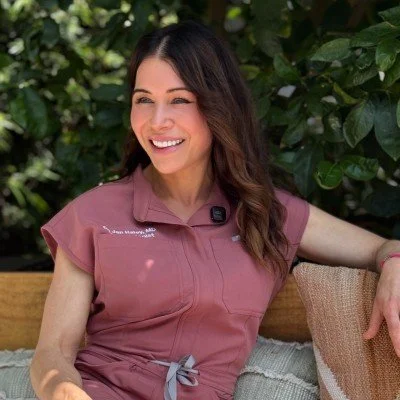
Connect with Dr. Jennifer:
Dr. Jennifer Haley is a board-certified dermatologist with nearly 22 years of experience and a strong background in nutrition. After earning her undergraduate degree in nutrition from Cornell University, she built her practice around a holistic approach to skin health, integrating nutrition and wellness into dermatological care. Dr. Haley is an advocate for education and patient empowerment. She is actively involved in developing AI platforms for dermatology, hosts her own podcast "Radiance Revealed," and shares insights into skin health and lifestyle. Dr. Haley is recognized for her commitment to helping patients take ownership of their health and for her passion in making expert dermatological care accessible to all.
Episode Highlights:
01:31 Hormone Disruptors: What’s Causing Adult Acne?
04:20 Detox and Prevention Tips
08:26 Intuitive Eating: Listen to Your Body’s Signals
13:14 SIBO, Rosacea, and Dermatology: Connecting the Dots
16:54 Optimal Mood Through Gut Wellness
21:30 Diet Cycles: Thriving at Every Age
24:15 Adapting Habits for Lifelong Health
Tweets:
Your skin is talking—are you listening? This episode flips dermatology on its head: skin reflects gut health, hormones, food, and stress. Join @justine.reichman and @drjenhaley for acne, rosacea, and detox truths you’ll actually use. #entrepreneurship #socialgood #inspiration #impactmatters #NextGenChef #EssentialIngredients #HolisticSkin #GutSkinConnection #SkinHealth #CleanLiving #FunctionalDerm #AcneHealing #NutritionForSkin #HormoneHealth #SkinFromWithin #GutBrainSkin
Inspirational Quotes:
00:32 “Skin is the largest visible organ that we have in our body, and it's an indicator of what's going on inside the body.” —Dr. Jennifer Haley
06:57 “Processed foods— our body doesn't necessarily recognize as food.” —Dr. Jennifer Haley
08:36 “You can tell what foods your body resonates with better…. The connection between making the right choice and choosing what's right for you and how you deal with it is so important.” —Justine Reichman
10:01 “Anyone who's really dogmatic about anything has to have a hesitation regarding that because at the end of the day, it's like, what feels good with you? Check in with yourself and trust yourself because we know the answers to what works for us if we can just trust it.” —Dr. Jennifer Haley
17:26 “By identifying what's going on in the gut, by identifying what you're eating and how it's making you feel, it can impact your brain and how you respond and how you think and feel.” —Justine Reichman
17:42 “Having a healthy brain is so important because it's our motivation, it's our mood, it's our relationships, it's our job performance, it carries over into every aspect of our life.”—Dr. Jennifer Haley
21:33 “At different points in our lives, while we always need protein and we need our vegetables, things shift a little. It's important to pay attention to that… The needs are different when you're growing versus when you're going through menopause, two different things.” —Justine Reichman
22:20 “We're meant to enjoy life. If you're going to imbibe, enjoy it. Enjoy it with people you love.” —Dr. Jennifer Haley
23:27 “Stop reaching externally for answers because intuitively, if you really, really sit quietly with yourself and feel, you have all the answers for yourself.” —Dr. Jennifer Haley
23:49 “We are meant to cycle; we are not stagnant beings. So what worked for you 10 years ago probably won't work for you now and definitely will not work in the future.” —Dr. Jennifer Haley
Transcription:
Justine Reichman: Hey, Dr. Haley, it's so nice to meet you, and have you here on the podcast. I'm excited for our community to get to know you, and for you to share a little bit about the way and the lense that you look at dermatology through. And what essential ingredients play a role in that for you? So welcome.
Dr. Jennifer Haley: Thank you. Thanks, Justine. I'm so happy to be here. The way I look at skin is basically the largest visible organ that we have in our body, and it's an indicator of what's going on inside of the body. So if there's something inflamed in your skin or something going on with your skin, there's a good indication that there's something going on within. So we always want to look within, and then you get the bounty on the outside of your skin.
Justine Reichman: And I like that. I don't think that everybody looks at it that way. It's funny. Recently, I had broken out right here, and I felt like I was hitting puberty again, except at a later stage in life. That other stage. So I called my naturopath, and I said to her, I'm breaking out. Oh, my goodness. She goes, might be low in zinc. Have something with zinc. And I had a couple oysters, and it went away. So to your point, and that's just a very small example of something I experienced and how it was connected.
Dr. Jennifer Haley: So many things can cause those breakouts. And in Arizona, our water is really high in copper. So sometimes, giving somebody a little bit of zinc can make the difference. Because copper, zinc and iron have this beautiful little dance together that they do. We're not recommending that everyone out there take a lot of zinc, because that could throw off the balance of things. But if you are zinc deficient for a short period of time, it can help clear up your acne. Then there's other things in our environment. All of the hormone disruptors, like plastics or even touching receipts, and having the lining of the coffee that we pick up every day, those things can mess up our hormones. They are endocrine disruptors that can cause acne at other ages than just the teenage years.
“Skin is the largest visible organ that we have in our body, and it's an indicator of what's going on inside the body.” —Dr. Jennifer Haley
Justine Reichman: So many things, wow, in everyday life.
Dr. Jennifer Haley: Before I start throwing medication at people, I really like to take a look at what we do on a daily basis. The simple things that we can shift or adjust in order to live our best life before pulling out all your money and spending your hard earned money on products that may or may not solve your problem.
Justine Reichman: So what are the first three or five questions that you ask your patients when they come in to better understand what route to take?
Dr. Jennifer Haley: Yeah, that's a great question. So we were talking offline before we started about my undergraduate degree in nutrition. So I studied nutrition as an undergrad. It's really my passion. And then I go to medical school, and we're taught that food doesn't play any role in your health. A logical standpoint. I'm 54, so this was about 35 or 30 years ago. I thought in my mind, we take medicine by mouth, so how is it that the body believes that medicine will cure us, and the food and the water that we consume every day plays no role? That just doesn't make any logical sense when you break it down. So I look at food as messages, and it's been shown in the field of epigenetics where it's not our genetics to be our destiny. Only about 15% of our genetics determines our health and the appearance of how quickly we age on our skin and overall. The other 85% is the environment, the exposome, what we are exposed to every single day. Some of these things are within our control, and some of them are not. But there's a lot that's within our control, and food is one of them. Food and purified filtered water, not in plastic, can certainly help turn on the right signals in our body and turn off the wrong signals in our body, whether it's accelerated aging, or acne, or dermatitis, or all of the things.
Justine Reichman: Wow, so interesting. I'm still thinking about that coffee cup, because I'm thinking about all the people that go and have a coffee collar. Aren't they called Coffee collars or something? The cup that they have when they're having their coffee. Now, I stopped doing that because I make my own espresso every morning. But the truth is, for years, I'd go every single day. And I'm wondering, as you're picking that up every day, what impact is that having? And by not doing it, are you able to reverse it? Or is that already in you and now you can only move forward?
Dr. Jennifer Haley: I'm a believer that we can only move forward. I cringe when I hear you say that, because that was an overworked physician in a hospital. I berate myself thinking, oh, could I have made better choices? Because we know that coffee and wine, they had the most pesticides in them out of a lot of the vegetables and the fruits out there. We can't really beat ourselves up for what we didn't know in the past, and our body has an amazing ability to detoxify. We do that through sweat, and that's why it's really important to sweat or sauna just to remove the sweat. Hot Yoga, whatever you like to do when we sweat, we remove heavy metals and toxins, but we want to shower it off. We don't want to let the sweat sit on our skin and get reabsorbed through urine, through defecation. For women who have our menses, we actually are detoxifying. When we breathe, we detoxify as well. So there's many ways that we detoxify, and our liver, our kidneys and all of these other mechanisms can really clean out all the toxins we're exposed to, and we can forge forward. That's always what I suggest.
Justine Reichman: And I think that's so important to think about. We can't kick ourselves for what we didn't do. But now that we're learning the impact of all these different things, and as you said, wine and coffee have the most pesticides out of a lot of fruits and vegetables. Some people, we take for granted and may not even know that. They may not know the impact of that. What are some of the other fruits and vegetables that people eat on a daily basis that maybe we're not cognizant of the impact of them, and how they're negatively impacting us, so that maybe they can make a more informed choice the next time they go to the grocery store?
Dr. Jennifer Haley: Before I even try to pick apart fruits and vegetables, I would always prefer that someone has a food that has one ingredient. We want the most essential, minimal ingredients. So avocado or banana, one ingredient as opposed to a package that has a whole bunch of ingredients on there. because processed foods, our body doesn't necessarily recognize it as food. So we have this trust that when we go to the grocery store, that our body actually identifies those things in the middle aisles as food, yet it doesn't. It has to spend all of its resources removing artificial color, artificial flavor, and all these preservatives from the food in order to get a small amount of nutrients. So I usually refer to ewg.org to look at the Dirty Dozen and the Clean Fifteen as far as choosing fruits and vegetables. But the main rule of thumb is, if something has a thick skin, a banana doesn't necessarily have to be organic, or like an avocado. But if it has skin that's going to soak up the pesticides like an apple, or tomato, or berries, you definitely want to have those as organic, because the benefits you can get from blueberries that are loaded with pesticides are defeated if they're not organic. So there's certain things that you really want to choose organic. But if you're going to choose blueberry life savers over blueberries, I would choose blueberries.
Justine Reichman: Well, that's a choice, and that's what we really want to encourage because we can't have everybody be perfect.
Dr. Jennifer Haley: No. And we don't want to over complicate it. Just eat real food, and eat at home as much as you can. Repair your own food as much as you can, and think of food as you want to enjoy it. But you also know that it's messages, and it's signals, and it's never too late.
“You can tell what foods your body resonates with better…. The connection between making the right choice and choosing what's right for you and how you deal with it is so important.” —Justine Reichman
Justine Reichman: And I think that if you pay attention, at least for me, my experience, if I pay attention to what I'm eating and how I'm feeling, whether it's my stomach, whether I got congested or have a headache, you can tell what foods your body resonates with better. It's talking to you. It's telling you, in my opinion, what to eat and what not to eat. That works for you. I've been doing that since I'm a little girl, because my mother used to tell me, don't eat dairy. You're going to get too congested. Don't eat this. She was shoving tofu tea at me. So I think it's important that, regardless, not everybody feels great when they eat a blueberry. Maybe they get a sour taste in their mouth, I don't know. But I think the connection between making the right choice and choosing what's right for you, and how you deal with it is so important.
Dr. Jennifer Haley: You bring up such a valid point. Because at the end of the day, we have such an overflowing amount of information coming at us all the time that I think we lose touch with our intuitive sense of what works for us, and what doesn't work for us. So I wish I had trusted my body with dairy, because I personally get the stuffiness, and the sore throat, and the inflammation. I had to get to the point where I lost my voice seven times in a year to realize that I had pools of acid in my larynx. I still love cheese. It's my favorite thing if I was going to eat it. Cheese is so good. but in small portions, I can certainly enjoy it. It's the chronic long term thing that causes problems for us, and I want people to understand that there's guidance out there. Anyone who's really dogmatic about anything, you have to have a hesitation regarding that. Because at the end of the day, it's what feels good with you. Check in with yourself, and trust yourself, because we know the answers of what works for us if we can just trust it.
Justine Reichman: I agree with you. I want to throw something else away. A little fly in the ointment there for you about gut, and how the gut impacts us as well? What role does food play in our gut? And then the impact it has on how we feel. And I don't just mean nauseous, I mean like you could be depressed, you could have all sorts of things because I think that there's a real connection here. I'm going to leave it to you to tell me, am I wrong? Am I crazy? Or is there really a connection here?
Dr. Jennifer Haley: Absolute connection. So telepathic, because I wanted to circle back to this. So the gut, the skin and the brain. It's gut, skin, brain access, and they all are derived from the same cell when we're an embryo, so they all inter communicate. So in western medicine, we divide things. We have the skin doctor, we have the endocrine doctor, we have the gyno. We have all different areas, but the body doesn't disconnect from itself. Everything is connected. So one organ that is damaged, or inflamed, or diseased is going to affect the rest of the body. And we're really seeing this now. There's more and more evidence, even though clearly, intuitively, and I always knew intuitively, that they were interconnected. Now, we're seeing solid evidence. So I'll start with acne. With acne, we know there's certain things that can worsen me in someone who's predisposed. Of course, there are always exceptions on people that do all the wrong things, that have no acne. And people that do all the right things and still have acne. Because we have that 15% of genetics, the 85% that are is within our control. We might as well give it a shot. So the first thing is high glycemic foods, foods that spike glucose, that bump up your sugar in your blood stream worse than acne. And this is not just sugar itself, but it's also processed carbohydrates that readily turn into sugar in the body.
So if you have bread, or rice, or oats, or oat milk, or pasta, your body can quickly convert that into glucose and cause inflammation. One way to lower this jump is to have it with protein, and have it with fats. So that will decrease the jump, the spike that you have. And just avoid any sugary drinks, and avoid obvious sugars, sweets and stuff if you want to have clear skin. The second is dairy, which we touched on, because dairy is inflammatory. And ironically, skim milk makes it worse than whole fat milk. So I usually will recommend people just kind of cleaning up their whole diet for six weeks with those two things, and then starting other things. I'll recommend some fish oil, and a little bit of zinc, and a few other tweaks like vitamin D, and some B vitamins, which have been linked to helping improve acne depending on the person themselves. I need to do an evaluation of where their levels are to begin with, and we do that for six weeks along with medical treatment and proper skincare. And then once they're clear, we could slowly start to introduce ourselves. I don't want anyone's brain going down the road of like, oh, no, I have to live this way forever. There's nothing absolute in this world, nothing inspiration. So absolutely. So acne, we know for sure can be worsened by diet. Now, rosacea is another one that we're really getting solid evidence of being associated with small intestinal bacterial overgrowth or SIBO, and has been worsening.
Justine Reichman: Super interesting on a personal level. Not to fake it about myself, but to share because I had SIBO. I was tested years ago for SIBO, and then I ended up getting a little rosacea here in all my eyes. And when I had a reoccurrence of the SIBO is when I found out I had rosacea there. And nobody connected the dots for me, probably because my eye doctor was the one that told me about the rosacea up here. And because I was in a different doctor talking about the SIBO.
Dr. Jennifer Haley: Isn't that interesting, if we all just communicated it, and we listened to--
Justine Reichman: But in all fairness, who's going to tell their eye doctor that they have SIBO? That would not be a correlation for me. For me to think, oh, I need to tell my doctor I have SIBO.
Dr. Jennifer Haley: It's only been the last five or six years that I've asked people about symptoms, and most people aren't forthcoming with their GI symptoms when they're at the dermatologist. It actually sounds like you've had something called perioral dermatitis, which is a subset of rosacea. For anyone listening, those are little bumps around the mouth, around the eyes, and on the elbows. Most classically, that's going to be psoriasis, but there's over 3000 diagnoses in the skin.
Justine Reichman: I got a million things now. I didn't mean thinking about myself. I was just like, when you said this, I was like, yeah, that's me.
Dr. Jennifer Haley: Interesting, because social media makes it look like dermatologists do beauty and skin care. But really, we know about 3,000 different diagnoses in the skin, and a lot of them are associated with other underlying conditions. And therefore, they're treatable by looking at the person as a holistic approach. So now, let's talk about the brain. This is what really excites me. Once we start addressing diet, and we slowly shift our diet, our gut bacteria are healthier. We produce 85% of the serotonin in our gut, and we tend to have happier moods, more motivation, and it feeds back into the cycle of taking care of ourselves. So you just need to get that take off, that initial take off, and then everything sort of cascades. And so many times have I given patients my acne diet, and it even goes down to breath work, because cortisol control and managing stress is really essential to keeping hormones balanced and keeping the body in a healthy place. Because think about this, if we're in high stress, what does high stress indicate? We're running from an animal that's going to eat us. So the last thing our body wants to do is reproduce. You shouldn't have a baby if you're in a stress mode. So I'm going to screw up your hormones so you can't have a baby because you can't take care of the baby if you're running around, right?
Justine Reichman: Yeah, it makes sense to me. So just to connect with the brain, again, with the gut. I don't know what I was watching, but I was watching and listening to something, and there was a whole conversation around our responses and our reactions. And how, if we have a healthy gut, we have one reaction. But if we're having issues with our gut, we can have these different kinds of reactions. And I thought it was super interesting, because here it is, it's impacting the way that you respond to conversations to your husband, to your wife, to your children. And by identifying what's going on in the gut, by identifying what you're eating and how it's making you feel, it sounds like it can impact your brain and how you respond, and how you think and feel.
“Having a healthy brain is so important because it's our motivation, it's our mood, it's our relationships, it's our job performance, it carries over into every aspect of our life.”—Dr. Jennifer Haley
Dr. Jennifer Haley: Having a healthy brain is so important because it's our motivation, it's our mood, it's our relationships, it's our job performance, and it carries over into every aspect of our life. And while food and diet isn't the whole picture, sometimes, there's reprogramming and trauma from childhood or transgenerational trauma. There's multiple ways that things can get worked out. There's neurofeedback, there's meditation, there's therapy, there's many things because we've all had different unique soul experiences on this earth. Although having a good diet is definitely going to help, because we have more bacteria in our body genetically than our actual cells. It's kind of freaky. Like, who's really the boss here? I believe that we actually have cravings, because the bacteria in our body want a certain food. Like my son, one of my sons, he loves nachos every day. I'm like, you have a parasite that wants you to have nachos every day, and he really craves it. And I've noticed that with myself, or with patients or people, they will have it with beer or wine, or certain things. You just have to break the cycle, and then I feel like you get a recalibration or rebalancing of the bacteria. And that's why I find that it's so important to avoid processed foods as much as we can. I eat out way too much, but I do try to avoid a lot of processed foods. Because the reason why Oreos or other processed foods can stay on the shelf for years and years at a time is because they have preservatives in them, and our gut is loaded with a microbiome, organisms, different organisms, bacteria. As I mentioned, fungi, archaea, all these different organisms that are in this perfect balance and keep us healthy, and keep the barrier strong, and send signals, and just do all the things we need to do. And when we eat those preservatives, what happens is they're killing our own gut bacteria. So it's like taking small amounts of antibiotics all the time. It throws everything off. And then one thing overgrows, just like when a woman's given antibiotics and she gets a yeast infection. Yeast isn't bad. We just need them in balance. We don't want them over growing. The same holds true for our gut.
Justine Reichman: I'm curious, you're talking about balance. I'm thinking of just saying everything in moderation. So if you were to have, if your kid, an Oreo once every six months, what is the actual impact of that? Is that an awful thing? Or is that something that's like, okay, you have one Oreo, and it's not gonna change.
Dr. Jennifer Haley: I don't think that matters. In college, I've seen this mentality of so many people that I had it myself where it's like, oh, I broke the diet. Might as well go crazy now. It's not really that way. One ice cream Sunday a month, who cares? That doesn't matter. Out of all the hundreds of thousands of calories or nutrients, I just try to look at the food as like, what's the most nutrient dense? Especially as women get older, the most important thing we could do is keep our muscles and our bones strong. So focusing on getting high quality protein and maximizing the nutritional density. We want to have the maximum number of nutrients per calorie.
Justine Reichman: I'm on a big protein diet now. And as I turned 53 and embarked on this whole other journey, it's now all about the protein, which I was really protein forward anyway. But now that I was told, it was like, I don't know, something like five eggs in the morning. I mean the equivalent of five eggs in the morning. And I was like, I'm allergic to eggs, so I'm gonna need another example, but it just sounds like a lot of protein.
Dr. Jennifer Haley: It is for me.
Justine Reichman: And I think what's interesting about it is that at different points in our lives, while we always need protein, and we need our vegetables, and we need things, things shift a little. And I think it's important to pay attention to that, because as we age, as we're in different parts of our lives, whether you're pregnant or you're going through menopause, or you're a teenager, all the hormones are different. The needs are different when you're growing versus when you're going through menopause. Two different things, two different times in your life.
Dr. Jennifer Haley: And at different times of your cycle, it changes as well. So during that luteal phase, right before your period, I say eat all the carbs you want because you're really growing an organ. You're growing a uterine lining. And if you don't give in to it, your body's metabolism kind of shuts down a little bit. So everything in this world is meant to cycle. We are not meant to be rigid. We are meant to cycle. We're meant to enjoy life. If you're going to imbibe, enjoy it. Enjoy it with people you love. That's why I think the Blue Zones live long because they just enjoy each other. They don't feel guilty about it, and eat tons of it. You just enjoy it. I don't want anyone to get out of this like, oh, don't do this, don't do that, because I definitely don't believe that. I had some carrot cake today, but a bite or two is enough because we don't need a large quantity. So we look at it in the grand scheme of things, and not from a guilt place, but from a joy, from a love, some from a savoring and a sharing experience with other people. It's just, what are we doing every day? What feels good for us? What doesn't? And I don't think anyone out there will say, putting down a pizza is going to feel good the next day. You just not.
“We are meant to cycle; we are not stagnant beings. So what worked for you 10 years ago probably won't work for you now and definitely will not work in the future.” —Dr. Jennifer Haley
Justine Reichman: But I would say sometimes, if we want a piece of cake, I really just need a fork full. I don't really need the whole thing. I don't even want the whole thing. I just want a little taste.
Dr. Jennifer Haley: And studies show that after two to three bites, actually your taste buds are satisfied. So it's not an all or nothing world. It's just, enjoy it. Stop reaching externally for answers. Because intuitively, if you really, really sit quietly with yourself and feel, you have all the answers for yourself. And then the third thing is we are meant to cycle, especially women. We're in this beautiful rhythm every month, every season of our lives, and we are not stagnant beings. So what worked for you 10 years ago probably won't work for you now, and definitely will not work in the future. So we are meant to be cyclic with everything, our food, our exercise, all of it. Our skincare, all of it. And we could definitely talk about that in the future.
Justine Reichman: There is so much to talk about. And as things evolve, and as we have a community that's coming forward with all these new things, it's always exciting to see what's new, and what's next, and how that shapes new things. Thank you very much for joining me today. It was so great to chat, and I hope that everyone that tuned in today really got something out of this, because there's a million different things that I took away from it, not just the new thing. Anyway, for those that want to learn more, or maybe even want to connect with you, what's the best way?
Dr. Jennifer Haley: Sure. I'm on LinkedIn, Jennifer Haley, MD FAAD, Board Certified Dermatologist. And probably the most active on Instagram at Dr. Jen Haley, D-R-J-E-N-H-A-L-E-Y. I have my own podcast called Radiance Revealed. I do it for fun when I'm in the mood and I'm feeling like there's a topic I want to discuss. But if you hit me up, DM on Instagram, telling me something you want me to discuss, I will discuss it on the podcast.
Justine Reichman: Okay, I've got so many things. You weren't talking just to me. You were talking to the listeners, but I have a few great ones, so don't forget to follow Jen on Instagram. Check out her podcast. We're going to add everything in the show notes so you'll be able to connect. And for those of you that are tuning in today on our podcast, we also have our video cast on our Essential Ingredients YouTube channel. Don't forget to follow us at essential.ingredient. And I want to thank our guests and our listeners, and you, Jen, for joining me today. I so appreciate it. It was great to connect.
Dr. Jennifer Haley: I appreciate you. Thank you.