S9 Ep77: Perimenopause & Menopause Decoded: What to Watch for and How to Cope with Lauren Tetenbaum
“In general, knowledge is power, and the more equipped we are with the tools we need, the better off we are. At a networking event, there were women who wish they knew about perimenopause, that it can be 10 years, and that it can impact mental health. Now I know, and I want me to tell my generation.” —Lauren Tetenbaum
Some moments in life flip a switch and make our bodies feel unfamiliar. A quiet shift shows up in our mood, sleep, energy, or reactions, and it becomes clear that something deeper deserves attention. This episode sits right in that space where questions rise, and real clarity begins.
Lauren Tetenbaum shares how her own confusion around early symptoms pushed her into years of research and conversations that shaped her book Millennial Menopause. Her work blends mental health expertise, advocacy, and lived experience to help our generation understand this transition with confidence and community.
Press play for a grounded, honest conversation that treats midlife health with curiosity, humor, and real support.
In this episode:
• Early signs of perimenopause in real life
• How mood changes connect to hormonal shifts
• What millennials are getting right and wrong about menopause
• Why knowledge, community, and providers matter
• Mental health patterns that deserve attention
• Coping strategies for sleep, stress, and overall well-being
• Strength training, nutrition, and lifestyle changes that help
• How culture shapes stigma around aging
• Why open dialogue benefits our future selves
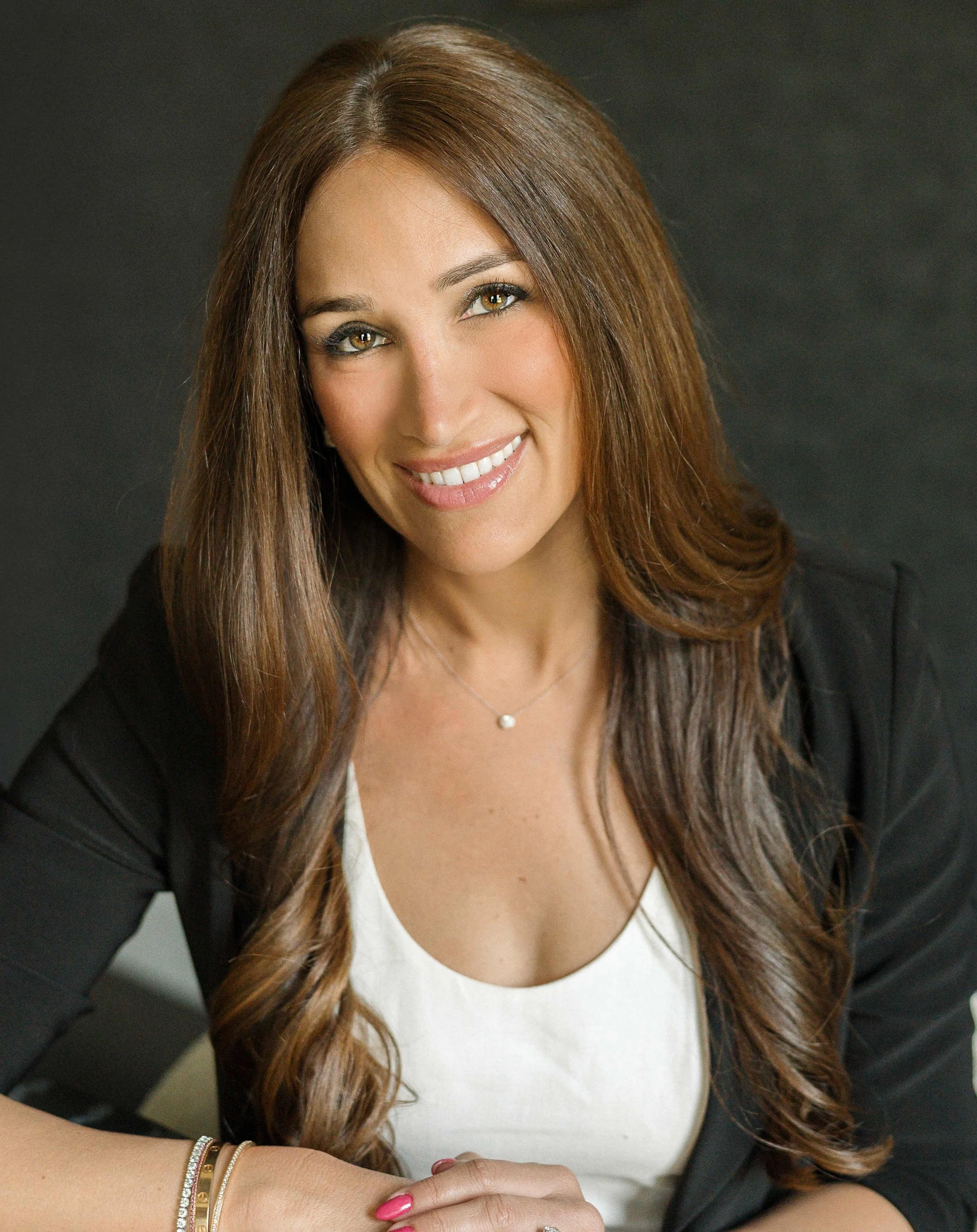
Connect with Lauren:
Lauren Tetenbaum, LCSW, JD, PMH-C, MSCP, is a New York-based mental health provider, therapist, and advocate for women's health and empowerment. She is the author of the book "Millennial Menopause: Preparing for Perimenopause, Menopause, and Life's Next Period," which was released in July 2025. A passionate educator and community builder, Lauren is dedicated to raising awareness, demystifying menopause, and providing women with the knowledge and resources they need to navigate midlife health transitions. Through her writing, research, and clinical practice, she empowers women to be proactive advocates for their well-being and fosters supportive conversations about topics traditionally seen as taboo.
Episode Highlights:
00:50 Millennial Menopause
06:30 Mood Swings and Mental Health: The Stats You Need to Know
13:22 Fighting Myths and Pushing Better Support
17:18 Menopause vs Andropause
20:56 A Girlfriend’s Guide for the Next Chapter of Life
23:49 No One Deserves to Suffer in Silence
Resources:
Book
Tweets:
Hot flashes, mood swings, or sleepless nights? It’s not just you—it’s perimenopause, and it can start in your late 30s. Tune in as @justine.reichman and @thecounselaur break down the science, coping tools, and myths you need to know. entrepreneurship #socialgood #inspiration #impactmatters #NextGenChef #EssentialIngredients #MillennialMenopause #WomensHealth #Perimenopause #MentalHealth #SelfCare#MenopauseAwareness #WomenEmpowerment #HealthEducation #MidlifeWellness #HormoneHealth
Inspirational Quotes:
01:43 “ People are talking about perimenopause, people are talking about menopause in a new way that they haven't.” —Justine Reichman
02:40 “ The more we talk about them, the more we normalize and de-stigmatize them, the better off we all are, because you don't have to go through anything alone.” —Lauren Tetenbaum
02:49 “Menopause is a universal transition for every woman with ovaries, and it's important that we recognize the symptoms and the treatment options.” —Lauren Tetenbaum
04:00 “In general, knowledge is power, and the more equipped we are with the tools we need, the better off we are. At a networking event, there were women who wish they knew about perimenopause, that it can be 10 years, and that it can impact mental health. Now I know, and I want me to tell my generation.” —Lauren Tetenbaum
05:37 “The fear is around this idea that menopause happens to old ladies, or that once you're in menopause, you're not young or beautiful or worthwhile. And that's certainly something that society has taught us, that we need to debunk.” —Lauren Tetenbaum
08:39 “Sleep should be a priority, so let's strive for that. Vitamins or nutrients should come from food, not supplements, unless that's necessary. Exercise, including strength training, for our cognitive health, cardiovascular health, and bone health. Stress reduction and social connection are so important for our mental health and also our cognitive functioning.” —Lauren Tetenbaum
10:09 “If you don't feel well, and you have tools that you can tap into to make yourself feel better, you have a little bit of a leg up, and we get to enjoy life a little bit more.” —Justine Reichman
15:08 “This is a systemic problem, because doctors are not getting the education in menopause care or women's health care.” —Lauren Tetenbaum
20:50 “The time is different now. People are more open. People talk about their feelings more.” —Justine Reichman
Transcription:
Justine Reichman: Good morning. My name is Justine, and I'm excited to be here today. You guys know me. I'm here each week, on Tuesday with different guests, talking about the impact of food and sustainability on our health, on our lifestyle, on our planet, food fashion and the works. So this morning, we're here with Lauren. Lauren Tetenbaum is from New York, and she just recently wrote a book called Millennial Menopause. And she's super interesting. I'm excited to talk with her. Not only is she passionate about women's health, she's passionate about empowering women to be advocates for themselves. Welcome Lauren.
Lauren Tetenbaum: Thank you for having me. Happy to be here.
Justine Reichman: Me too. I'm so happy. So Lauren, first, give us a little look at that book again just so the viewers that are watching can say, it's a pretty pink book.
Lauren Tetenbaum: I love pink. My book is called Millennial Menopause: Preparing for Perimenopause, Menopause, and Life's Next Period. We love a cheeky pun, and it was released in July 2025. It was truly a labor of love that came out of my realizing that as I approached my 40s, even though I am a mental health provider, I am very well aware of women's rights, women's health, I realized I knew nothing about menopause, and I started asking questions, researching and interviewing women and experts, and wrote it all down.
Justine Reichman: It's amazing. Because right now, this is really topical. People are talking about perimenopause. People are talking about menopause in a new way that they haven't. I don't think when I was in my 30s, that it was even a conversation or a thought that I had. And frankly, if we talked about my 40s, it still wasn't a conversation. The conversation came because I wanted to go off the pill at some point. And transition, we were trying to figure out that the average age was 53. So anyway, I have my whole journey. But what I'm curious about, because I wasn't thinking about this, and I'm curious how things have shifted now. Because you're bringing this to awareness, are you noticing that people are talking about it earlier? Did you have a moment of clarity for yourself?
“Menopause is a universal transition for every woman with ovaries, and it's important that we recognize the symptoms and the treatment options.” —Lauren Tetenbaum
Lauren Tetenbaum: I do totally agree that, as a culture, we're talking about it earlier. And I just think in general, when it comes to topics that can be taboo, the more we talk about them, the more we normalize and de-stigmatize them, the better off we all are because you don't have to go through anything alone. Menopause is a universal transition for every woman with ovaries, and it's really important that we recognize the symptoms. And of course, the treatment options. And I'm so glad that you mentioned the birth control pill and also hormone therapy, because there was a lot of fear around hormones. And now, we have debunked many of the myths that came out from a study in 2002. We know that it's generally safe and effective. Most importantly, we know that women have options. That the menopause transition can start earlier than the actual final menstrual period, and it's important to recognize those symptoms. Know you're not going crazy, and then get the help that you need.
Justine Reichman: I couldn't agree more, and I wish I had found this earlier. Because if I had somebody like you, somebody that was talking about this and could explain to me that some of these things can correlate to perimenopause, and are often symptoms of perimenopause, there might have been a way for me to deal with it in a different way. Instead of guessing, I tell my partner all the time, oh, it must be this. Oh, it must be that. You always think it's something different.
Lauren Tetenbaum: And maybe it was hormonal, maybe it wasn't. But in general, knowledge is power. And the more equipped we are with the tools we need, the better off we are. And for me, I met Anne Fulenwider, the Co-Founder of Alloy, a women's health platform for midlife women at a networking event. And there were other women there, all older than I was. They all said things like, I wish I had known that perimenopause can be 10 years, that it can really impact mental health, that help was available. I wish I had known. I wish I had known. And I truly walked out of there thinking, well, now I know. And I want me to tell my generation, and I'm certainly seeing it in my practice as well as a therapist.
Justine Reichman: And are you finding that people are more curious now at a younger age? Are they trying to find coping skills and identify how to know if this is something that's related to perimenopause or something that they need to dig in deeper.
Lauren Tetenbaum: I think millennials are used to talking about formerly taboo topics, whether it's fertility struggles, or mental health issues, or the general stresses of motherhood. We still have a long way to go. I would say that millennials who technically were born between 1981 and 1996, and I'm generalizing, but they still identify as too young for menopause. And the reality of it is many of us are in our 40s, and we very much are entering into the perimenopause phase. And I think the fear is around this idea that menopause happens to old ladies. Or once you're in menopause, you're not young, or beautiful, or worthwhile. And that's certainly something that society has taught us, that we need to debunk.
Justine Reichman: I also think that it's really important to debunk that, to let people know that that's not accurate, that you do have worth, and that you are beautiful. I completely agree with what you're saying. And I think it's about instilling curiosity too, for people to know that this is something they want to learn about sooner, not later.
Lauren Tetenbaum: Exactly. Be proactive.
Justine Reichman: Yeah, be proactive. And so if we talk on a personal level for yourself, how have you been impacted by this? How has that shaped what you're telling the world, what you're putting in your book and what you're sharing with clients?
Lauren Tetenbaum: So one thing, one fact that struck me while I was doing my research was that up to 70% of women experience mood shifts and mood symptoms during perimenopause. And that if you've had previous episodes of depression, you are 2 to 5 times more likely to experience depression during perimenopause. When I learned that, of course, I was really struck by that as a mental health professional, and also as someone who certainly has experienced anxiety and depression. And when I use those terms, I'm not even necessarily saying the full diagnostic criteria. To me, the diagnosis is useful, but the symptoms are really what I care about and want to treat. And some women or people might hear those figures and be scared. But I truly view them as empowering. Because now that I know that it's something that I can be prepared for and look out for, practice my coping mechanisms and find the right providers who know what they're talking about for midlife women, and be able to set myself up for success in this transition, and also to educate my clients and friends. So that's something that was really important to me.
Justine Reichman: Yeah, I can imagine. I think recognizing that for yourself, it almost feels like a weight has been lifted off your shoulders to know that this is something you can dig into. I know you mentioned anxiety, depression, all those different things. Are there any coping mechanisms that you could maybe share with those folks that are going through this, that maybe they could tap into, or at least try in their repertoire?
Lauren Tetenbaum: Sure. There's a few. And of course, every woman will experience menopause differently. Every woman will experience anxiety, depression, mood issues a little bit differently, but there are a few fundamental strategies that we can all kind of benefit from. One is getting quality sleep, which is not always easy especially when we don't feel good physically, or when we're having mental health issues. But sleep should be a priority, so let's strive for that. Another is quality nutrition, which I know you feel strongly about. I agree, our vitamins or nutrients should hopefully come from food, not supplements, unless that's necessary. Exercise, including strength training. That's something I also personally implemented since learning about it, because I never was lifting weights or anything like that. And now, I've learned the tremendous benefits of strength training and resistance exercises for our cognitive health, our cardiovascular health. And of course, our bone health, and then stress reduction and social connection. Those are so important for our mental health, and also our cognitive functioning. Lastly, there's also, of course, CBT therapy, which Cognitive Behavioral Therapy is the primary psychotherapy that I engage in which we talk about feelings and approaches to stress. Things like that. But also, medication is a tool in our toolbox, whether that's hormone therapy or antidepressants. And often, we use a combination of all of the above to feel better. I recommend women to think about what is bothering them? What do they want to work on? And then we slowly work on implementing all of those strategies.
“The fear is around this idea that menopause happens to old ladies, or that once you're in menopause, you're not young or beautiful or worthwhile. And that's certainly something that society has taught us, that we need to debunk.” —Lauren Tetenbaum
Justine Reichman: Nice. Had I known this, I know I'm being redundant, life would have been so much more amazing. And it's not that life wasn't good, it's that if you don't feel well, or your stomach's always bothering you, or you're always tired or something and you have tools that you can tap into to make yourself feel better, you have a little bit of a leg up, and we get to enjoy life a little bit more. I know I can tell you, as I mentioned, I went off birth control at a really late stage because I was scared of going off birth control. And I was scared of going off birth control because when I was younger, I had the worst PMS. I spoke with my doctors to make that transition from birth control to HRT. I was nervous. I was scared that I was going to have those same symptoms. But truthfully, if you have a team around you, if you have somebody to talk to like yourself, if you have a doctor that knows how to make those transitions for you with HRT, there are ways that you can feel better. I think having somebody that can walk you through that in every staff, yourself, talking about your feelings, your doctor. And then I think it's also, like you said, food. I don't know what your thoughts are on food, but I think hydration, because you get to drink. And if you eat, if you don't eat, you're going to be even more anxious, hungry or whatever. And if you don't think, you are not your best self. So tell me a little bit about how you structured your book. What you noticed, and what you learned when you went to that networking event empowered you to then be like, I'm going to write this book. I want to talk to all the millennials out there. My question is, what's the nugget that you found that was going to pique their interest?
Lauren Tetenbaum: Menopause can and does begin, not just when your period stops. That's actually sort of one of the ending points. But actually, menopause begins usually in one's late 30s, early 40s, and it's reflected by a whole range of physical and mental symptoms. And you don't have to spend your 40s suffering through them. You can get help. I would say the primary nugget that I walked away with was the power of community and talking about it, whether it's sharing resources, finding providers who know what they're talking about, just venting or laughing. You mentioned something about levity, and I think that's so important to have laughter and joy. And try not to take things so seriously, even if they could be hard. They could be, but you don't have to suffer through any of it.
Justine Reichman: I think that's an important point that people really need to hear. Because I think hearing from somebody like yourself who is in that stage at this moment, talking about it, you get to empower that next generation. I'm at a point where, when I got my first hot flash, I didn't know what it was. I thought I had food poisoning, and I had to call a friend and be like, okay, I don't know what this is, but this happened twice now. And she's like, oh, welcome to the club. But why is it that I'm 53, and for the last X number of years, nobody's mentioned anything to me.
Lauren Tetenbaum: Well, a lot of it is because, again, in our culture, we don't value older women. We don't value older people in general. And 53 is not old. We have such a skewed view of life. Even if we say the word midlife, a lot of people get funny about that. But it's nothing to be ashamed of or worried about. And if you are having a hard time, which does happen again, it's okay, and it will be okay. You don't have to suffer through anything. And I really wanted to demystify the myths about menopause and perimenopause. I wanted to provide resources, which I do. I give so many other suggestions for books, for social media accounts, by vetted professionals, for podcasts. Because knowledge, again, is power. And the more that we talk about these issues, we are empowering ourselves.
Justine Reichman: Yeah. What was the most surprising thing you found when you started to do this research?
Lauren Tetenbaum: Certainly the age range. What I knew about menopause was your period stopped, maybe some hot flashes. I really did not know the age that it happens. I interviewed many men for the book too, and a few of them said, oh, doesn't that happen in your 70s? No, what do you think? But really, I didn't know. I'm well educated, so I'm not afraid to admit that something was amiss in my education. And then first I thought, oh, maybe it's just me. I missed that day or a week, or what? Ever in biology or in grad school? No, no. The more I spoke to very brilliant physicians, the more I realized this is a systemic problem because doctors are not getting the education in menopause care or women's health care, frankly, that they need. And that was really surprising. And then the fact, again, that many women in their late 30s, early 40s are experiencing symptoms, even if they go through actual menopause, which is one year after final period, at the average age of 51 they're still experiencing the symptoms for many years prior. And that was something I felt like I wanted to screen from the rooftops. And I basically am, because we don't know this, and then we think we're going crazy, and we are having really difficult times with our interpersonal dynamics or at work. So many women leave the workforce or feel like they have to cut back because they're suffering. I'm all about helping women not suffer and get the access to the health care that they need.
Justine Reichman: And I commend you for that. I'm so impressed that you figure this out at the time that you did, so that you can start to create a movement, if you will, for those millennials that are heading towards this and in this moment of time when it's so important to tap into it so that you can really go through it in a much more better way, and an easier way that makes life just a little bit better.
Lauren Tetenbaum: Thank you. And yes, to demand better. And this is the lawyer in me saying that we don't have to just sit back and say, okay, this is just the way it is. No, we can demand that our healthcare professionals get the training. We can demand that our research gets funded. We can demand that our workplaces provide support. And so I talk about all of that in the book. It's not just mental health. Although, of course, that's a huge part of it. But there are also chapters on how to navigate this in the workplace. How to talk to men. There's a whole chapter dedicated to men. We talk about sex, exercise, sleep and so many different areas of our life, because menopause can impact so many areas of our life.
Justine Reichman: I'm curious, because you mentioned you interviewed men, and I don't know what age ranges they were, but andropause is also something that's not talked about a lot. I would say even less than menopause. And I would say I've talked to some men, and they're just like, yeah, no, I'm fine. I'm fine. I'm fine. But yet, equally, I'm sure that they're experiencing depression and other issues as it relates to hormones, testosterone and all sorts of things. So I was curious if that came up at all in your conversation?
Lauren Tetenbaum: I did look into this a little bit. I'm certainly not an andropause or men's health expert. But what I have come to learn is that, yes, testosterone dips for men in midlife, but not to the extent that it reaches levels considered low. And the other piece is that, often, men, they are for better or worse, less complicated than women. So if they are struggling, a little bit of testosterone goes a long way for them. Whereas women also may benefit from testosterone and really have to fight to even get it. And there's no FDA approved dosage for women so I don't want to say this is not a men's issue, but it's not quite the same. It's not the same thing. We're not comparing apples to apples. But I will also say in general, midlife is hard. It's hard for men, for women, for anyone. There's a lot going on with our life transitions. Our parents are aging, maybe not here with us anymore. We might have toddlers, we might have teenagers, we might be empty nesters. That's stressful. Our careers are changing. I don't want to say that all these mood issues or stressors are hormone related. But when you look at the whole picture, there's a lot going on. And if you're a man, woman, whatever, if you're feeling like you need support, you deserve that support.
Justine Reichman: Yeah. I think you're accurate. We all deserve that support. And so when you first started talking about this after you had the realization, and you started to talk to people, and you're building your community, and you're writing your book, what was the feedback you got from other Millennials about what you were bringing to the table? What were you surfacing?
Lauren Tetenbaum: I don't want to talk about that, or I'm not ready to think about that to thank you so much, because I've noticed weird changes, and I had no idea. I didn't have the language to describe this. I thought I was going crazy. I often hear in my therapy practice and in my community reflections on postpartum such as, why didn't anyone warn me about how hard it is? Or, I had no idea that weaning from breastfeeding can cause a lot of mood shifts, things like that. And that was mirrored in the menopause conversation of, wow, thank you for telling me. Because again, when you have that knowledge, even if you're having a hard time, let's say with symptoms, you know it's not in your head. You know that you're not going crazy. You know that this is a natural process to an extent, and then that help is available.
“The time is different now. People are more open. People talk about their feelings more.” —Justine Reichman
Justine Reichman: Because I'm super curious. If I look at myself 20 years ago, if somebody came up to me and said, let's talk about perimenopause. Yeah, I don't know where I would have fallen in there. In general, I like to think that I'm forward thinking and thinking ahead, but I also think the time is different now. People are more open. People talk about their feelings more, or maybe that's just because I live in California.
Lauren Tetenbaum: We're both. I agree. And I say in the book, this is not a textbook that you study and have to memorize. No, this book is there when you need it, and if you're thinking, huh? Normally, I don't react to something the way I just did. Maybe something's going on with me. Check it out. Read it. I can't guarantee it's perimenopause, obviously, if I'm not diagnosing each individual. But it's worth reading and getting educated, getting prepared. And it was really important to me to de-stigmatize it and just talk about it in general. For the friends of mine who said things like, oh, I'm not. I don't even want to think about it. I get it. But again, that's because they feel young and fear aging. And in my opinion, menopause is going to happen anyway. You might as well know what it is and not go into it blindly.
Justine Reichman: Some people don't want to know. Some people want to know everything, so that they can be prophylactic, and they can be preventative in the best way they can. But I can understand how scary it can be to learn these things as well. You know what I was thinking about your book? I was thinking about how you described it as something you can go to remind you of like a recipe book, or how you use it for reference. I love thinking about it that way, because it feels like you have almost a bit of a safety net there. You have something that you can go to when you have a question. You're not alone and somebody else had it. So it's in the book, most likely. And you're not reading it from cover to cover. Or maybe you are the first time, and then you go back as things pop up and you want to check in. So it's kind of something that is a support system in the book, in your cupboard, so that you could always reach for it when you have questions.
Lauren Tetenbaum: That's a beautiful description, and really resonates with me. So thank you for picking up on that because the book itself, yes, there is a ton of science, a ton of journals from scientific resources. I certainly did my research, but it's written in a fun and friendly way. It's full of pop culture references. It's meant to be, and it is like a girlfriend's guide to this next chapter of life. It's a resource on a safety net. And I know that women who have read it feel like they're talking to a friend who knows what they're talking about. And that's really my goal for it, so thank you for highlighting that.
Justine Reichman: Oh, it's my pleasure. So for those folks that are interested in learning more about your book or where they can get it, where's the best place it's sold?
Lauren Tetenbaum: Wherever books are sold, Amazon, Barnes & Noble's, independent bookstores. And if you go to millennialmenopause.com, you will see all the links, including to my primary website.
Justine Reichman: Awesome. Lauren, thank you so much. This was such a great conversation. Really, I'm so inspired by you and taking this initiative to bring this conversation to the forefront when nobody was talking about it. And I think that there's so many people that will be helped by this by even just getting a little bit more educated so they can make more informed choices, and know that it's okay to talk about and to ask questions. So everybody out there, if you have more questions, you're going to want to find this book, and you're going to want to read it. You don't need to wait until you have menopause. Don't wait like I did. You don't need to suffer in silence or with questions over your head not knowing what's going on. So Lauren, again, thank you so much. It was so great to chat with you. And for those folks that are tuning in today on the podcast, don't forget that you can also watch this live or on YouTube at Essential Ingredients. And if you're not following us, please do at essential.ingredients, and justine.reichman. We look forward to having lots more guests like you, and we look forward to having you back and talk about in six months or a year. What are you seeing now? Are people talking about it more? Because it's really these conversations that inspire more conversation and more curiosity, which is what we want to instill.
Lauren Tetenbaum: Always happy to chat. And if I can't help you directly to all the listeners or viewers, happy to point you in the right direction, so feel free to get in touch.
Justine Reichman: What's the best way for them to connect with you?
Lauren Tetenbaum: You can reach me via email, lauren@thecounselaur.com. Or on Instagram at thecounselaur, counselaur, but L-A-U-R for Lauren.
Justine Reichman: We will make sure that all of that is in the show notes, so thank you so much again. Thank you to our listeners for tuning in.