S9 Ep78: Menu Transparency Unlocked: Find Safe Restaurant Choices Fast with Dylan McDonnell
“It is the most loyal customer segment that exists because people find it so hard to find places that they trust, that when they do and they have a good experience, they keep going back again and again. It’s a huge revenue opportunity for restaurants to take advantage of transparency.” —Dylan McDonnell
Nothing about dining out should feel like a gamble. In this episode, we talk with Dylan McDonnell, founder of Foodini, about how accurate ingredient data and personalized menus restore trust and enjoyment at restaurants for people with celiac disease, allergies, and special diets.
Dylan shares the personal story that launched the company and how Foodini tags menu items across restaurants, hotels, and stadiums so menus can show what is safe, what needs a modifier, and what to avoid. He explains the tech and operational challenges behind keeping menu data current and why transparency is also a major revenue opportunity for restaurants.
Press play to hear why menu transparency matters now and how restaurants can make dining safer and more inclusive.
Key topics covered
Foodini's origin story and Dylan’s celiac experience
How dietary intelligence and personalized menus work
Menu data, ingredient tagging, and QR-based experiences
Challenges of keeping ingredient and supplier data accurate
Why transparency builds trust and loyalty and opens revenue for restaurants
The role of regulation and industry adoption
How consumers and restaurants can get started with Foodini
Connect with Dylan:
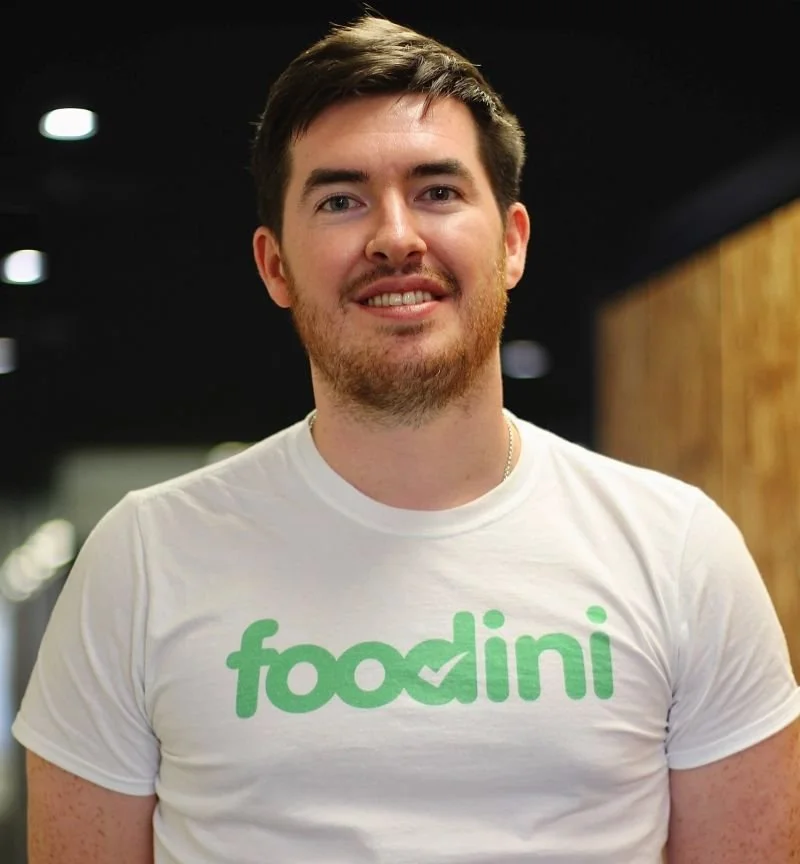
Dylan McDonnell is the founder and CEO of Foodini, a dietary intelligence platform that helps restaurants and food service providers deliver accurate, personalized menu information for more than 150 allergens and dietary needs. Inspired by his own lifelong experience with celiac disease, Dylan left a career in corporate law to build a scalable solution that brings transparency, safety, and inclusivity to dining. Under his leadership, Foodini has supported hundreds of thousands of users across the U.S., Canada, and Australia, partnering with restaurants, hotels, and stadiums to modernize menu data and improve the guest experience. He is recognized as a leading voice in advancing food-allergen transparency and helping the industry adapt to emerging regulatory standards.
Episode Highlights:
01:15 What is Foodini? Personalyzed Allergy-Safe Menu Explained
06:23 Market Research, Customer Interviews, and MVP
10:04 Loyalty, Revenue Opportunity, and Decision Influence
13:03 Data Problem in Food Service and Building a Tech Team
17:48 Self-Funded Offshore Build and Early Team Steps
22:34 Eating Freely Again
24:22 Explaining User Workflow
Tweets:
Safe meals should be simple. Tune in for how @getfoodini maps ingredients, supports 150+ dietary needs, and helps families trust menus. Founder story and practical fixes— listen today with @justine.reichman and Dylan McDonnell. #entrepreneurship #socialgood #inspiration #impactmatters #NextGenChef #EssentialIngredients #FoodAllergy #Celiac #MenuTech #AllergyAwareness #AllergySafety #RestaurantTech #SafeDining #Transparency
Inspirational Quotes:
02:33 “More and more people are aware of their allergies, their intolerances. They're paying attention to them the way they make them feel, and it's more important than ever to be transparent so that people can be mindful about what the ingredients are.” —Justine Reichman
04:51 “The reality is, for many people with food allergies, one tiny grain of the wrong thing can literally be life and death for them.” —Dylan McDonnell
10:05 “A little bit of security goes a really long way. People who might have been ambivalent about going out and wanting to participate now have a bit more flexibility.” —Justine Reichman
10:26 “There is this huge segment of society that is not going to your restaurant because they don't trust that they can. But if you give them that information, not only are you attracting a massive segment, but you're also getting their friends, their families, their coworkers, because they're the decision maker when it comes to going out.” —Dylan McDonnell
11:01 “It is the most loyal customer segment that exists because people find it so hard to find places that they trust, that when they do and they have a good experience, they keep going back again and again. It’s a huge revenue opportunity for restaurants to take advantage of transparency.” —Dylan McDonnell
14:05 “One of the reasons why a digital solution is so important is because menus change all the time, recipes change all the time, ingredients change all the time, and it's really hard to keep this accurate and up to date.” —Dylan McDonnell
16:57 “We all do best with what we know, and we're more passionate about it. But having experts around can drive things to a whole other place; doing it yourself can often be challenging.” —Justine Reichman
23:05 “Us or any other solution doesn't change the fact that the people who have these problems [allergies] need to still advocate for themselves.” —Dylan McDonnell
26:25 “There was a report that was issued which said that 53.9% of allergy incidences that occur in restaurants happen after the staff have been notified about the food allergen. That tells you the system is broken when humans are brought into the loop. This has to be a technical source of truth that doesn't just rely on humans to always get it right.” —Dylan McDonnell
Transcription:
Justine Reichman: Good morning, and welcome to Essential Ingredients. I want to welcome both our guests today, Dylan McDonnell, as well as our listeners and our viewers that are tuning in each week. We have a great community of folks, and I think you guys are not going to want to miss this episode today with Dylan. Dylan is the Founder of Foodini, and it is an app that connects you with the transparency you want when going to a restaurant so that you know whether you're celiac, whether you have intolerances. This is an app that can help you make a more informed choice and be safe. Welcome, Dylan.
Dylan McDonnell: Thanks very much, Justine, great to be here.
Justine Reichman: Likewise, great to meet you. I'm super excited about what you guys have built here. What you've built here, and the inspiration behind it. And so for those folks that are tuning in for the first time, haven't met you, don't know what Foodini is, maybe you can just give us a higher level than I did. But not the whole enchilada so that we still have things to talk about.
Dylan McDonnell: In terms of what Foodini is, we're essentially a dietary intelligence company. So we work with restaurants, hotels, stadiums, and schools to, in essence, document their menu data, to tag it with the correct ingredient and allergen information so that we can then provide a personalized menu experience to customers across 150 different food allergies and dietary needs. So what does that mean? A customer can walk into a restaurant we work with, scan a QR code, create a dietary profile from those 150 different things, gluten, vegan, keto, shellfish, and instantly, the menu will be customized for them to say, here's what you can eat. Here's what you can eat with a modifier, and what that modifier is. And here's what you can't eat. And just to your point, we do have an app. It's actually just in LA at the moment, in terms like discovering locations around you, our main product kind of sits within restaurants, both on their website and via QR code. And it's more of a website, a URL type experience. But we're building that critical mass of locations all the time.
Justine Reichman: Well, I traveled to LA a lot. So when I heard you say LA, it piqued my interest. I'm going to want to try it when I come to LA.
Dylan McDonnell: Absolutely, you should.
Justine Reichman: In the meantime, this is super exciting because I know more and more people are aware of their allergies, their intolerances. They're paying attention to them the way they make them feel. And it's more important than ever to be transparent so that people can be mindful about what the ingredients are. And I can't imagine why people haven't thought of this before. I know we talked about it. There are some other more antiquated solutions to it, but this seems the most advanced that I've seen so far, and gives people the most flexibility and the most education so they can make the best decision for themselves. I know you're celiac, and I'm sure that that played a role in you innovating this. I'd love to hear a little bit about what that journey was like for you, and how you came up with this idea?
Dylan McDonnell: Absolutely. I'm a bit of a weird one. People have probably clicked onto an Irish accent at this point. I was born in Philly, funnily enough. But I grew up in Ireland. Irish parents. And I was not working in the world of food at all. I was a lawyer by trade. Worked in corporate law and big law, and with a lot of the global tech companies, the Googles, Facebooks, Microsofts of the world. That journey took me to Australia to add even more complexity and geographical confusion into the mix. And while I was there, I started Foodini. And as you outlined, my connection to the problem was celiac. So I was diagnosed when I was 10 after a few years of being quite sick when they were trying to figure out back in the day what was wrong with me. What kept making me react this negatively? And once I figured it out, obviously, I've been on the gluten free diet ever since. And what I found over time is, at home, it's manageable. You go to the grocery store, the options keep getting better and better. I feel like year on year, very manageable in the grand scheme of things. Could be a lot worse dining out, different story. And over the years, just had a culmination of so many bad experiences in terms of restaurants not having any information documented. All the dreaded, I think that's gluten free that you often get from a staff member where they haven't a clue, being served the wrong foods, and being sick for a few days after the whole spectrum of things. In one way, I'm fortunate that I'm not anaphylactic. I'm not gonna draw on the ground of giving a trace of the wrong thing. But the reality is, for many people with food allergies, that is the case. One tiny grain of the wrong thing can literally be life and death for them.
And so for me, again, I just couldn't understand why there wasn't this transparency of information. That was kind of number one. And then I was looking into that like, how is this possible? But I was like, maybe because there's only a few of us. It's probably like I live in my own bubble of gluten free. There's a handful of us. It's just not worth it for the restaurants and for the food service industry. And then I looked into the numbers, and that blew my mind. So in the US, you have 33 million Americans that have a diagnosed food allergy. It's like 1 in 10 diagnosed food allergies. Then you have another 50 million that have some form of food intolerance. That means they have a negative reaction to the food, but it's not a medically diagnosed allergy, per se. And then you have another 70 million people who follow a lifestyle diet. That's your vegan, you're a vegetarian, you're keto, you're paleo, your low FODMAP, your low carb, you name it. And I was like, how is there such a big market on the consumer side, but lack of information on the food service side? And we can talk in a minute about why that has been the case? And maybe, what's changed that might make it easier going forward? But yeah, the aha moment was, this is a real problem that impacts a lot of people in a significant way, and there's just no solution out there. So I kind of decided to take a crack at doing something about it.
“The reality is, for many people with food allergies, one tiny grain of the wrong thing can literally be life and death for them.” —Dylan McDonnell
Justine Reichman: And I think that that's admirable. It is a huge problem. And as you're saying, those numbers, they're staggering. They're much greater than I ever could have imagined.
Dylan McDonnell: Maybe this is my personality. I think it was a bit more of a slow burn for me. It was a combination of a lifetime experience of living the problem that culminated in a few months of like, in the back of my mind, something here, why is this? Which then resulted in me starting to research the size of the market in terms of how many people were impacted. Which then resulted in me looking into opportunities somewhere in the world, this has already been solved. It's probably in New Zealand,, or Spain, or somewhere, and it just hasn't met it here yet. But there's definitely a company that solved for this already. And then I was like, okay, no, that's not the case either. And then I was like, I must be crazy. If this was so obvious, someone would have done it already, of course. And still in my capacity as a lawyer, I spent several months doing field research, talking to customers, talking to families with food allergies, talking to vegans, talking to people following lifestyle diets, and just trying to be like, is this really that big of a problem for you too? It's a problem for me. Does it impact you in the same way? Do you struggle in the same way when you go to restaurants? Do you sometimes not go out and avoid it? Keep getting the same feedback and then talk to restaurants, is this a problem for you? What do you do when customers come in with this? Oh, you don't really have a solution. You don't do anything. You hope for the best and cross your fingers. And so, again, maybe it's the lawyer in me. But it was definitely an effort over a period of time to educate myself on this. And then I got to a point where I kind of designed a very basic MVP, got some really positive feedback on it, and got some investor interest. And then that was the, okay, I've spent my time validating that this is real, and there is a real opportunity. That this is a real problem that needs to be solved. And then I was like, I'm all in. Let's go do this.
Justine Reichman: So how has it changed your life now that you can go to a restaurant, obviously, the ones that you know that have this. What kinds of doors has it opened for you? What opportunities are there for you to eat? How does it make you feel now that you have access to this?
Dylan McDonnell: I think as a consumer, it's a few things like, with the consumer hat on, it's inclusive for the first part. The amount of people that do not avoid social outings, their friend groups, their family outings, the cold, the Christmas lunch, they can't get the information they need to know that they're going to be safe there. And it's awkward, it can be embarrassing, can be whatever. And so a lot of people just take themselves out of the situation, don't go. And I feel like that's not good enough. And then there's another big segment who go, but they are nervous every bite they're taking. They're like, that waiter said he thinks there's no peanuts in here. But I didn't get conviction from him, and there's no document that says that I made it. Did he even ask the chef? And so now, I'm eating, but I'm on tender hooks. I can't relax, I can't enjoy it, and I'm just hoping for the best, again, that there's not something in here. I think transparency gives trust, it gives inclusivity, it gives enjoyment back to the people who just want to be like everyone else. And again, most of the listeners here probably just take for granted that they can walk into any restaurant and eat whatever they want, and that's amazing. But for the people who can't, it truly impacts them every meal every day. There's no one, again, it's funny. What we've learned over the years is that our super users are actually the moms of kids with food allergies. Because again, there's no one who just cares about this problem more. Because again, especially as the kids start getting older, and teenage years, and eating without them, there is a constant fear for them that their child will advocate for themselves, maybe in the same way that mom always has done. So yeah, it's certainly a game changer, I think, for the people who fall into the bucket of needing to know what's in their food.
Justine Reichman: Yeah, I can imagine a little bit of security goes a really long way for those people that might have been tentative or ambivalent about going out and wanting to participate now have a bit more flexibility and access.
Dylan McDonnell: 100%. And the thing is, it's great for consumers, obviously, but for restaurants. A lot of what we've had to do is educate them to explain that there is this huge segment of society that is not going to your restaurant because they don't understand or trust that they can. But if you give them that information, not only are you attracting a massive segment, but you're also getting their friends, their families, their co-workers, because they're the decision maker when it comes to going out. So if we're going for lunch, we can't go to somewhere that doesn't have a gluten free option. And if I know that that place down the street does, and this one over here doesn't, well, we're going to the place that does. Because otherwise, I can't eat. So it's a huge revenue opportunity for these restaurants. And again, it is the most loyal customer segment that exists, because these people find it so hard to find places that they trust. That when they do and they have a good experience, they keep going back again and again, and again, and again, and again. So it's a huge revenue opportunity for the restaurants who take advantage of this transparency well.
Justine Reichman: So let's look at that population for a minute. You're talking about millions of people that have gluten, or dairy, or whatever, peanut allergy, right? So what percentage of that population do you think, since launching the app, you've been able to tap into, and increase their opportunities of going out in a safe way?
Dylan McDonnell: Hard to calculate. We're closing in on half a million customers who've used our technology in terms of creating a personalized menu. I'm sure you could do the maths on what that is, and that's not insignificant at all. Given how recent we've only been in the US for just over a year, we're definitely making a lot of progress. Most customers find our technology in the restaurant itself. So they'll go into a restaurant or onto a restaurant's website. They'll never have heard of Foodini before, but they'll see a button or a QR where it says allergy dietary menu. And then they'll create that personalized menu for themselves in a few seconds, not necessarily knowing that we're the ones powering that in the back end. And so then they'd be like, well, I've never seen this before. This is amazing. How can I get to these other places? And then they'll see, oh, what's this Foodini in the top left corner? And then they kind of track us down that way. So most customers discover us through our partners.
Justine Reichman: So is it like I'm picturing a menu, and in a corner, there's a QR code and it says customize?
Dylan McDonnell: Exactly. Allergy Dietary Menu, scan here.
Justine Reichman: That's what will be there, and then they'll click on it with their phone. And people are used to using phones now, whether it's even to pay a bill or to get menus. People are shying away from wasting paper and all sorts of things. So there's a lot of more comfort, I'd say 100%.
Dylan McDonnell: I think as well, obviously, not just for the consumer, but for the restaurant also. The reality of food is, again, I think it's important. There might be people here who work in the food or restaurant industry, and it's very easy to say, oh, the big bad restaurants won't publish this information. Why not? Why are they not doing this? But we've so much empathy for that industry, because this is really hard to do. If there was just a magic bowl of accurate data that restaurants could tap into to give this to consumers, they would. They absolutely would. But the problem is, the way supply chain works in the United States from manufacturer to supplier, to distributor down to restaurants, and the way the data layer that currently exists, and the way ingredients can change, and suppliers can swap out at the last minute this brand of mail for that brand of mail because they ran out of the first brand of mail. There are reasons why it's very hard to get this information accurate and keep it accurate in the reality of running a restaurant. Except with the exception, probably, of the big enterprise groups. And so one of the reasons why digital solutions are, or we believe a digital solution is so important is because menus change all the time. Recipes change all the time. Ingredients change all the time. And it's really hard to keep this accurate and up to date, and keep reprinting your menus, reprinting your menu boards, and updating your information on your kiosk and on your website and data if you have to do that manually in all these different places. Whereas we kind of sit in the middle as the aggregator and collector of this data, who makes sure we keep it up to date and also propagate it to all of those different places where a restaurant's menu lives, to make sure that the consumer is constantly seeing as accurate as possible data.
Justine Reichman: It's so comprehensive what you built, and it's so hard to maintain the updating. And I think a digital solution really does solve that problem. Because how many times have you gotten yesterday's menu today, right? Because they're changing it all the time. And not only is that not the correct menu. It's also a waste of paper, printing and all sorts of things, and it has to be done manually or by a person. So there's lots of things that go into that. So I think that this solution makes a whole lot of sense. And when I think about it, I think about the technology that you had to build. You kicked this off, telling us that you were an attorney, and that over the next while you did the research and you built your MVP, did you have that skill set? Did you have to go learn that skill set? Did you surround yourself with people that could build it for you? What did that look like?
Dylan McDonnell: I did not have that skill set, and I absolutely have not learned that skill set. If you'd asked me to write a line of code right now, you'd be waiting a long, long time before I successfully managed that myself, unless I had my ChatGPT friend or someone beside me. No, I think I'm good at knowing what I'm good at, and I'm good at knowing what I'm not good at. I'm certainly not a technology coding type person, but I was very fortunate to surround myself, to your point, with people who are. And so whether it's our CTO Kent, who is a technology whiz, and Cameron or our other senior back end engineers who have become real experts from a tech perspective in terms of menu schemas and the technology, and how everything works in the back end, to my co-founder, Erica, who spent 15 years in restaurant and food tech in the US, and so also understood intimately how menus interact, schemas and everything there. And a number of our advisors as well, and some of our investors as well. And just due diligence myself in terms of maybe learning less about how to code the technology, but more about what the product needed to do to be able to solve the problem, and then bring the tech team in to actually execute, I think that's definitely been more my approach. I have not and will not be learning how to code anytime soon, that's for sure.
“We all do best with what we know, and we're more passionate about it. But having experts around can drive things to a whole other place; doing it yourself can often be challenging.” —Justine Reichman
Justine Reichman: Of course, I totally understand. I'm a big advocate of surrounding yourself with those experts and leaning into what your skill set is. We all do best with what we know, and we're more passionate about it, and we can figure it out, and we can be more efficient with our time and our energy. Having that expert around really can just drive things to a whole nother place than doing it yourself can often be challenging. Not to say it can't be done, but I'm with you in terms of the journey, and how that resonates with me. So when we go back and you were going through that time, and you're doing the research, or you're investigating all these things, and you're building this MVP, and this was pre-funding, correct?
Dylan McDonnell: Yeah, MVP was pre-funding.
Justine Reichman: So talk to you a little bit about how you put that all together. Was that self funded? Were people on board? Were they going to be part of the company? What does that look like? Because everybody has a different journey building that community, and getting it off the ground. I'd love to hear what it was like for you.
Dylan McDonnell: The very first MVP, which I then used to get funding was self funded, so I suppose I was lucky. I had a bit in savings, and so took some of that money, and I actually went to an offshore dev agency and asked for it. Don't think it was anything crazy at the time, maybe like $15,000, something like that to build me like a bare bones MVP that was technology that functioned. I think the big difference nowadays is where AI comes in, as companies like Lovable and Cloud, and all the GPTs where probably smart kids now could probably do that in a week by themselves, which is scary, or maybe even less, at very little cost. But that's, I suppose, the difference between now and a few years ago. So I had that. I also had my head dietitian who's still with me to this day, who I kind of had already sourced at that point in time. She wasn't a full time employee at this point in time. I think she was more like consulting part time, as I was kind of trying to think this through. So she was my first team member. Between us, we were kind of trying to onboard a few initial restaurants onto this MVP platform that I had got built offshore, and that was enough to kind of show, here's what it would be like. Very bare bones is what it looks like. We have worked with some restaurants. We've got customer feedback on the experience. It's all really positive. Now, I need money to build this properly, and to actually scale the solution and build a bigger team around me. And yeah, that's how I went about it.
Justine Reichman: Okay, that's exciting. So now, you've built something that can be used online, and you have a beta in LA. What are your next plans for Foodini?
Dylan McDonnell: So we work with beta from a consumer app in LA. But in terms of restaurants, hotels, stadiums, anyone on the B2B side where we're working with all over the country, in Australia and in Canada. So again, anyone listening who falls into any of those faces of food service or restaurants who finds this interesting, we can absolutely support and work with you. So our big focus right now, and this is actually kind of interesting. If you have any listeners who have food allergies, traditionally, up until a few weeks ago in the US, there's been zero regulation around food allergies in restaurants. Didn't have to document. Didn't have to label, nothing, no requirements. In California on the 13th of October, about three weeks ago, Gavin Newsom signed the first piece of regulation that relates to food allergies in restaurants. And that mandates that as of July next year, so only seven months away, all restaurant groups are 20 plus locations where one of those locations are in California, so pretty much every big chain and mid market chain in the country must label all of their menus for the major nine food allergens. And so that completely changes the game, we believe, in terms of now all of these groups who maybe, this wasn't our priority for, or they thought it was too hard, or they were worried about it. Now I have no choice. They must document this, and they must put it on their menus. And they are allowed to use a QR solution to do that, which, of course, is good for us. But aside from that, I see this as the first domino that has fallen towards echoing what happens in Europe, whereby all restaurants will be required to document their food allergens on their menu. And frankly, I think that is the way it should be. I think it's a massive constant health and safety issue. The fact that this is not the case, and this bill that just passed in California is now the blueprint to get this not just across every state as it is, but also down to every restaurant, not just the kind of chains with 20 plus locations.
And so our focus right now is to make sure that we're working with all of these restaurants. And instead of maybe traditionally they might have gone and paid a consultant a $15,000 for a static PDF that sits on their website, we're telling them now that with the advent of technology, AI and solutions like ours, you can actually do this in a much more scalable, much cheaper, much easier, much quicker way that also is a much better experience for your consumers. And so we're really focused on working with all of those groups. And then obviously, any other restaurant along the way who decides that this is something that they want to do as well. And then from there, we'll continue to scale the consumer up. Because the big thing really in that, as you would imagine is I don't want someone in Kentucky to download the app, and there only be one restaurant in Kentucky. You know what I mean? You want there to be enough restaurants that it's actually you're discovering new places, which is the whole point. So we'll gradually expand that from state to state and city to city as we continue to add more options for those consumers. But that's not to say that anyone who wants to check out the app, it's on the app stores. Would love any feedback or thoughts from the Food Allergy Community on ways we could make it better, or just feedback. Generally speaking, we always love talking to anyone who has a passion for this space.
Justine Reichman: So how has this made your life easier?
Dylan McDonnell: In terms of my job? Because if it's in terms of my job, it's definitely not easier. Corporate law was easier. Again, I think I alluded to this earlier. It's just the ability to enjoy the experience like everyone else, and not be worried, not be nervous, not to feel like maybe there's times where you shouldn't go, or shouldn't eat, or experience things differently. It is important to say, though us or any other solution doesn't change the fact that the people who have these problems need to still advocate for themselves. What we're trying to change is currently, you have to go into a restaurant and ask, I have a shellfish and a peanut allergy, what can I eat on the menu? And you're relying on that wait staff to accurately communicate the information to you. We still strongly recommend that everyone still says, I have a peanut and shellfish allergy, but I'd like to order the chicken curry because I know based on your menu that that is suitable for me. So you still need to notify the restaurant or the food service base that you have the allergy. The difference is you're not relying on them to communicate what is suitable for you or not. So there is always going to be a degree of risk. A chef can get out of the wrong side of bed and put a bag of peanuts into a salad that that's not supposed to be in, and you have no way of mitigating against that, and I have no way of mitigating against that other than making sure people get the right training, there's processes and data. But I suppose my big message is you still will need to advocate for yourself. You still need to have your little awareness antenna on if you spot something that doesn't look right. But from my experience and anyone I've talked to who used our technology, it's light and day versus the old experience, which was zero confidence that this is safe in the first place.
Justine Reichman: So if I was going to ask you a little bit about the experience and what that's like for you on a personal level, not everybody else, but YOU in particular, so you want to go out to dinner, tell me what that journey is like for you with Foodini? Or just generally, are you going to Foodini first to see what your options are like? What does it look like for you?
Dylan McDonnell: Yeah. Well, I think you'll understand this if someone says to you, hey, want to go to dinner at Gjelina tomorrow night? The first thing you're going to do if you have a food allergy is look at the menu. Because at this point in time, I don't know the first thing about this place. I don't know what kind of food they serve. They might have nothing but pizza and no gluten free crust, so straight away, that means I can't eat. You have to look at the menu as a consumer. So you look at the menu, and then you're looking up and down, and again, I've been doing this long enough that you get a sense that, yeah, it looks like there's things here that should be right, but you still don't know 99% of the time. Unless, again, there are certain venues that fair play at least label for things like gluten free, vegan and vegetarian, but they definitely don't label for almonds, dairy and gluten, as you kind of alluded to in your scenario. So my normal routine, regardless of Foodini is to look up the menu. If I can't see the information I need, then you're either emailing or calling to clarify.
The difference when I go into a restaurant that has this documented in some manner, shape or form, whether that's Foodini or otherwise, if I use Foodini in five seconds, click, see allergy menu, gluten free, save, 20 things I can eat. Great. Book. Done. No calling, no emailing, no process. I just have the information at my fingertips. If not, again, you're just relying on whoever answers the phone who, again, more times than not doesn't know. Because if they don't have the information on their website, 99% of the time, that person who answers the phone doesn't have the information either. There was actually a pretty scary stat that came out earlier this year. There was a report that was issued which said that, to be specific, 53.9% of allergy incidences that occur in restaurants happen after the staff have been notified about the food allergen. And so that, again, just tells you the system is broken when humans are brought into the loop holistically. And so it just kind of reinforced our strong view that this has to be a technical source of truth that doesn't just rely on humans to always get it right, because it's very hard for a waiter to be an expert in every allergen, every ingredient, and every menu item. It's very difficult, and I have empathy for them.
Justine Reichman: People are at risk here, so I think there's a real risk factor, and I think there's a real concern. So Dylan, this has been amazing. I'm so excited for what you're doing. I can't wait to see it open up in so many different other areas. And for those folks that are maybe consumers and want to learn more, and maybe even want to try this out, what's the best way for them to dig in a little deeper?
Dylan McDonnell: Yeah. I think first is our website, foodini.co, that kind of explains how we work, how we work with restaurants, our processes and whatnot. That's number one. Any consumer or person out there who has a food allergy or dietary need who, if you're in LA, amazing. If you're in the US full stop and just want to understand what the future of personalized menus looks like, would love you to check out the app, create your dietary profile, and put your location into Los Angeles, and have a look at what that kind of experience looks like, and what we're building towards. And then anyone who wants to reach out to me, like I said, I love speaking to people in the community, whether that's on the consumer side or the restaurant side, my email is Dylan, D-Y-L-A-N @getfoodini, G-E-T-F-O-O-D-I-N-I.com. Like I said, I always love having conversations. And LinkedIn, you can also find me pretty easily on there, Dylan McDonnell.
Justine Reichman: Awesome. Thank you so much for joining us today, talking to us about Foodini and your journey, and even your personal issues around celiac, and what inspired you to build this business. It's going to be so important for so many, and I want to thank our listeners for tuning in. I told you, wouldn't want to miss this, especially if you have a food allergy because this is going to be integral to how people can continue to eat in a more safe way, enabling them to make more informed choices, and be mindful, and take the responsibility out of the waiter's hands who may not have all the information, so thank you.
Dylan McDonnell: Not at all, thank you, and thank you for having me on. I really appreciated it, and really enjoyed the chat.
Justine Reichman: Likewise.