You Don't Need More. You Need Better.
Discover how conscious living—not perfection—can transform your food, fashion, and lifestyle choices into something more meaningful and sustainable.
The case for living consciously, not perfectly.
It started with a seed packet.
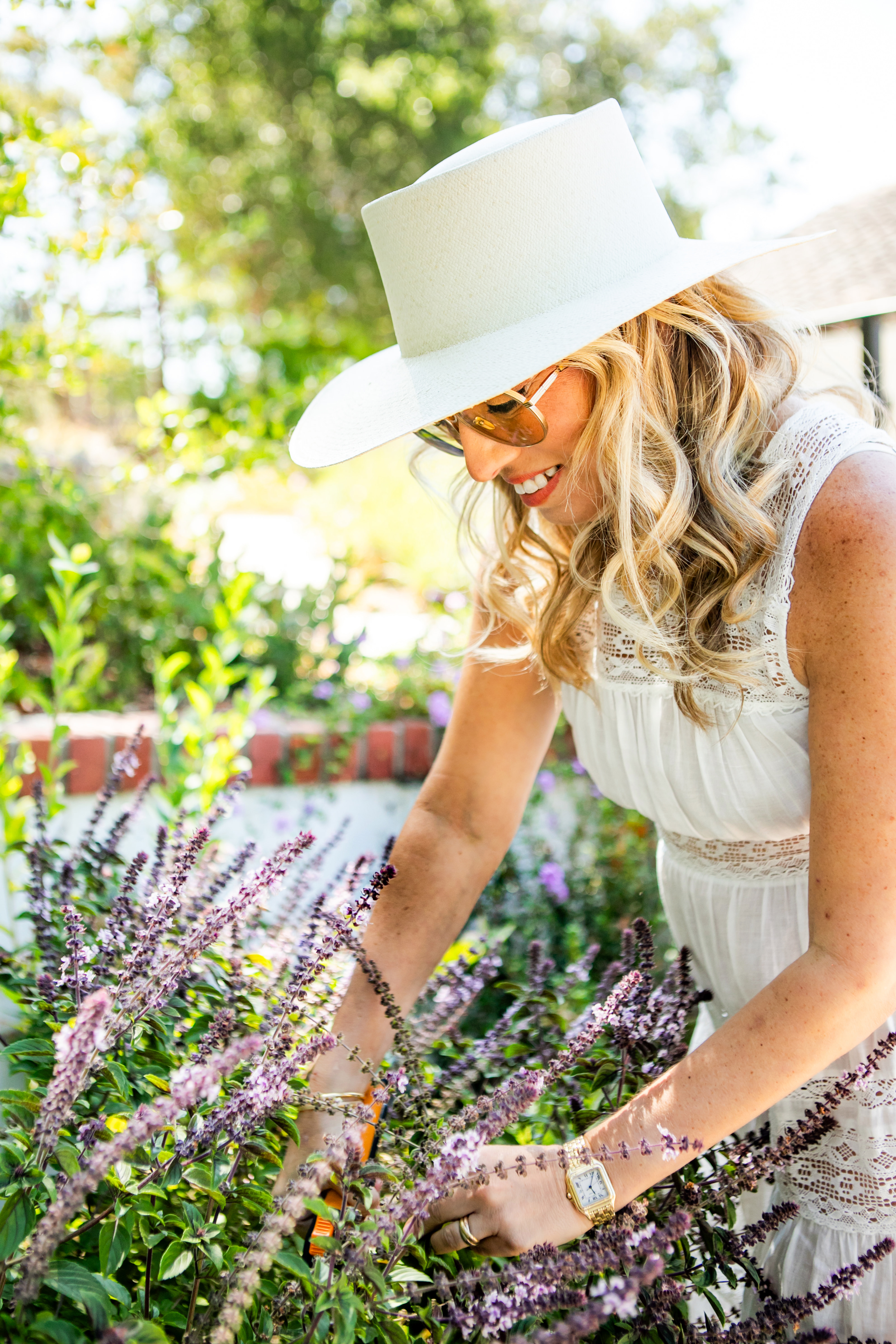
Not metaphorically. An actual seed packet. I was standing in my Marin garden one morning this spring, coffee in hand, looking at a patch of dirt I had been meaning to do something with for years. And I thought: what if this is the year I actually grow something?
Not a revolution. Not a lifestyle overhaul. Just a decision to do one thing differently because I now knew enough to want to.
That morning became the lens through which I started looking at everything else: what I eat, what I wear, how I move through my home, how I spend an evening. Not with guilt. Not with a checklist. With curiosity about what a more intentional version of my life could actually feel like.
This is what living consciously looks like in practice. And it is messier, more personal, and more freeing than any wellness trend will ever tell you.
The Garden: Where It Clicked
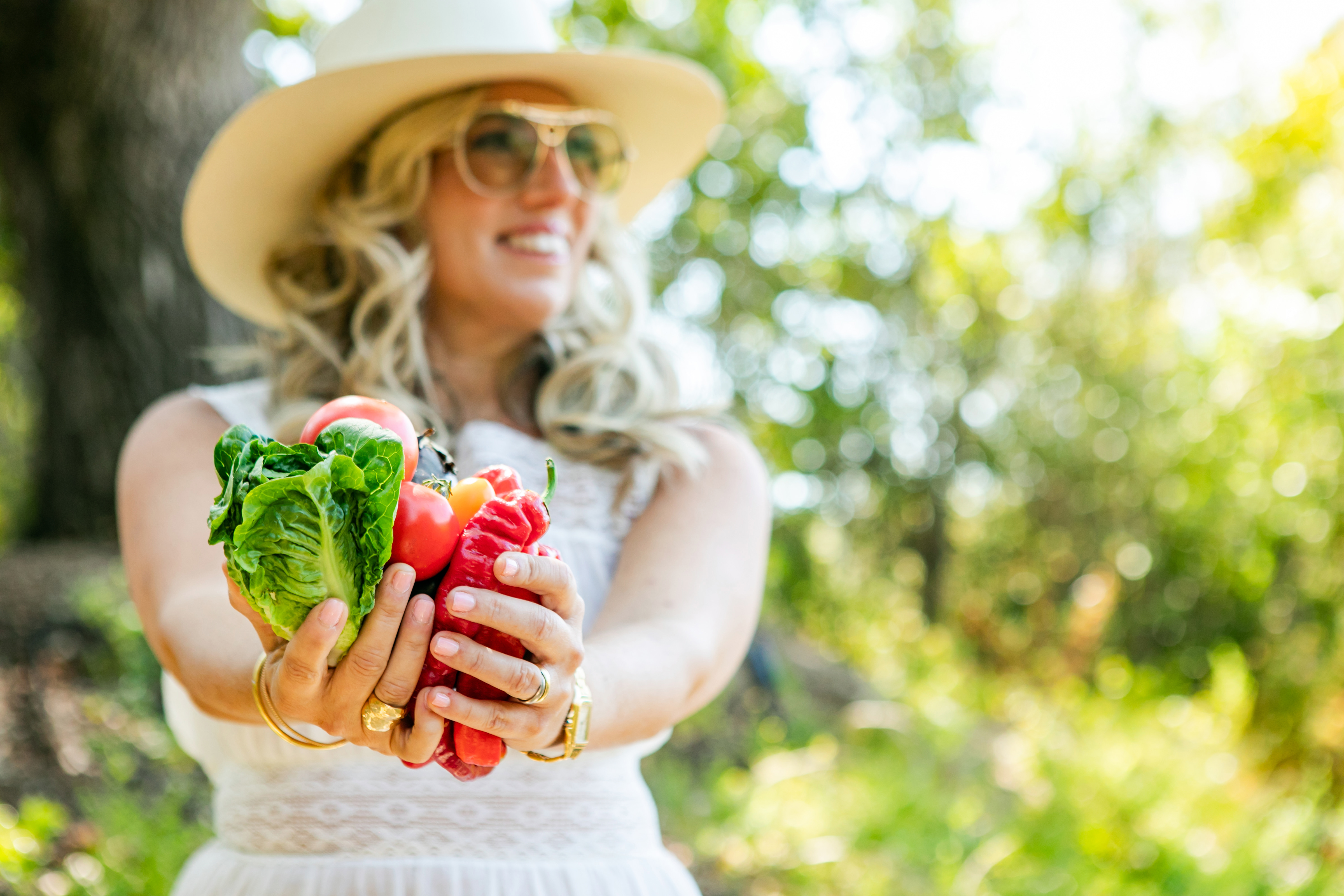
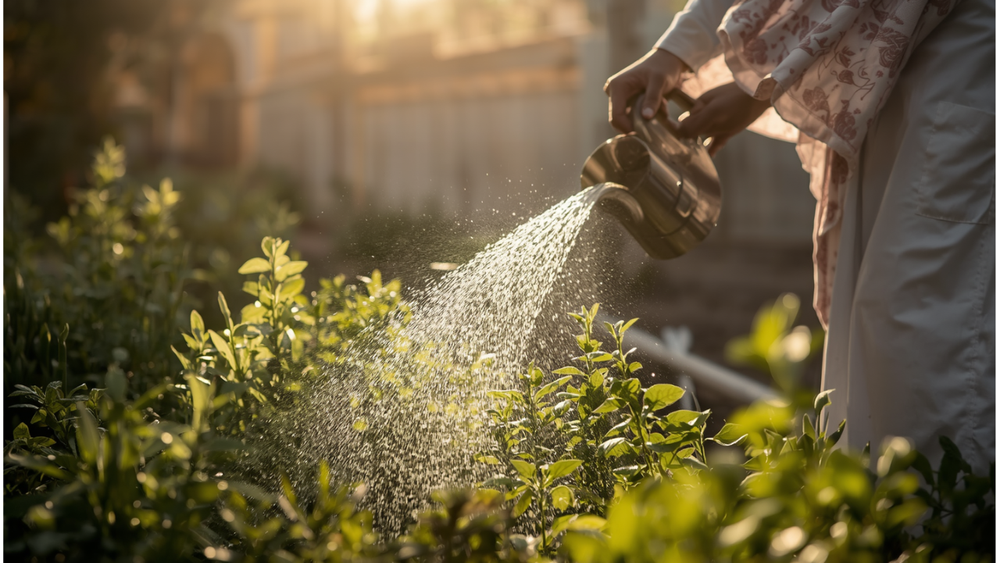
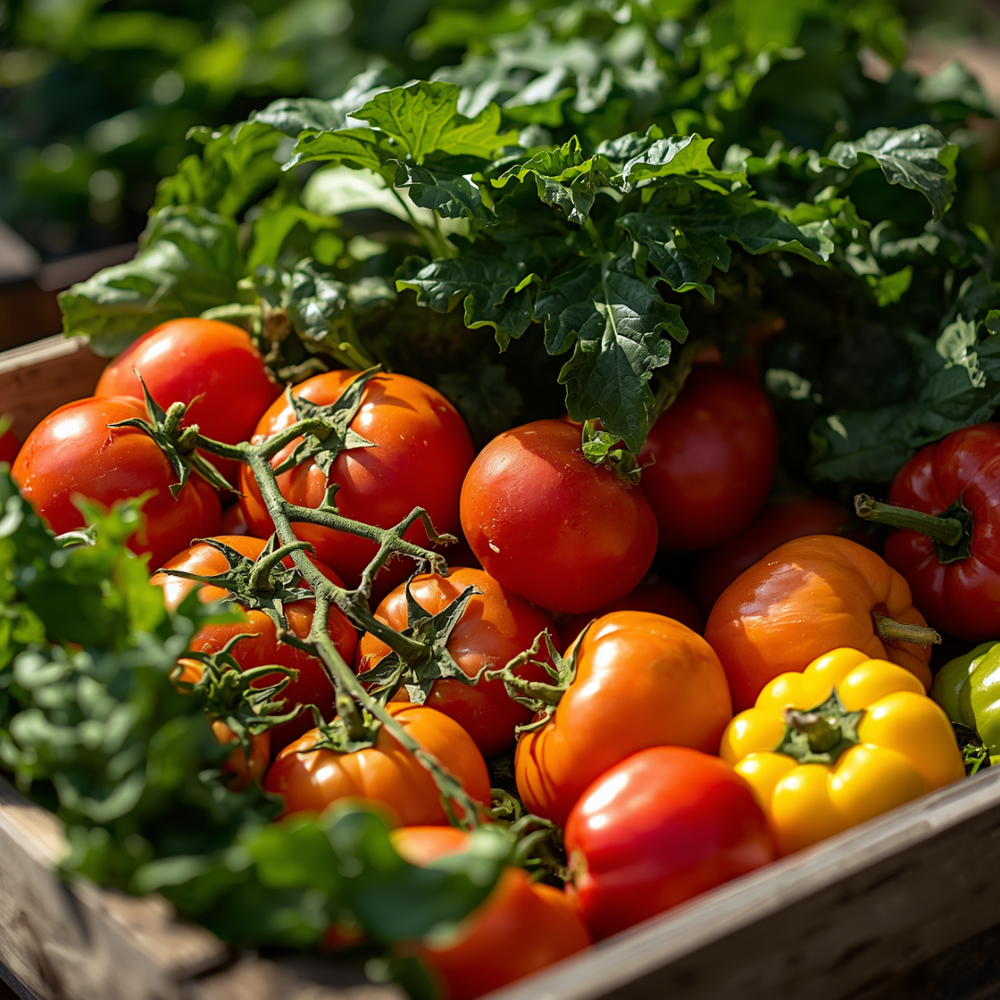
I planted tomatoes, herbs, and leafy greens. Nothing revolutionary. But once I started growing food, I started thinking differently about all of it. The ingredients I was reaching for, the meals I was cooking, the choices I was making at the market.
The science made me want to lean in harder. Fresh produce in the U.S. travels over 1,500 miles before it reaches your fork, according to food systems research published in ScienceDirect. That distance means more fossil fuels burned, more emissions generated, and produce that has been picked before peak ripeness to survive the journey. Research published by the National Institutes of Health confirms that organic and locally grown produce carries lower pesticide residues and a modestly higher content of beneficial phenolic compounds compared to conventionally transported alternatives.
Growing even a portion of what you eat changes how you treat food. I waste less. I cook more. I slow down enough to actually taste it. The food I grow with my own hands, I do not take for granted.
And here is where the story starts to thread itself: once you feel that connection in one part of your life, you start looking for it everywhere.
The Closet: The Same Lesson, Different Room
I opened my closet this spring the way I always do. Half expecting to feel like I had nothing to wear, half tempted to go shopping to fix that feeling.
Instead, I went exploring.
The white button-down I have owned for years. The ballet flats. The denim. A neckerchief I forgot I had. The preppy, clean, pulled-together look I apparently already own in triplicate. The 90s are back with full force, and I did not need to buy a single thing to participate.
I love fashion. I want to be clear about that. Looking chic is not something I am willing to sacrifice on the altar of sustainability. But what I realized is that building a chic life and building a conscious one are not opposites. They are the same project.
Here is what the research says: according to the United Nations Environment Programme, the fashion industry contributes 10 percent of global carbon emissions annually, more than all international flights and maritime shipping combined. And a landmark study by WRAP (the Waste and Resources Action Programme) found that simply extending the life of your clothing by nine months reduces its carbon, water, and waste footprint by 20 to 30 percent. Not buying a different brand. Not switching to organic cotton. Just wearing what you already own, longer.
The goal is a closet that passes the test of time, not the trend cycle. Knowing how to work what you have, lean into accessories, and see your clothes with fresh eyes is not a compromise. It is a skill. And it is the same skill I was practicing in the garden: learning to see the value in what is already there.
The seed packet taught me that. The closet confirmed it.
The Home: Fresh Without the Frenzy
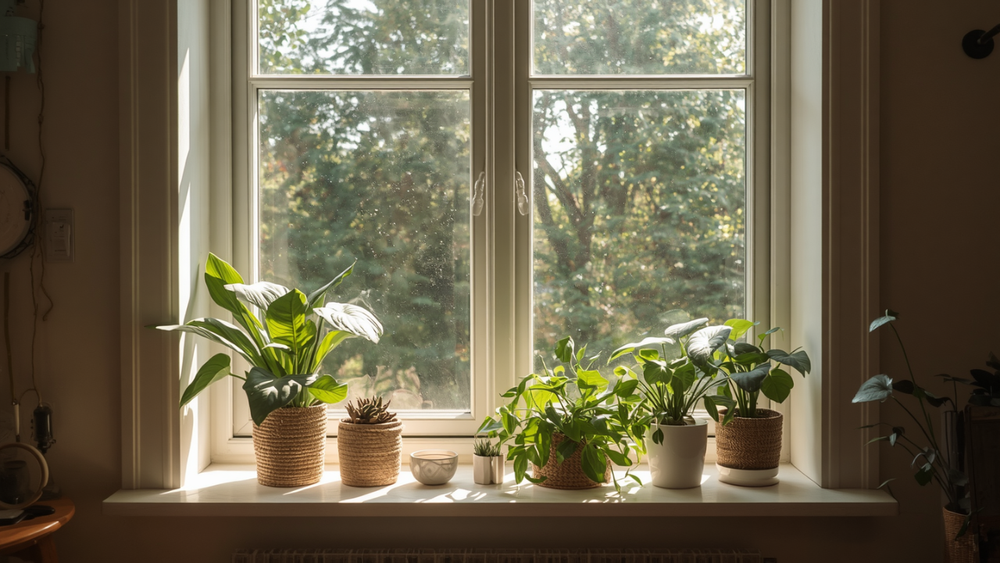
The same impulse that made me want to refresh my closet hits me every season with my home. I love when a space feels alive and considered. I love swapping in outdoor cushions when the weather turns, pulling out different textures, making a room feel like it exhaled.
But I have started asking a question before I buy anything new for the house: do I already have something that does this job beautifully? Usually the answer is yes. The things I bring out each spring feel special precisely because they were put away. Scarcity creates appreciation. That is not deprivation. That is design thinking.
This is the thread that connects the garden to the closet to the living room: when you stop looking outward for the next thing, you start seeing what you already have with completely different eyes.
The Honest Part: I Still Order In
And I am not quitting.
I want to say that clearly because this whole conversation falls apart if I pretend to be someone I am not. Some evenings, after a long day, the idea of opening an app and having dinner appear at my door is not a failure. It is survival.
But I also know the truth about it. Research published in the National Institutes of Health journal links frequent food delivery with higher calorie consumption, elevated sodium intake, and a pattern of choosing calorie-dense convenience foods over nutritious ones. Takeaway dishes frequently contain sodium levels that exceed daily recommended limits in a single serving. The packaging waste is real. The budget hit is real. My garden is twenty feet away and I am ordering pad thai. I see the irony.
So I did not quit. I scaled back. Four or five times a week became one or two. That single shift means fewer single-use containers in landfills, more meals made from ingredients I actually chose, and a budget that reflects my values a little more honestly.

I did not need to be perfect. I needed to be honest. And honest, for me, looks like progress, not purity.
What This Is Really About
A seed packet led me to a garden. The garden changed how I think about food. Thinking differently about food made me question what else I was consuming out of habit rather than intention. That question walked me into my closet, into my home, into my honest accounting of how I actually spend my evenings.
None of these choices exist in isolation. They are all the same choice, made in different rooms, on different days, with the same question underneath: does this serve me, and does it serve something bigger than me?
Research published in the National Institutes of Health confirms what many of us sense but rarely name: perceived gaps between our values and our actual behavior are directly associated with decreased wellbeing and increased negative affect. The inverse is equally true. When we close that gap, even partially, even imperfectly, something in us settles. We feel more like ourselves.
A large-scale study of U.S. adults conducted through the Health and Retirement Study found that people who reported a stronger sense of purpose in life showed better outcomes across 35 separate indicators of physical health, psychological wellbeing, and social connection. Not perfection. Purpose.
Living consciously is not a destination. It is a practice of making better choices more often, adjusting when you learn something new, and giving yourself enough grace to be human in the process.
Now It’s Your Turn
I want to know: what is the one choice you are making differently this season? What did you learn that shifted something? What are you holding onto and what are you finally ready to let go of?
This is not a call for perfection. It is a call for honesty. And it is an invitation to build something together.
Tell me in the comments. Share it with someone who needs to hear it. Let us make this a conversation worth having.
NextGen Purpose is a global media platform at the intersection of food, health, sustainability, beauty, fashion, and lifestyle. We believe that conscious living is not a luxury. It is a practice and it belongs to all of us.
Sources referenced in this article:
ScienceDirect, How Far Does Your Food Travel on the Highway: Food Miles and Carbon Footprint, 2025
National Institutes of Health, Human Health Implications of Organic Food and Organic Agriculture: A Comprehensive Review, PMC5658984
United Nations Environment Programme, Fashion Industry Carbon Emissions Data, cited in Earth.Org, 2026
WRAP (Waste and Resources Action Programme), Extending Product Lifetimes: Clothing Durability Research, 2024
National Institutes of Health, Food Delivery Apps and the Negative Health Impacts for Americans, PMC7044187
National Institutes of Health, The Complexities of Minding the Gap: Perceived Discrepancies Between Values and Behavior Affect Well-Being, PMC6465641
National Institutes of Health, Sense of Purpose in Life and Subsequent Physical, Behavioral, and Psychosocial Health: An Outcome-Wide Approach, PMC8669210
The Journal
Get essays like this in your inbox
New pieces every week on wellness, sustainability, food, and conscious living.
The Essential Ingredients Letter · Free
Get the letter. Stay in the conversation.
Enjoyed this episode? Justine sends one newsletter every Thursday on conscious living — food, wellness, sustainability, and the choices that compound.
Every Thursday · No spam · Cancel any time
Subscribe to the podcast
Never miss a Tuesday conversation. Subscribe or follow on your favorite listening app.
Free · Every Thursday
Subscribe
Enter your email below.