The Wellness Industry Isn't Making Us Well (And Other Things I've Had to Figure Out Myself)
A candid look at midlife mental health, perimenopause, and why the wellness industry may be missing what women actually need.
Mental Health Awareness Month 2026: What the Wellness Industry Gets Wrong About Midlife Women
For Mental Health Awareness Month 2026, one founder gets honest about midlife anxiety, perimenopause, and the small daily practices that actually help her feel like herself again.
May is Mental Health Awareness Month. Which means your feed is about to fill up with pastel infographics, breathing app ads, and brand posts that say “it’s okay not to be okay” right next to a discount code.
Here is my controversial take: Mental Health Awareness Month has become a marketing moment. A really profitable one. And we deserve so much more than that.
I want to try something different. I want to talk about what mental health actually looks like in midlife. Not the clinical version. Not the crisis version. But the everyday, creeping, hard to name version. The one that does not look like a PSA. The one that looks like you.
The Dichotomy Nobody Talks About
We are, by most measures, the most mentally health aware generation in history. We talk about therapy like it is a book club. We have apps for anxiety, podcasts for grief, and entire industries built around our nervous systems.
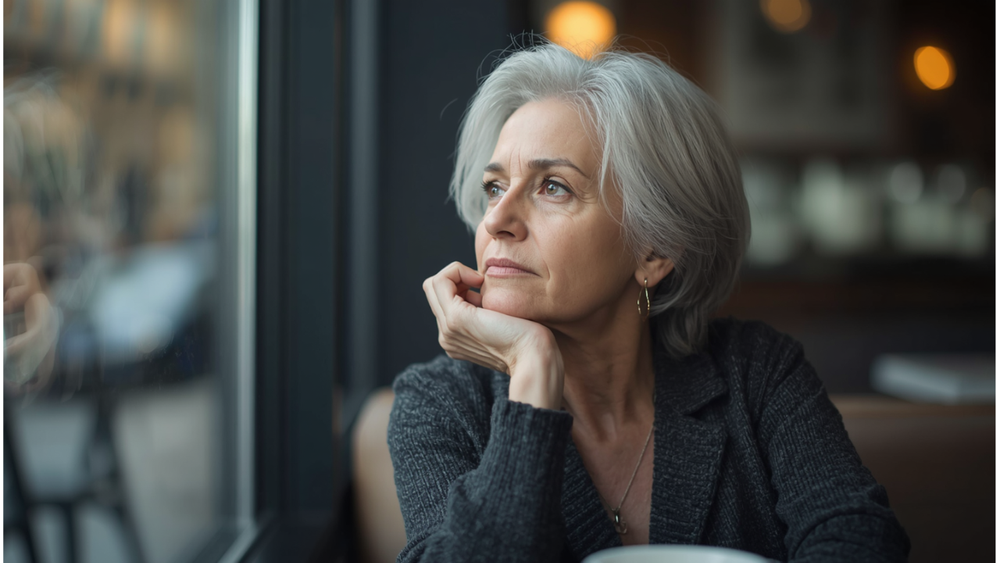
And yet — are we actually getting better? Or are we just getting better at talking about it?
Because here is what I have come to believe, and it is going to make some people uncomfortable: most of what the wellness industry is selling you is built on the business model of you not feeling well. Your anxiety is their revenue stream. Your exhaustion is their market opportunity. That is not care. That is capitalism wearing a linen jumpsuit.
Here is what I notice in myself, and in the women around me: midlife has a way of quietly rearranging everything you thought you knew about your own mind. Perimenopause is real, and it is weird, and nobody warned me that one of its less glamorous gifts would be a relationship with anxiety I did not sign up for. Not dramatic anxiety. Not the kind that lands you in the ER. The kind that hums. The kind that makes you feel like yourself but slightly off. Like a song playing in a room one floor above you.
I do not think I am broken. I do not think you are either. I think we are navigating a genuinely difficult passage — hormonally, emotionally, logistically — at a time when life keeps asking more of us, not less. And telling women to breathe through a broken system, then selling them a $40 adaptogen to wash it down with, is its own kind of gaslighting.
So what am I actually doing about it? Not the influencer answer. The honest one.
What Actually Works For Me
I breathe. Intentionally, annoyingly, on purpose. It is free, it is unglamorous, and it works. No app required.
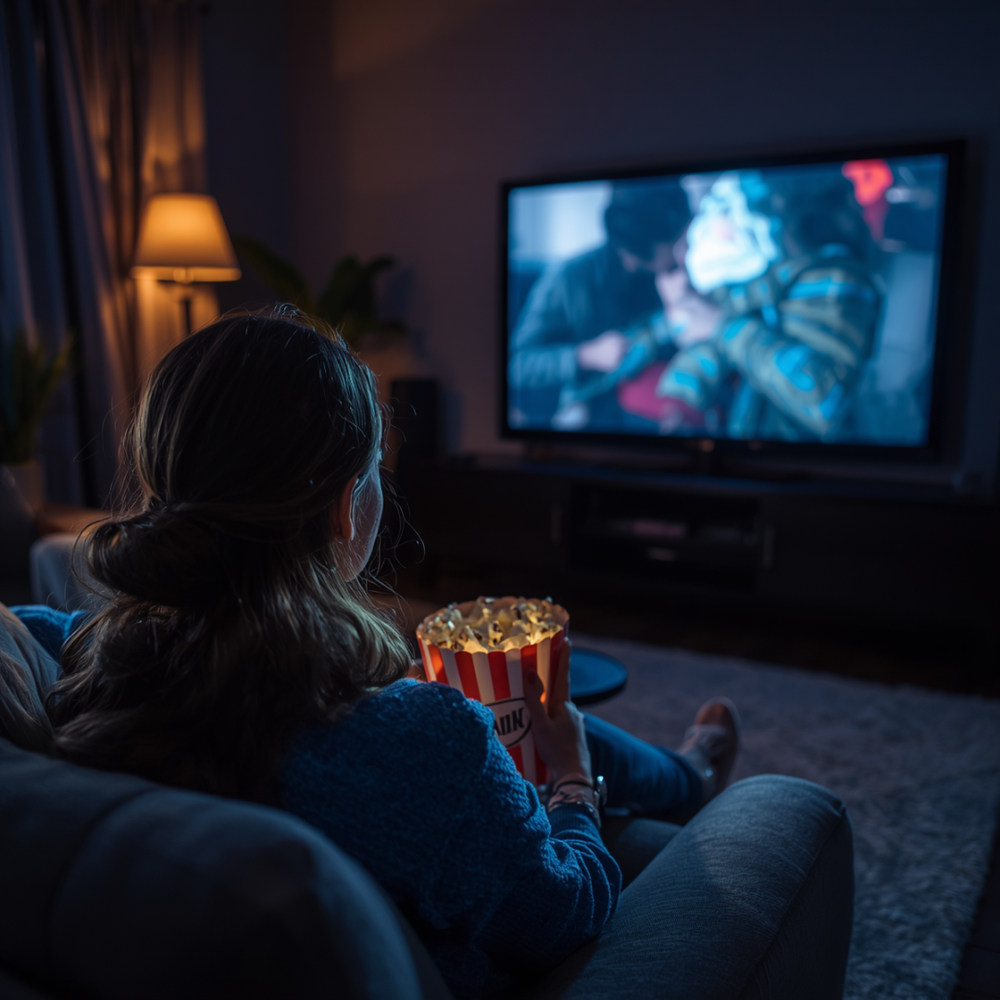
I watch romantic comedies without apology. There is something genuinely medicinal about a plot you know will resolve happily. The brain needs that sometimes. I am not joking, and I am not sorry.
I binge Netflix when I need to turn my brain completely off, and I have stopped feeling guilty about it. Rest is not laziness. Rest is data recovery. The wellness industry wants you to feel guilty about rest, so you will buy something to help you feel better about resting. I am done with that.
I cook. I go out to dinner. I eat things that are delicious, and I pay attention while I am eating them. Food has always been my love language, and it turns out it is also my reset button. A great meal, made with intention or shared with people I love, does more for my mental health than most things I could purchase.
I play golf. Which, if you know me, is either completely obvious or completely surprising. What I did not expect was that it would become one of the most meditative parts of my week. There is something about standing on a beautiful course, lining up a shot, and having absolutely no choice but to be present. The game demands it. Your brain cannot spiral while you are focused on a 4-inch ball. The beauty of the course, the meditative stillness of that moment before you swing — it is a full reset. I will take that trade every time.
And then there is Mahjong.
The Unexpected Reset
I host Mahjong nights, and what I want to tell you is that this game is not what you think it is. From the outside it looks social and leisurely. From the inside it is an all out mental sprint.
You are tracking your hand, watching the discards, calculating what you need, deciding in real time whether to call a tile or let it go. You are reading the table. You are thinking three moves ahead while also staying completely present for the move that is happening right now. There are so many moving parts that your brain has absolutely no bandwidth left for anything else.
And that is exactly the point.
For me, Mahjong is one of the most effective forms of stress relief I have found, precisely because it is so demanding. There is no room for the hum. No space for the anxiety to find a foothold. My mind is entirely, completely occupied with one thing: finding that hand. And in that total occupation, something releases. I come out the other side of a Mahjong night feeling grounded in a way that is hard to explain but impossible to ignore.
It is also a connection. Real connection. The kind that happens when you are sitting around a table with friends, fully present, laughing, groaning, and celebrating a winning hand. That kind of grounding matters enormously for mental health, and nobody is selling it to you because it does not come in a bottle.

What I Actually Believe
None of what I have shared is a prescription. None of it is a program. But all of it is intentional, which I think is the point the wellness industry keeps missing. They want to sell you the solution. What actually helps is the practice of paying attention to yourself. Of noticing what quiets the hum. Giving yourself enough credit to know the difference between a crisis and a hard season.
The controversial truth I keep coming back to is this: community, presence, pleasure, and play are the most underrated mental health tools available to us. They are also not coincidentally the ones you cannot monetize. A Mahjong night costs nothing but your time. A romantic comedy is $0 on the streaming service you already pay for. A home cooked meal, a walk on a golf course, a conscious breath — these are not lesser interventions. They are the real ones.
Mental Health Awareness Month 2026 matters. But awareness without honesty is just marketing. And honesty without action is just content.
So here is my invitation: this May, before you buy the supplement, download the app, or sign up for the program — ask yourself what actually makes you feel like yourself again. Then do more of that. Unapologetically. Publicly. With friends if you can.
I am figuring it out, one breath and one rom com and one Mahjong tile at a time.
And if you are too — I see you.
The Journal
Get essays like this in your inbox
New pieces every week on wellness, sustainability, food, and conscious living.
The Essential Ingredients Letter · Free
Get the letter. Stay in the conversation.
Enjoyed this episode? Justine sends one newsletter every Thursday on conscious living — food, wellness, sustainability, and the choices that compound.
Every Thursday · No spam · Cancel any time
Subscribe to the podcast
Never miss a Tuesday conversation. Subscribe or follow on your favorite listening app.
Free · Every Thursday
Subscribe
Enter your email below.