S9 Ep72: Rethink Your Plate: How Agriculture Shapes Everyday Wellness with Jennifer Waxman
“Everything about our waking being is affected by the food we eat. And it’s not just where your food comes from, but the ingredients…with integrity. Who is putting their love and passion into a crop? Who is not taking the shortcuts? How are individual ingredients… affecting our overall mood, physicality, all those things. All this is coming to light now— this is not pseudoscience anymore.” —Jennifer Waxman
Every meal shapes more than our day—it shapes our health, our habits, and even our outlook. The world talks about superfoods and supplements, but the real power is digging into what grows close to home. By shifting perspective on our plate, we can change everything we thought we knew about wellness.
Raised on homegrown food and practical kitchen wisdom, Seed2source co-founder, Jennifer Waxman, turned her roots into a mission to make agriculture accessible and meaningful. She’s faced the challenges of new food technologies, bridged the gap between farms and hospitals, and built real-world solutions for everyday eaters. Today, she proves anyone can harness the benefits of smarter agriculture, even without expert know-how.
Expect surprising tips about local sourcing, honest talk about common food myths, behind-the-scenes glimpses at hospital nutrition programs, and smart strategies for bringing better produce (and practices) into your life—all served in this week’s episode. Stream now!
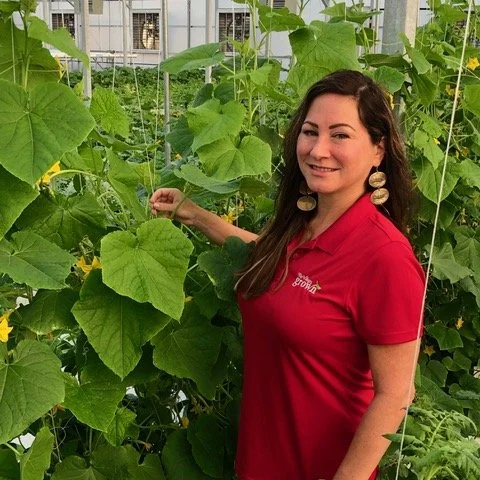
Connect with Jennifer:
Jennifer Waxman, co-founder and managing partner at Seed2Source, began her career in agribusiness and natural wellness in 2000 after earning her MBA from Rollins College. She became a global leader in agricultural water conservation and hydroponics, gaining early insights into Controlled Environment Agriculture (CEA) before its U.S. emergence. In 2005, she founded a consulting firm focused on sustainable agriculture and wellness, managing supply chains and pioneering food-as-medicine models.
As Executive Director of The Villages Grown, she developed a community-centric, local food system business model. Jennifer is a respected mentor and advocate for the Local Food Movement, collaborating with major health and academic institutions. She educates on nutrient-dense growing and the health impacts of diet, emphasizing the link between agriculture and wellness. Her leadership spans board roles, keynote speaking, and editorial contributions across national and international agricultural organizations.
Episode Highlights:
00:44 Meet Jennifer
04:11 Lessons Learned from Successes and Failures
07:34 Transitioning to Agriculture: Nurturing Plants and People
16:04 The Impact of Food as Medicine
21:59 Education and Empowerment in Agriculture
30:58 The Future of Agriculture and Its Broader Impact
36:16 Agriculture at the Roots of All Sectors
Tweets:
Tired of complicated trends? Real health is simple: better food, less waste, more know-how. Learn straight from the experts on agriculture, zero-waste tricks, and eating well every day with @justine.reichman and @seed2source co-founder, Jennifer Waxman. #entrepreneurship #socialgood #inspiration #impactmatters #NextGenChef #EssentialIngredients #agriculture #wellness #localfood #wellness #growathome #urbanfarming #mindfuleating
Inspirational Quotes:
04:11 “With every entrepreneur and every consultant working through these new initiatives and innovations, there's a lot of successes and failures in the process, and we learn so much from our failures, as much as our successes.” —Justine Reichman
04:33 “You can never be a consultant if you haven't failed forth. Your whole job is to make sure nobody repeats or is risk mitigative to the failures or struggles you had— that's the key to a good consultant.” —Jennifer Waxman
05:13 “Our mantra is the intersection between wellness and agriculture, and when you separate the two, we become ill.” —Jennifer Waxman
13:19 “Let go of the fear. What do you really have to lose? You get ‘nos’ all day long.” —Jennifer Waxman
14:11 “The simplest things are what make people billionaires. We make everything so complex.” —Jennifer Waxman
16:14 “The root is agriculture, and the root impacts the planet, and it impacts food as medicine.” —Justine Reichman
17:15 “Everything about our waking being is affected by the food we eat…and it’s not just where your food comes from, but the ingredients…with integrity. Who is putting their love and passion into a crop? Who is not taking the shortcuts? How are individual ingredients… affecting our overall mood, physicality, all those things. All this is coming to light now— this is not pseudoscience anymore.” —Jennifer Waxman
19:22 “Education is integral. It's key because without the education, people don't know why they're making the choices that they're making.” —Justine Reichman
29:52 “Just because you haven't done it doesn't mean you can't. There are so many tools now for us to be educated.” —Jennifer Waxman
36:01 “It all comes back to agriculture. We can't exist without it, and we need to protect it and understand it more.” —Jennifer Waxman
Transcription:
Justine Reichman: Good morning, and welcome to Essential Ingredients. I'm your host, Justine. I want to just welcome Jennifer Waxman, who is here as our guest today. She is the Founder of Seed2Source, and an expert in this field, and has talked to so many different people and in so many different places. I'm excited to have her on the podcast. I'm excited for our community to get to know you a little bit, so if we could just kick it off and say who is Jennifer Waxman, and what is Seed2Source?
Jennifer Waxman: Well, I thank you, first of all, for the opportunity to come on your podcast. You're doing some amazing work. But who am I? I don't know most of the time who I am, because I'm interested in all things, sustainable agriculture and wellness. My whole career has actually been in space, and I'll date myself, but that's okay. Starting in 2000 upon grad school, coming from a farming family and growing up like a hippie a bit with my mother growing our food and canning our food, I ended up doing a practicum for, if anyone understands Controlled Environment Agriculture, which really is what it sounds like, growing indoors with controls, they will laugh when they hear that I was on a project that was an outdoor multi tiered recycling, hydroponic flood, and drain into an aquaponic reserve for desert tree growing in Florida. The Florida sun doesn't work. Financially unviable, both from taking a lot of grant funding from the USDA and the University of Florida, and not really pushing the needle. But what I did see at the time was this was the future of food, and I wanted to be a part of it, as cliche as that sounds. I thought I'd be blacklisted. But instead, some of the equipment providers to that project noted what our consulting group was, what we called ourselves. Of course, we were in college. We were consultants, which will lead to how I became a consultant.
I got the bug there on many, many levels. I just thought it would be blacklisted, but they really recognized our work, and also had put a lot of money into it as well. So I ended up being a global marketing manager for the largest manufacturer of adjustable micro irrigation in the world. Prior to graduating upon that, traveled the world, seen again cliche future food, and that's Controlled Environment Agriculture. Not the whole solution, but a part of the solution. Got really geeked out by it and said, I want to be a part of this. But what do we do in the United States? Anything that makes sense around food and food security, growing nutritious products and domestic supply, so I knew it was coming. It has been done in so many other countries in such a glorious way for many decades.
First of all, hydroponics, let me start there. The basic thing is grown in water, not soil. Hanging Gardens of Babylon. This is not new people, but I knew it was coming. And after five years being with the company that employed me, I had started to become a speaker on behalf of the company. Carved out their hydroponic division. Started doing a lot more speaking, and a lot more people coming to me for consultation. I realized I had a book of business, so I started my consulting firm in 2005, and my first client was my former employer. Still to this day, great relationship. Now, I ended up being part of a lot of the successes and failures we see in Controlled Environment Agriculture. Again, just how it sounds growing indoors. Whether that is growing in soil indoors, whether that's growing aquaponically, whether that's growing aeroponically, which just means roots are suspended and misted with aquarius solution, or hydroponic roots are in water 95% of the time. I had a heck of a time just navigating the New World Order of that in the US and all the people that were opposed and afraid of it, especially old school farmers, which I had an appreciation for. At the same time, launched the second chapter of Slow Food in the US in Orlando. So how I gained some respect back was making friends with the farmers and cutting out the middleman.
Justine Reichman: So with every entrepreneur and every consultant working through these new initiatives and these new innovations, there's a lot of successes and failures in the process, and we learned so much from our failures, as much as our successes. So could you share a couple of those successes and failures you had during your journey?
“Our mantra is the intersection between wellness and agriculture, and when you separate the two, we become ill.” —Jennifer Waxman
Jennifer Waxman: Sure. First off, I want to state that you can never be a consultant if you haven't failed forth. Your whole job is to make sure nobody repeats or is risk mitigative to the failures or struggles you had. That's the key to a good consultant. And a lot try to lead with just successes. And what that tells me is they've had more failures and successes, and don't recognize them as such. So we're proud to say we had a lot of failures. Failures are trying to be too much to everybody at all times. Failures are having that gut feeling of taking on a client that you know is in it, not for the passion that my firm walks a walk with, and that's agriculture and healing people. In fact, our mantra is the intersection between wellness and agriculture. And when you separate the two, we become ill, and that's the state of the world. And just going as a hungry need for the next gig, newborn consultancy firm, we would take whatever came to us and get excited, and almost take the sales pitch, and not be able to peel back the layers of the onion, pun intended. And so when we started to recognize that we had the ability to pivot and only take clients that had true intention, and with that intention and passion, we could help them be more successful. That's where we started to lead towards. But that took a while.
Because in the beginning, it's feast or famine. You're new. You got to learn to read the room. I thought I was really good at that. But I realized that I was reading the sales pitch and as a salesperson, boo on me. I should have known better. So we had quite a few of those. And what I didn't realize is they were taking all the credit for our work, but we signed up for that. So we didn't have those very specific points in our negotiation of who we are and who they were, and where one stops somewhere starts, and then feeling really upset when we bring someone to a success level, and we set them up for success, and then they turn off the relationship, and then they thrive. That was a really hard thing for my ego. Something I still struggle with, quite honestly, and so that's going on 26 years in the field. So again, dating myself, that took a couple decades, but I'm still going through it. Still learning like, who do I want to be in this information exchange? Who do I want to be in this opportunity cost of taking on a new client? What is the trajectory of growth? Is this just short term? What do I want out of it, as much as what they want out of me? And so that's like an ongoing process, I think, for any consultant. Some have really coined where the lane they want to be in, and they're fine with that. They want to white label everything and move on, and then they aggregate that experience and apply it to the next project. I'm a little different because I grew up from a farming family. I grew up walking this walk, and so I have a little bit of an emotional attachment of ego to each project and client. I'm still in therapy for it.
Justine Reichman: That could be hard. I think it's hard when you're so emotionally attached and you've grown up in it, and it's in your ethos, it's in your body, it's in everything that you do. It's part of your core values.
Jennifer Waxman: I'm wearing strawberries. Come on, I mean it.
Justine Reichman: They're so cute. So if we go back, you graduate from university, and you come from a farming family, and I think it's clear that that was like a natural path. But I'm curious when you were thinking about, okay, how do I want to change the world? Because it sounds like you were on a mission to make the world a healthier place to not be sick from the roots, so to speak. So when you thought about that, did you say, okay, this is what I want to do in the next 10 years, or the next 20 years, thinking about the overarching change whether systematic or otherwise that you wanted to create in the world?
Jennifer Waxman: Yeah. Good question. So growing up, people didn't come over to my house to have snacks because it was like, do you want some black beans? Do you want a salad that was grown out here? We didn't have the process, we didn't have all that so I was kind of embarrassed. And also, we did it for resources because it grew up with a big budget. So it was always how my mother was raised anyway. It wasn't like this glamorous thing that it is now, like everybody thinks it's cool to farm now and all the things. We used to be like, no, I don't have Twinkies. The PTSD from it, now we have this resurgence of going back to our roots pun intended to what we talked about earlier. So it wasn't like I grew up, I wanted to go into farming. Farming wasn't sexy. Then, it was what poor people did. That was in my child's mind, in my mind's eye, right? Then got to college, became a big hippie, always plant based, and started cooking for everyone. I realized that was my love language. That was my nurturing. Here's all my poor college student friends, and they're away from home, they don't know how to cook, and I'm cooking for everyone. That was my nurturing ways. So it wasn't like I set out for that. It was just in my DNA.
I actually went to school for psychology. I graduated from school in psychology because I wanted to help the world. I always had that mentality of, I have to make my stance here. I need to leave the world a better place. I need to heal people. Did I have the definition around the heel then? No. Ended up going into grad school, taking my work home with me, wanting to literally, if somebody was hurt as a therapist, I wanted to go make sure that it got very dark because I couldn't control it. I remember my brother calling me and saying, you've been an entrepreneur since you were 11. You had a babysitting ring for the love of God in the neighborhood. Get out of whatever you're doing. But the root of all businesses of psychology apply that, and then just go. I went to the same MBA school that he got his MBA from, and he's just going there. You'll find your way. And then it found me. I had that practice in agriculture. And then I was like, wait, I'm doing the math here. I understand this is not new to me. It's just a new application. Agriculture is agriculture. This is just a little technology laden, and a new system and processes. So that's kind of how it was all born. But it wasn't like this ultimate plan. The plan was always to heal. I just didn't know. I didn't have the wherewithal behind how I was healing. I was able to bridge both worlds, and that's really where it started.
Justine Reichman: That's so interesting. And as you're sitting there saying that, I think about my career. When I start, I'll be dating myself. I graduated college in 1995, I was okay. I'm 53. When I look back, and I don't know if you have this, I think it kind of talks about what you were saying. My first job was completely different, and I won't even touch on that, but there was a point around 2000 where I had an idea to connect people and bring people together to leverage resources to be able to figure out what they wanted to do. It was a community building kind of thing where I was connecting resources with people, helping people, and helping them to help themselves. And so now, I find myself 25 years later in a different industry, the same idea connecting people, leveraging resources so people can make more informed choices. The other one was for a career transition. This is about food and the impact it has on the planet, on food, on fashion, on health and on lifestyle. But we seem to take those ideas that we have, and they come through all the way. Sometimes, it just takes us a little while to figure out where they're going to land. It was like a practice run. I feel like it's like practicing until you get there. I don't know if that makes sense.
Jennifer Waxman: It totally does. It's like you're already in motion, but you don't put it in context. It's just happening. And then one day, you have that aha moment. You're like, wait a minute. This is all synergistic. This all happened for the right reasons. This happened negatively. This happened positively. This is where I am. But oh, my gosh, it's all the same thing.
Justine Reichman: Exactly. I'm 53, and I figured out that, oh, I'm doing the same thing I did when I was, however old, 25, but in a different way with a little bit more expertise, a little bit more wisdom, a little bit more patience, and a little bit more thoughtful and strategic planning. As you were talking about that, that's what came up for me. And I was like, oh, I'm there with you. I could see myself going through that whole process. You were doing it even though it wasn't farming. Then you fast forward, and you're now this consultant, and your old employer is your client, and you're doing exactly what you set out to do. Not everybody it's that clear for people, and people have a lot of challenges around that. It's hard to get there often. So what would you say to those viewers, those people tuning in today, whether they're listening or watching, that are trying to navigate that for themselves?
Jennifer Waxman: Yeah. Good question. Let go of the fear. What do you really have to lose? You get NO's all day long. You get no's verbally with physical cues, with a gut feeling like you really have nothing to lose. I had to realize that what makes me happy goes back to feeding people, me cooking for college students. You can't cope without agriculture. Me nurturing people, you have to nurture plants. It's like human connectivity. They're living things. And then when you can translate that nurturing of the crop, and now you're nurturing humanity, animals or what have you, even if it goes into biofuel, which is a whole nother subject, but it all stems from agriculture. At the end of the day, you're helping move the needle. So what helps you move the needle? What makes you feel safe? What makes you feel proud?
It could be the simplest of things. And the simplest things are what make people billionaires. We make everything so complex. Those aha moments when you see a CPG, a product move and you're like, I made my own version of that. And you have that aha moment. Then you're mad. Everybody has creativity. We can't express even human words without being intuitively creative, and we put so much weight on that word. Creative means you're an artist. What does artist mean? It's so many multiple iterations. What artistry means is what makes you tick, what makes you feel good about yourself, and then look at all the lanes that you can navigate around that would make you feel like you are not working. The goal in life is to feel like you're not working. To wake up and be happy. You might be stressed because you have a lot to do, but it's happy stress. It's a willing stress. I'm sure parents wake up and they're stressed because they have to take care of their children, but they love their children. It's a willing stress. I think if you start to break down those layers and really think about what makes you tick, and not just tick as a hobby. But tick as, I really think I could change the world with this, that's where you start to break down those levels of fear. We're all so concerned about what everybody thinks and being rejected. But let's just be real. We're rejected multiple times a day. That's the psychology out of me. But what do you have to lose? How long are we really on this planet? I think people really start to have those discussions.
“The root is agriculture, and the root impacts the planet, and it impacts food as medicine.” —Justine Reichman
Justine Reichman: The only opportunity is the one missed. It's true. That's where my adventurous side comes in. That's where my spontaneity comes in. It's taking those risks. And I think that there's a certain group of people that take different kinds of risks, or really like a paycheck and can't do that, but can find their way in other ways. Because as you're saying, there's lots of different roles. Not everyone's an entrepreneur and can still have an impact. And so I just want to go back to something because you're talking about it, and we were talking about the root. The root is agriculture, and the root impacts the planet, and it impacts food as medicine, as I believe you said. Maybe not in those words, but I'm taking a little liberty when I say food is medicine. And I think that we talk about going back to the year 2000 or even 20 years ago, that was kind of an advanced way to think. It's now becoming comfortable to talk about. Before, it was like, I want something scientific. Well, they needed to go and provide science, or do this, or do that, and focus on it. But there's a lot to be said about food as medicine, and how to heal the planet. And when you were talking about that, I could feel the passion, and I could feel the energy. I would love to learn a little bit more about going back to those roots, and how you think that can impact our health and the planet.
Jennifer Waxman: It's becoming the cliche term, but we have to meet people where they're at. The food is medicine. Movement is everything about our waking being is affected by the food we eat. Every one of us has to eat. We've been so disconnected from where our food comes from. I can say that the only good thing that came out of Covid is people were stuck at home watching documentaries, right? And many of those documentaries are about knowing where your food comes from, and not just where your food comes from. Because not all food is grown and created equal. I think we know that. But ingredients, I would like to say with integrity, who is putting their love and passion into a crop? Who is not taking the shortcuts? How are individual ingredients, and that could be fresh, infecting our overall mood, physicality, all those things? All this is coming to light now. This is not like pseudoscience anymore. I was always told that I was a big hippie, but I can take medicine for that, or I work out. I love that one. I can eat what I want. What if you're eating with and you are approaching, how much better your workout would be? And how much more would you achieve? I think we've gone from a shift like, trust me, I think physical activity is extremely important for so many reasons. But we used to take the approach that it was workout first, and food was second. And I think we're going forward now. We have a long way to go. These are just new discussions. I work with institutions, major hospitals, and created the first Florida farm to institution program, which our team is very proud of. But to this day, in 2025, we're going into 2026. Ask a hospital, including registered dietitians, cardiologists and nutritionists, what does food is medicine mean to them. What does a medically tailored meal mean to them? 95% of the time, they don't answer on the level. I think it should be answered as not (inaudible), but I come from an agriculture perspective. They're coming from a practitioner perspective, and our disconnect is still there. That is as scary as it is to me. It also creates the most opportunity for education.
“Education is integral. It's key because without the education, people don't know why they're making the choices that they're making.” —Justine Reichman
Justine Reichman: I think education is integral here. It's key. Because without the education, people don't know why they're making the choices that they're making. They don't know why to choose this over that. And I just want to go back to the hospital you were talking about, because interestingly enough, it's out of the Northeast Corridor, out of New York and Connecticut, and they integrated a program that they built it out like hospitality, and they bring top chefs on, Michelin Star chefs or whoever, but they also connect them with dietitians and nutritionists. And instead of getting frozen fruit and frozen vegetables, they get things from the farm. They make and tailor the meals to the patient so that they're not giving the patient something, if they have high cholesterol, that's going to be bad for them. They're looking at the full picture. And this was a unique thing that I saw when I first talked to them about this, that you had a hospital creating this. I love the fact that they were doing this. I'm curious to hear how that is similar or different to what you're talking about with the one you're working with in Florida.
Jennifer Waxman: Oh, no, multiple institutions. Not just one. I deal with about 25 plus hospitals and institutions.
Justine Reichman: All those institutions.
Jennifer Waxman: What you're hitting on is precision nutrition depending on chronic conditions. So not all fruits and vegetables serve our bodies. Well, we're all very unique. For instance, I'm working with an insane company right now called Get Saucy. They're completely allergen free, friendly everywhere from AIP compliant, no night shades. So they've created a tomato sauce without tomatoes and ingredients. We use red carrots that are high in lycopene, actually higher than tomatoes themselves. So my job, which I call the Golden Unicorn Job is to procure domestic side consistent, high nutrient value crops that can replace allergen crops. And so we've been able to get them where we have pilots going into major institutions now, because where's the last place you need information, and a place of healing where you're trying to heal? Where's the number one place you're probably being fed some really bad product? So the fact that you've just mentioned, and I thank you for introducing me to the good work that they're doing because they didn't know about it, that's where hospitals and healing institutions need to go. So the upsetting thing is, we go back to food and medicine. And those that have allergens, 50% of the population have food based trigger allergens, and they don't even know.
So even though they're combating a chronic disease and they're in the hospital or transitioning out of the hospital to heal, they don't even know this exists. They're there for something else, just called inflammation, and the very food that they're eating is disrupting that inflammation, making it go off the charts. And even at the practitioner level, they don't know until it's too late. However, there are ways to figure it out quite quickly to reverse the diet with precision, nutrition, local sourcing, you name it, as we all know. And if we don't know yet, I'm going to pretend that this audience does now because I believe an enlightened audience, from the time you harvest a crop till it ends up on the plate, especially through distribution and all types of temperature inflections, the way people handle it when it ends up in retail versus into your fridge, which has temperature inflections as well, we've lost about 80% of the nutritive value. That's pretty scary stuff. So you are here committed to your family, committed to your own personal wellness, spending your discretionary income on so-called organic products, so called local, this and that, because you're doing whatever you can with all the information overload that you know. You think you're making the right decisions. But most of the time, you're not.
Justine Reichman: What do people do when they're in this situation? I'm overly analytical about everything, and I pay attention to every feeling I have with every bite that I take. But I don't think that everybody does that. That's not something I grew up with. My mother was ahead of her time and told me, you can't have a dairy. It's going to make you congested. Don't eat this because that's bad for you. But for the average person, that's not paying attention to how they feel from everything, how can they address this for themselves. Are there tools?
Jennifer Waxman: There are. And you can get food trigger assessments even through your insurance. Go to your doctor and get a referral. It's not uncommon. It used to be, but it's not uncommon anymore because it's going to save the insurance company a lot of money that they can figure that out. There's different economic incentives of knowing, trying to figure out a solution, or even knowing if you fit in those categories now. But I always say, start in your own backyard. That's why I started this second chapter Slow Food Orlando. Let's not talk about food deserts, because that's a whole nother topic for three more sessions with you. Let's talk about what most people have access to in their own backyard. There's farmers around you and you used to say, well, there's not, because we don't have conventional farmers. Well, you have urban AG. There's hardly a state now that doesn't have some kind of program there, or homesteaders that are bringing their product to Farmers Markets. Start at your Farmers Market, and ask them questions. You can do a quick Google search. I don't have 5 hours to tell you all the questions to ask, but do a quick Google search. What are the top questions you should ask your farmer to know your farmer? This is readily available. Some very obvious information like, do you use any chemical inputs? Do you use bees?
There's a lot of easy questions. You don't have to be an expert. Just bring your checklist and they'll be like, she's asking me a lot of questions. Because what you do want to figure out is if that farmer at the Farmers Market didn't go to a dumping station, a food waste and then represent themselves as a farmer at Farmers Market, then you want to support your grocers at local food programs. Unfortunately, I hate to be the pair of all bad things. But a lot of times, just because they have a local food program doesn't mean it wasn't sitting in inventory before it got out there, before it got to you. With each second, it's losing its nutritive values. Just taking a human off oxygen, what happens? We deteriorate. The third thing is, there's a lot of direct ships from amazing regenerative farms and controlled AG farms that are, yeah, local, local, local. Trust me. I used to be that person. 100, 150 mile radius. Well, it's just not possible. But there's a lot of companies that harvest that day, getting it into a box, and FedEx has it for you, and at the best temperature controls. It can not always be the best, but it's to you the next day. We have to meet our expectations where they're at. The fourth one, anyone that tells me that they don't have a green thumb or don't have the room to grow a tray of microgreens on their own windowsill, one cup a day, you're literally putting it on a mat and spraying water on it. Sometimes, a little nutrient. Sometimes, you don't need it. It all depends on the community in your house. If you can't even do that for yourself, you can spend $150 on all these supplements a month, versus $5 maybe a week. I don't know where to help you, like you don't really want to help yourself at that point. So it's like, why even listen to this podcast?
Justine Reichman: Well, I do think that covid was the impetus for many people to guard their own gardens. I mean, well, we moved during covid, and I have a garden now. I grew up in New York City. We did not have a garden in New York City that we could grow our vegetables on, you know what I mean, and we didn't have a fire escape, and we didn't have a windowsill. I mean, we had a windowsill inside, not outside, and we would grow a couple things here and there in the window. And I think that it was an opportunity during that time to really embrace the ways that this is available to you. Now. There's many more ways that you can do things that we couldn't do back then, and I think it's exciting for people. It gives people a touch point and enables them, if they're interested, to get involved on a personal level and to participate themselves.
Jennifer Waxman: There's so many levels of engagement. I have a lot of friends, and I'm part of it. We all grow something different, and we barter. Even to the level that I'm a zero food waste person, and I teach courses on that, any of your leftover vegetables as you're chopping, I freeze it. Then I make a broth, and I give that to everyone as a water substitute in everything they cook and sipping broth, and all the good things for fasting. And then I take that motion, I put it out into the plants. So it's like this. There's so many ways to participate. Join a CSA, which is community support.
Justine Reichman: And there's many community gardens that people also share. One thing that I like to do in the summer is with leftover or overripe fruits. I'll put them in the ice bins, and I'll add a little water, mint or something, and then of course, you have some sort of juice. Or you can put it in water and it becomes flavored with cucumbers or whatever. There's so many different things. And even using the stocks of things. Are there any tools or resources that you think we don't have today that would be really useful to be able to make things more accessible and easier for people?
Jennifer Waxman: Well, go old school. I think you just said something about regrowing from the stocks. Anything with a root, you can just cut it and regrow it hydroponically. All hydroponics means to take the technology out. It just needs some water, put it in a dang jar with some toothpicks and let it regrow its roots, and then put it into a container farm. And the container farm literally can just mean a flower pot with some soil and put it indoors, elevate it if you have animals or whatever so it's getting sunlight, or outdoors on your porch. People have been doing this since the beginning of time. It's an easy search. There's so many YouTubes of creative ways to reuse, I mean, for the love in third world countries, and we should be ashamed of this. They're taking Pepsi and Coke bottles liters and cutting them in half, making hydroponic and soil systems. Again, this whole skill, you need this certain skill set. You need certain tools. You need all this. It's just simple, you're over complicating it. We go back to that fear state like, I can't do this or that. Just because you haven't done it doesn't mean you can't. We live in the world of literature, why even go to college anymore when you can go on YouTube and can go to the master class? And there's so many tools now for us to be educated on the kiss methods. So keep it simple stupid, as I'm sure we all know. But there's no more excuses anymore. You got to invest in you, and you got to invest in your family. Take the excuses out of it, because we have more access than we've ever had. Now again, we're working on food deserts because we don't need people going to Dollar General, 7/11 and those things. But that's a whole nother discussion. And we can't solve the world's problems today. We can just get people excited.
Justine Reichman: It's true. I want to just tie it up on a pretty bow to the extent we can, if you will. So if we think about health, and we talk about the roots being the roots of agriculture impacting our health as a person, as an individual, and as a planet, if we consider that, people start to do this. People get involved, and they start to be more conscious about what they're putting in the land, what they're growing, what they're eating and demanding more. How do you think that's going to impact people's health? What do you think we will see? How do you think that will impact the planet?
Jennifer Waxman: Well, I think by even having that mindset, you're not just physically changing yourself. You're emotionally and psychologically changing yourself. It's a sense of empowerment. It's a sense that you can take care of yourself and make decisions. And taking care of yourself doesn't just mean growing your own food. It means making the right decisions, and seeking out the opportunities that can impact you, both physically, spiritually, mentally, all the things. I think it's happening. That's why I'm more reinvigorated than I've ever been in my career. Because let me tell you, Controlled Environment Agriculture hasn't had a lot of great words to be said in the last couple years, with a lot of the misuse of capital funds and the wrong people coming into the table, pun intended. I had a moment where I was like, maybe I need to shift into a value added product and stay out of the growth side because we've got a bad reputation. And then we have this shift where people are just demanding solutions for bio security, food security, you name it. We've had a little bit of an eye opening with imports and recalls. And oh, my gosh, what if the US was cut off from food supply? What would happen? We need to grow our own food here. There's so many conversations changing on domestic supply and getting people excited.
And I hate to say it this way, but I will make agriculture sexy. That's hard work. And no thank you. You're married to it, and you can never leave it. There's technologies, processes and systems now that make it where you could actually have a life and then do good work. So it's forever changing. I don't think it's a trend. Food and medicine is not a trend. It's just getting redefined, reevaluated, and repositioned. Agriculture? I think controlled ag was really sexy. It was like, whoa, doesn't work. Well, it does. We just did it wrong with the wrong people. Those conversations are coming back to light. The skill set that can be learned from those entering the food economy, I think, is an ever progressive sector of new job and economic development opportunities. So I haven't been this excited in a long time, and I am human enough to admit that there was a while that I was like, can I just apply all this? Because being in agriculture, you wear 10 million hats. I can probably do whatever else I want, but I'm back. Everyone's like, is it because you like the pain? Maybe I do. Maybe the pain meets the reward benefit that I get out of it. But the world is ever changing so fast, and the US is just catching up. But there's a lot of support programs, and there is still capital out there. There are a lot of nonprofits and grant opportunities to get people even into the value add sectors. You've got this great recipe that's multi-generation passed down, and you go to a farmer that needs another outlet for distribution and you have a collaboration, and you're creating a new product line, and it's zero waste. There's so many ways to enter the new food economy, so it's a very exciting time for me.
Justine Reichman: I can tell you're excited about it. I'm excited about it too, because I think that we've expanded our conversation. And I'll just tell you briefly, to not just be the impact on the future of food, but how the impact of food and sustainability will impact beauty, fashion, lifestyle, health and the planet. Because I think it's all integral, and so I'm looking forward to seeing how that plays out, what we can expect and the changes we can see there. And leveraging resources from one another that oftentimes go by the wayside because we look at them as waste.
Jennifer Waxman: Absolutely. And you want to talk about surging sectors bridging agriculture with fashion is replacing animal based fabrics and what have you with plant based, which is a waste stream. So pineapple leathers, I'm pretty big. And mushrooms. You've got mushroom leathers and all kinds of insane mushroom art. Sam Shoemaker, shout out to you, amazing artists in the world of mushrooms. I love that you made that connection. And I don't think people look at that. But as much in depth as you and I, I'm a fashionista myself. Agriculture is changing fashion, taking waste materials and turning it into beautiful art, whether that be from clothing to cosmeceuticals, plant based cosmeceuticals. Our skin is our largest organ, and here we are putting poison on ourselves and going, but I'm not eating it so it's not affecting me. Okay? Well, glad we're getting into those conversations where our brains are opening up more, and why our brains open up more. Mushrooms? Everybody consumes a lot of mushrooms. But a silly plug for new and novel ingredients that aren't so new and novel at all, but are having a rebirth and a resurgence. But yeah, again, there's so many sectors that coincide with agriculture, which makes this so exciting. It's not just consumables. As we talked about earlier, biofuels, it's fashion, it's animal consumables, it's industrial materials. You've got hemp industrial materials and hempcrete. If you really peel back the layers of the onion, here goes that pun again, it all comes back to agriculture. We can't exist without it, and we need to protect and understand it more. And I feel like those conversations are happening now more than they ever happen.
Justine Reichman: That's why I built this platform, this podcast, to be able to initiate, to light the fire underneath a couple people to have some conversations, to get people curious, to give people an opportunity to hear from experts and make better choices for themselves, their family and the planet. I am so grateful to have had you here today. I want to thank you for joining us and for having this conversation. We're going to bring you back, if you'll come, because there's so much more I feel like we can talk about. I want to thank our guests for tuning in. And if there's anybody that wanted to get in touch with you and had questions,, or they wanted to brainstorm with you about agriculture and how they could maybe leverage on what they're doing, what's the best way for them to connect?
Jennifer Waxman: Well, they can email me. I do a lot of speaking engagements that are made public, including this one. Thank you so much for having me, because I love everything you're doing. I think we're going to be best friends, but I think we already know that. Email me at jennifer@seed2source.com, that's numeral two, literally taking from the seed to where it ends. So seed2source.com
Justine Reichman: We'll put that in the show notes for everyone. Thank you so much. And for those who are tuning in today and want to watch the podcast, it will be on our YouTube channel at Essential Ingredients. We're available on Spotify, iTunes, wherever you listen to podcasts at Essential Ingredients as well. Don't forget to sign up for our sub stack so you never miss a new episode.