S9 Ep83: Clean Water, Wrong Bottle: Upgrade to Lab-Grade Hydration with Hardy Steinmann
“The idea came suddenly one day. I was traveling and had this little Japanese perfume spray in my hand. It’s actually aluminum, and the inside glass, very little. And I said to myself, that’s the concept ofthe bottle I’m going to do. Glass.. Honesty.” —Hardy Steinman
We drink water every day, yet most of us never question the container. We accept strange smells, plastic taste, and constant replacement as normal. This conversation challenges that mindset and asks us to slow down and rethink what daily hydration is doing to our bodies and the environment.
Listen in as Hardy Steinmann shares the personal journey behind building Okapa, a hydration vessel designed with lab-grade glass, precision engineering, and a belief that fewer, better objects can improve health and reduce waste.
Press play to explore a different way of thinking about hydration and long-term wellness:
Why hydration quality matters as much as quantity
The hidden issues with plastic and standard glass bottles
How material porosity affects taste, smell, and bacteria
The engineering behind shock absorption and durability
Longevity versus throwaway consumer culture
Environmental responsibility through better design
Why investing in one well-made product changes daily habits
Connect with Hardy:
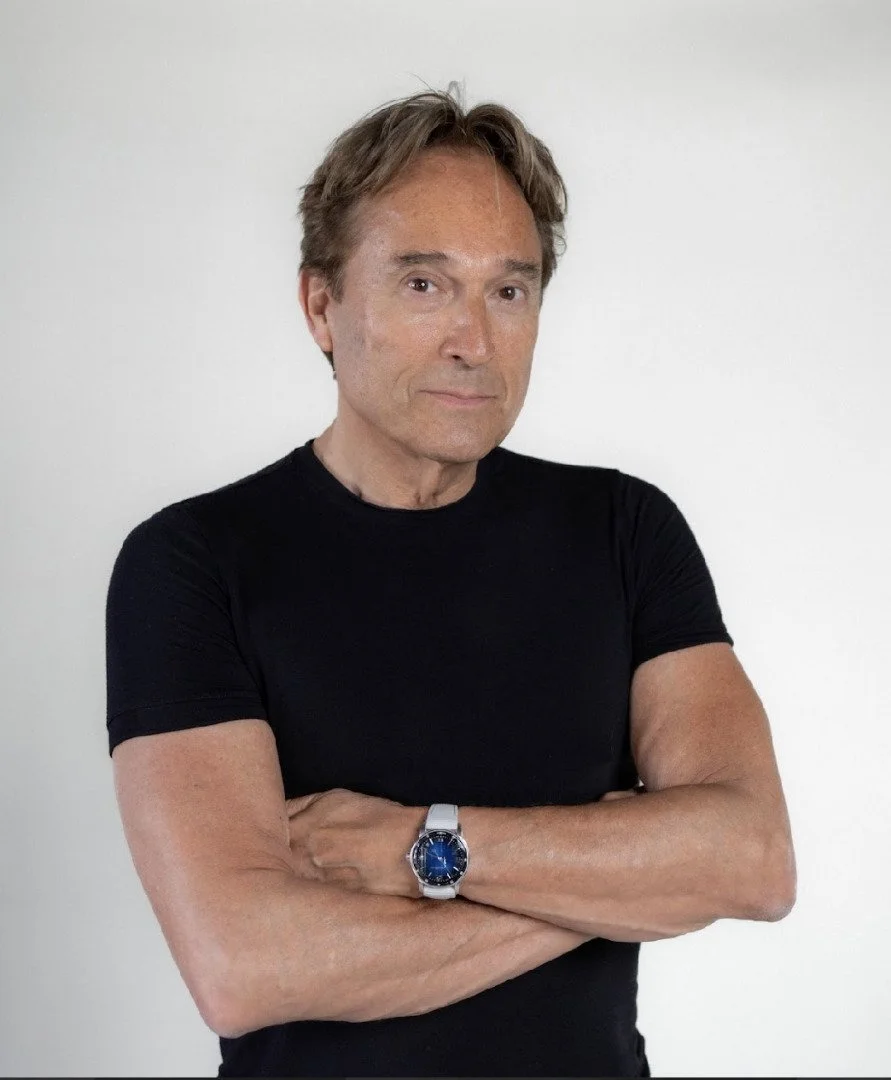
Hardy Steinmann is the founder of Okapa, a company renowned for its innovative and meticulously engineered water bottles designed to promote health, hygiene, and sustainability. With over eight years of research and development and a background that spans leading and rebuilding companies around the world, Hardy is committed to using only the highest-quality materials and advanced engineering techniques. Drawing inspiration from his international experiences—including time spent in Papua New Guinea—he brings a unique perspective to product design, ensuring that Okapa bottles set a new standard for performance, longevity, and environmental responsibility. Hardy’s dedication to transparency, consumer education, and less-is-more philosophy positions Okapa as both a leader in its field and a catalyst for positive change in how people approach health and hydration.
Episode Highlights:
00:51 The Problem with Traditional Water Bottles: Plastic & Steel Issues
03:00 The Science of Glass:
07:31 Health Impact: Comparing Glass, Plastic, and Hygiene in Hydration
12:00 Iconic Design and the Eight-Material Engineering Challenge
18:02 “Swiss Watch” Precision: Over-Engineering for Perfect Hydration
21:00 Minimalism vs. Consumption: Bottles Built to Last
28:47 Engineering Details: Handle, Materials, and Replacement Parts
31:41 Health Market Potential: From Lab-Grade Glass to Medical Collaboration
Tweets:
Hydration isn’t just about drinking more—it’s also about what you drink from. This episode breaks down why materials matter, how glass changes taste + smell, and the hidden health impact of everyday bottles. Listen in and rethink your hydration with @justine.reichman and @okapaofficial Founder, Hardy Steinmann. #entrepreneurship #socialgood #inspiration #impactmatters #NextGenChef #EssentialIngredients #Okapa #labgradehydration #ecofriendlysolutions #sustainableproducts #zerowaste #engineeringdesign #medicalgradematerials #elegantproductdesign #consumersatisfaction #healthwellness
Inspirational Quotes:
01:00 “You need to hydrate. The matter is, it's not just only how much you hydrate, but what you're hydrating from.” —Hardy Steinmann
06:49 “The concept is to give the most healthy insight to the end consumer. That's number one. Number two is function, performance, longevity.” —Hardy Steinmann
08:21 “Use the best materials where you drink or eat from, just as what you put in there is very important.” —Hardy Steinmann
09:16 “First of all, it tastes really good, it doesn't smell bad. And for me, that's a game changer, because that's going to impact how much water I'm going to drink.” —Justine Reichmman
11:55 “From a company point of view, if you can easily just take 20-30% off of a product, you are pushing it down the consumer's throat the wrong way. You feed them misinformation about the product, where the value is not really there.” —Hardy Steinmann
18:52 “People are changing the way that they think about things, and it's really going to be driving them to look for new things.” —Justine Reichman
22:20 “If you're not educated about materials, then you won't bring the educational aspect to it when you sell a product. So the educational process needs to be there.” —Hardy Steinmann
30:21 “Give them something really unique and perfect, because everybody works hard for the money. So we're not just going to go out there with a costly product… There is this great feeling to see people when you give them something, and they are content, and satisfied, and happy about a product.” —Hardy Steinmann
Transcription:
Justine Reichman: Well, I'm super excited to have you on today. So for those folks that are tuning in, tell them a little bit about what we're talking about. So if I can, Hardy Steinmann is here with me today. He founded this company called Okapa. They are beautiful water bottles. They're made to make your water taste better. They're made with better materials. It smells better when you're drinking. It changes the experience. I'm excited to hear from you, Hardy, to get in deeper into this and talk about why this bottle was so important for you to make, and the impact it's going to have, both on people and planet.
Hardy Steinmann: So the impact on people, of course, hydration is a vital thing. I always say, and I've said this many times already, yes, you need to hydrate. The matter is, it's not just only how much you hydrate, but what you're hydrating from. So that brings us back, really, to the product and the honesty in there. After all these plastics, as you said, the smell, even the steel, even when you brush them, you have all the steel dust in there. You actually drink that steel dust at the end of the day, and the plastic is even worse. We don't even have to discuss that. The content rests in there. So I said at the very beginning, how can I actually solve this? And believe me, we set out, and I said to myself, we had no idea. I didn't know the name. I said, I have to take something really original. And then before I had the bottle, actually, I came up with the name. Obviously, that's Okapa. I used to live in Papua New Guinea in the mid 70s. So Papua, New Guinea, I said, Okapa. Well, you know this real honest nature, this beautiful environment there, nature at its best. And then I thought, well, what about putting this feeling into the end consumer's hand? Believe me, I went around, I looked for about three, 400 bottles here. I looked for an industrial design firm in San Francisco. I know them very well. So we, in a way, collaborated at the very beginning with the whole design and everything.
“You need to hydrate. The matter is, it's not just only how much you hydrate, but what you're hydrating from.” —Hardy Steinmann
But the idea came suddenly one day as I was traveling with this little Japanese perfume spray in my hand. It's actually aluminum, and inside is glass, very little. And I said to myself, that's the concept of a model. I'm going to do glass. Then I went out to look for the very, very best glass. I tell you, it took us about one and a half years. It's not just glass. There is soda lime glass. You have porosity in there. There is borosilicate glass. You still have not had such a great thermal shock. And there is borosilicate at 3.3, which is the very best in the world. Then we had to have it very thin, because you have to be able to put it in the sleeve. It has to have low weight. I had companies from Switzerland, Portugal. We were all over the world. And at the end of the day, in Germany, it took us about one and a half years just to get that glass. So I thought, okay, of course, the glass that time, we already had some of the design, because you have to put it in somewhere. You have to protect it. So here, you give the person the great taste, the honesty drinking from that glass. That was the initial idea. Just the content lying there. The content is sleeping in the most healthy piece of material you can get, which is that glass. But then, of course, people are afraid of breakage. That's understandable, too.
So we built this whole shock absorption system. For example, there's silicon in here, here, then on the bottom. If I take this apart, let's say you have here, so the glass actually stands in there, inside the aluminum Of course, this is inside the aluminum. The aluminum shell is a protection tool. By the way, it takes a certain type of aluminum hardness or softness to absorb some shock, which is then basically irradiating into the silicon, and that then hits the glass. Physics is a huge, huge thing. I'm saying this everywhere, honestly, it took probably more than 10,000 prototypes to get this actually done. Just in terms of, you cannot even measure it on a computer. Because we did some computerized testing of how good the shock absorption has to be. But really, at the end, you have to do a real physical test. When the heat comes, it's the aluminum, then it's the silicon, then it's the glass. And the glass inside moves too, and then depends how much content is in the glass, because that shifts too. So that's just the content and the security of it, Justine.
Justine Reichman: So I'm curious, there's other glass water bottles out there. Talk to me a little bit about the comparison between them, and how you created something different, and why?
Hardy Steinmann: Okay. The glass, of course, as I said, there is a lot of glass out there. And when you have normal glass, you take it from the dishwasher or whatever. You drink certain things, and you probably have noticed that sometimes, normal glass can start to smell as well.
Justine Reichman: Yes. I don't like it coming out of the dishwasher.
Hardy Steinmann: That's exactly what it is. So this is proof that there is porosity inside. So I was looking for a glass where they really have guaranteed zero porosity. And there's a lot of glass in the market, and that's great. That's already a great step away from plastic. There's nothing wrong, but to give the very, very best. You want to do that with zero porosity. This glass we're using is being used in labs. When you give blood, those vials, that's the glass. So pharmaceutic level lab glass is borosilicate 3.3, so that differentiates us, of course, from many, many people who have that glass. But it's not just then. Some people might have a similar glass, but then it's the whole concept, really, how it protects, how you drink from it, the comfort, the longevity, the function, the performance, the longevity of the whole thing. The whole concept together. As you said in the beginning, the concept is to give the most healthy insight to the end consumer. That's number one. Number two is function, performance, longevity. That goes all together. When you look in the luxury field, whether you have glasses, sunglasses, cars, watches, normal fashion, there is always a differentiation. Sometimes, you know that because there's material structure engineering. So what we have as a whole concept, not just the content lies in the most hygienic material, which is that glass, but also the way you drink from, and how it's protected, because the water touches different surfaces.
Justine Reichman: When we talk about the different kinds of glass, let's just say plastic, because not everybody buys glass. It's not always available, and they just want water, they want to hydrate. But if we look at this on a daily basis, and you compare somebody that's drinking out of plastic or out of some other glass to this, what's the impact we could see for them and their health?
“Use the best materials where you drink or eat from, just as what you put in there is very important.” —Hardy Steinmann
Hardy Steinmann: Well, that's a big question mark in general out there. Hydration is one thing. A lot of people think hydration is just hydration, but bacteria build up is something very, very dangerous. Many times, people go and have themselves checked, and they don't have something, for whatever reason. But they only look at the surface, and then we just throw meds at them, and then we're band-aiding it. But the root cause is really, use the best materials where you drink or eat from. And then, of course, what you put in there as well is very important. So the differentiation to a lot of other, I would say, even normal glass, the soda lime is just the porosity in there. There is, at one point, growing bacteria. So you need to be able to, in this particular bottle, you basically put coffee, or bone broth, or whatever in there. You just rinse it quickly and toss it out. And actually, there's no smell left, because it doesn't have any pores. So you clean it easily. So it keeps the honesty of what you put in there, but it's also extremely gentle, easy to clean, honest to clean, compared to a lot of other materials. All these shortcuts.
Justine Reichman: Yeah. I think first of all, it tastes really good. It doesn't smell bad. And for me, that's a game changer, because that's going to impact how much water I'm going to drink. If I don't like the smell of the bottle, I leave it. And so many times when you're leaving wherever it is, you could be at a hotel where they give you water, when you're getting in your car for your drive, you could be at a conference, you could be anywhere. And a lot of times, people bring water bottles, then they sit in their bags all day, and they forget about them, and then I imagine the bacteria growing. So this seems like a great solution. I know you've built a bunch of companies, am I right? And you've worked on so many different things. So I'm wondering what the trajectory is for this? How do you see it growing? I think I'm also curious about the price points. And if that's an obstacle, how people are responding to that based on your experience because you have a lot of it. I think this is your first initiative at it, right? And you led a long career rebuilding companies. And now, here it is. You're kick starting this. You've put a lot of time, energy, money, resources, and investigation to building this. So you have a lot of experience. So I'm wondering, you went out there, what told you this was going to be the right thing to build next? Invest your time and your money in. And what role does the price point pay? I know that the materials are probably very expensive. But I'm curious, if you test drove that with consumers, what the feedback has been?
Hardy Steinmann: Just to start quickly at the last question, we did test it heavily with lots of consumers. The satisfaction is absolutely there across the board. I'm going to come to that in a second. Obviously, price in many ways, that is going to be a question. Because people say, hey, how can this be $300, and I can have a cup for 50 or 60 bucks, or even 30. In this segment, there is no high level quality existing. Everything that's out there, in my eyes, is shortcuts. They offer maybe a bottle with three different tops or whatever, this and that, and straws can fill with bacteria. It's almost to blind the end consumer with just more and more, and more, and make the price look attractive. And then you read many times, oh, it's normally 70 bucks. Now, it's 39. How can that even be? Actually, from a company point, that doesn't work. If you can easily just take off 20, 30% or whatever of a product, and just try to push it that way, I think you push it down to the end consumers and consumers throat the wrong way. You actually feed them, in my eyes, with misinformation about the product. You convince them with something where the value is actually not really there.
So going to hours, I always said, let's do one thing, iconic look. The car has four wheels, generally. And the watch has two hands, or it's digital, and maybe a second hand. So there's only so many ways you can show time, so many ways a car drives. That's the same thing as a bottle. You have something you drink from that you cannot change that, so why not go after the very, very best? Number one, what is actually out there? And as I said before, the drinking quality of the content, but then also the performance of the product. What does it do to you when you drink it daily? How convenient is it? Does it easily break? How does it perform when it drops and so on? We have this drinking pleasure. I felt well for me, we have, of course, plans in terms of surface, whatever materials and all this. But I want the iconic look to be there. I want that. Because at the end, you hydrate, there is only so much you can change, right? You can make it a cubicle. You can make it a square thing, or whatever. It's something to be easy to carry around and to try to hydrate from it. Be honest of what the content is all about, the material on top of it, around it.
Now, going to the price, I can tell you. I've worked on this as, this is R&D alone for about eight years because every single material in there is not necessarily easily used in that market. Especially the combination of eight different materials in that bottle. 8 is extremely difficult to make them feed together, fuse almost into a perfect product. Just the function of, just when you see this type of, just the hinge. It is so complex because as it opens and closes, it doesn't really fall in your face. There's a mechanism inside, and there's a D tamping in there, which is titanium. The titanium D tamping is probably as much as some of those cheap bottles out there. This is longevity, right? It's a mechanism. We tested those things with robots, open and closed 100,000 times. Then you have the metals, the friction on the metals we spoke to metallurgists all over the world. Which metals go the best sort of had this galling, this non galling effect in the best possible way, because it's a very high level stainless steel. Even that one that we tested, I can tell you, probably took two and a half years to get the right geometry and function with the right materials. We tested an array of different stainless steels just for the mechanisms. That's, by the way, the front and the back, the locking mechanism. Open, close, you see, it feels very smooth. All of it. You press the button, then you close it. And so you have the confidence that it's really closed. And then, by the way, with the whole concept now to guarantee leak and spill proof, as you know, we have what is up to 70 plus patterns in the whole world.
Justine Reichman: I have so many questions about that too that are pending. These patents are pending, and that's a whole nother conversation about. I'm curious, what's the biggest engineering miracle that you've seen in order to make this happen?
Hardy Steinmann: It's a bottle, right? It's not an airplane. But as simple as this bottle may look and seem, because that's what I wanted from the very beginning. I said, a five year old has to be able to take this bottle apart and put it back together. And I want all snap functions, and I want the best materials where you can make the best surface out of it. At the same time, obviously, always with health as a number one, and hygiene, the patterns came in because of the way this whole thing works together, the way it feeds. I can take this out quickly, the way the spout rests basically in the glass like this. The glass actually doesn't touch on any hard surfaces at all. It's actually suspended. But when you close it, when you close the top cap, when you go to a Starbucks, or where I poke off in it, and you just take it, by the way, you don't even touch the spout. You then close it so it's back together. So the spout feeds directly into the glass, stabilizes the glass with the silicon, which is also supported by the bottom here. It's all down to the microns. If this is not calculated down to the microns, this will not work, Justine. It will not work. It would leak. You would have an issue. You would have a potential breakage. This is how difficult this is, down to the microns. But it's how all these parts work together. Top cap, mid cap, how this whole mid cap threaded ring feeds into the shell, as I said, before stabilizing the glass.
Justine Reichman: So to me, this is like how we say Swiss watches are on time. They're mechanisms.
Hardy Steinmann: I tell you what it is, you can call that in a fanatic way, almost over engineered. But that's exactly what it takes to give you not just the best taste with materials being used, but the whole concept of working together with all these different materials to really work flawlessly, is exactly what they said. The watch has to be on time.
Justine Reichman: There's that. I want to go back to something you were talking about before, the type of thinking that goes with this, because I think people's needs are changing the way that they think about things, and it's really going to be driving the consumer to look for new things. How do we create that shift with environmentalism? To all things to consider environmentalism.
Hardy Steinmann: I love that question. I think that question you can only answer with a product which has a multi faceted approach. To me, the product alone has to be perfect to help the people, number one, understand the benefits, health benefits, environmental benefits. But now, the mind of the people, to me, I think at the very beginning I said that we can only come out if we have a very unique, almost crazy website which stimulates the interest of people. Stimulation, to me, is a stimulation of the very little catch that few seconds a day people have, catch those few seconds with something unique, whether it's the website. But then additionally, also our Instagram, for example, how we go out, not sure whether you see now our Instagram, we're going all out because, as I said, we are basically an engineering company. We are a cyber tech company and fashion lifestyle to really conform to health and to this new world. Our product is a new world product. It should feed into the thinking, into a new thinking, that less is more. Have one piece, but have the right piece. Have one piece with the right materials, but use that on a daily basis. Don't shift from one to the other and throw it away after two months. You just add to the garbage in this world. This is a throwaway society. It is in a way sickening, already. I tell you, for me, when you look at even at Black Friday or whatever, every product, they throw all the stuff out there against the consumer at the end. I'm wondering, how much do we have at home we don't use?
Justine Reichman: I'm sure a lot. We have so much storage. We've got so much stuff. It's about consumption, at least. I find that here in the US, and I'm going to venture to say in other places, they're more minimalistic. But I think, as I said in the beginning of our conversation, I feel like in the US, and I don't know that this is still true because I do think narratives are changing. But traditionally, people have thought bigger, better, best. I see a difference from coast to coast, even from New York to California, because there's less of a footprint that's still available out here. But I think it's really an interesting conversation when you talk about your product being a lifelong product, its connection to health, and its connection to the environment. And I'm wondering, when I think about Okapa, what are their concerns, or the conversation they want to have with regards to Gen Z and millennials around this?
“If you're not educated about materials, then you won't bring the educational aspect to it when you sell a product. So the educational process needs to be there.” —Hardy Steinmann
Hardy Steinmann: The Gen Z millennials, and even the Alpha generation, I think, are waking up more and more. It's actually interesting lately when I'm traveling all over the world. I see some young people having a better understanding of the environment. Of course, there is so much offered to the young people. And if you're not educated about materials, and you don't bring the educational aspect to it when you sell a product, how can the very young people even know? So there is a need for an educational process. Needs to be there, which in my eyes, should start in school already. So there should even be a class about the environment. But to me, I think for us, when we talk about the health, we talk about the hygiene, we bring this single, unique, iconic product out there which really has the capacity, the capability to fully satisfy you in what you require from a hydration product. I don't want to go into this. In fashion, whether it's cups, hydration vessels, for whatever reason they are in, that's a great thing. I'm very happy for them, because every brand works hard. They have a reason for being.
But when I look at the quick fixes and the mechanics behind the marketing, just to push it down to the Gen Z's and millennials, and I think the Gen Zs and millennials are more open, and they want more story. Millennials question things, I would say. But Gen Z's and alphas even more, they want a story behind it. They want to understand something. So the loyalty to large brands is probably lesser here, because they really do not just want to hear a name and say, this is great. And see all the influences running around with it. They want a kind of story. So we are doing that. We are putting that story out there. The very latest one, we saw this desert video where we explain every material we have. We really go in depth of what it is, where it's coming from. And believe me, there's more coming. We're working on something which is going way over the top, which explains people how things are actually manufactured in a very, very, very cool video. If you ask a very young person today, I'm branching out a little bit, where's the milk coming from? They might say that it's from a supermarket instead of a cow. Where are things coming from, and what has been put in it? And the large companies sometimes trick people into consuming the wrong thing. By the way, the paper cups and paper plates you eat from, have you ever thought about the layer on it? That's a plastic layer.
Justine Reichman: Actually, I don't eat off paper. But that's because, as a little girl, my mother said, we don't eat off paper. That's not a thing. I don't know why. Even if we went out to a picnic, you eat the sandwich from whatever you have. She just didn't do paper. I don't know if it was intentional around waste, or if it was just unnecessary to her, or she just felt like maybe it was a lazy way to do something for her. I don't know. Maybe I'm not giving her enough credit. She was organic in the 70s, and very forward thinking around everything she did. As we're talking about these things, I heard you say that Gen Z and alpha versus millennials, and you know these things, the conversation is different with them. What are the different ways? If you could maybe give us two or three examples of how you might talk to either audience about the key reasons that this is important for them to get on board with, or there's three reasons they want to have this in their pantry.
Hardy Steinmann: I would say that we are almost putting the Gen Z and the millennials almost together, in a way, because we're talking about the hygiene, the honesty about materials, where they're coming from, and how it's being made. So a lot of people just say, oh, this is good for you. But we are saying, why? Helps them understand more. I would say a little bit more than some of the competition, actually, why the millennials and Gen Z's are just, I think there are more ahead. There's more happening with them. This whole influx with all social media is they're so busy with everything. But I really see. And going back to the younger ones, the alpha in a simple way, somebody lets the water on. They say, oh, well, can we just turn the water off? We don't have that many resources. I heard this in some of our studies. They want, for example, a glass. They like the clean intake. They do this more and more. They see the difference, and they also connect it immediately to the environment. The only difference is we're taking the whole thing a step further. It's not just the environment. We just take the very, very best intense material to actually give you also to connect with that health, the highest level of health where you actually feed yourself with liquid that we may connect with you on the health aspect at the very highest level. I think that is very, very important. That's why we go higher. And as I said before, we then dress it up in the perfect conceptual performance and function. And then, of course, what we also do, we make it absolutely, we want to make it. I'm a big proponent of making this as beautiful as possible. Engineering is always the unsung hero. Engineering, to me, is a phenomenal thing, and I wanted to beautify all these parts in a special way. All these engineered, they're all highly engineered all of it. But when you touch the bottle, even the top cap. It's very, very smooth texturing. You will not find this. That type, the treatment is totally different, the way the shell feels everything else inside and out, honesty. But make it beautiful to give you this few seconds of fun every day you drink from it. And yes, it's costly, but it's gonna last you for a few years. You can also order replacement parts.
Justine Reichman: I have to tell you, the first thing that came to my mind was, oh, my God, I don't want to lose it. Where do I put an air tag on it? Can I put it on here? People say that they lose things. I would just put an air tag on it. That was the first thing that I thought of. But Hardy, there's been so much great information here, and I think that people really can get a sense of this. But before we wrap up, is there anything that you feel like you want to make sure the consumer knows, whether it's about your background, or the journey, or why this is going to change their life.
Hardy Steinmann: Okay. Just quickly want to add something. The handle, by the way, look what I'm doing here. You see that this handle is a triple shot molding. It has a special material inside and outside for the smooth touch and feel when you drop it. It serves almost as a spring so it doesn't crash, and decides the way it's put together. So it also keeps the look. One of the small things, every piece in there is, I would say engineered to the highest level possible. So from my own background, to me, I've been in so many companies in so many different categories all over the world. And the way I watch people, I always feel, as you said at the beginning, first of all, less is more. Give them something really unique and perfect, because I do understand that everybody works hard for the money. We're not just going to go out there with a costly product. It's cashing in, it's giving the right thing, which is more costly in this category. There is no segmentation, as we said before. Everything is just utilitarian and with low level materials. But I think the world in general, the people I have a great respect for, I love people everywhere. Any type of culture mentality at one point, they always merge. We sometimes never see this, because a lot of it becomes a different way because they're being led in certain ways. But the human brain, the interest into new things, into innovation, wanting to be happy, wanting to have something different, and feeling good about themselves, all over the world is the same. There is this great feeling to see people when you give them something content, satisfied and happy about a product, it's a small thing. Literally, this is a very small thing, but it touches every facet of what you can do to a product and put it to the end consumer. It touches literally every facet to make something whole in a very, very small way.
Justine Reichman: I have one last question for you, and I'm just curious, because as I was thinking about this, and I'm thinking about what goes into making this, the integrity of it, the integrity of the glass, the fact that it's hospital grade, or lab grade, and can be used in hospitals, I'm wondering, is there a place for this in the health market? For example, somebody with diabetes that needs to be drinking more water, I'm making it up, or somebody that just needs to have this, is there a market for this, or opportunity for collaboration, or to be able to integrate it? Because it is changing what you're getting. It is impacting your health. Because of the materials you've used, it just all goes back to health. So, yeah, we get medical equipment all the time. We get things for respiratory issues and all sorts of things, could this be something that we're going to see sometime in the medical community?
Hardy Steinmann: Could very well be. I had one small example. There's this lady who has, I think, 3rd or 4th stage of cancer. I'm very familiar with this anyway. This person has a bottle and die hard believes that this is just good for her, because it is the honesty in the materials. As you said, even the steel is being used for shears in the operating room. We are not lying about the materials, which elevates it to be used absolutely in connection with any type of a health product or health categories. Because this is really the real thing. We have nothing to hide. It's all open out there. It's on our website. In our latest social media campaign we are running right now, we are literally showing what the material is, and there's more coming. As I said before, it does connect seamlessly with what's out there, with health needs, absolutely, the only way I think you can drink cleaner is maybe drink it from the mountains, from a river, and directly dig it. Dig your head into the river, and drink from there. But I think if you have to take it from, as we all do, from a horse, then you have purified water and all this. But you have to put it somewhere, and that is the bridge to take into this intake of the hydration intake to have the bridge. That's the bridge from the top into your mouth. There's nothing else, unless you have a very high quality glass, just a simple glass. But this is a portable hydration vessel at its very highest point possible, total honesty without any lie in it.
Justine Reichman: And so for those viewers or listeners that are tuning in today and they've seen my beautiful bottle, or they've seen the variety of ones that you have behind you in beautiful colors, where could they go get this?
Hardy Steinmann: It's on our website, it's okapa.com.
Justine Reichman: Awesome. Thank you so much, Hardy, it was so great to connect with you. Learn about your journey, learn about all the years and time you spent putting into this, and the impact that you're going to have people make the change, both in the narrative in their head and with their bottles of water.
Hardy Steinmann: Justine, thank you so much. It's my pleasure talking to you. Real pleasure getting to know you at least a little bit on this podcast, but maybe we'll see each other again and stay in touch.
Justine Reichman: I hope so.